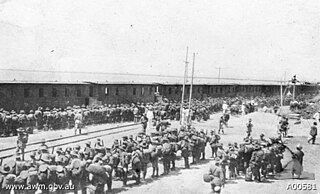
The Australian and New Zealand Army Corps (ANZAC) was a First World War army corps of the Mediterranean Expeditionary Force. It was formed in Egypt in December 1914, and operated during the Battle of Gallipoli. General William Birdwood commanded the corps, which comprised troops from the First Australian Imperial Force and 1st New Zealand Expeditionary Force. The corps disbanded in 1916, following the Allied evacuation of the Gallipoli peninsula and the formation of I ANZAC Corps and II ANZAC Corps. The Corps was reestablished, briefly, in the Second World War during the Battle of Greece in 1941.

The 3rd Brigade is a combined arms brigade of the Australian Army, principally made up of the 1st and 3rd Battalions of the Royal Australian Regiment. Initially raised in 1903 as part of the post-Federation Australian Army, it was removed from the order of battle in 1906 following the restructure of the field force. It was re-formed in 1914 for service during World War I, taking part in the fighting at Gallipoli and on the Western Front in Europe. During World War II the brigade was used in a defensive role before it was disbanded in 1944. It was re-raised in 1967 for service during the Vietnam War and later went on to provide the nucleus of the deployment to East Timor during the Australian-led intervention in 1999. The brigade is currently based at Lavarack Barracks in Townsville, Queensland.

The Royal Tasmania Regiment is a Reserve infantry regiment within the Australian Army consisting of a single battalion. Formed in 1960 following a review of military formations in Australia, the Regiment can trace its lineage back the late 19th Century and has served Australia in a number of conflicts including the Boer War, World War I and World War II. Today it serves as a part of the Australian Army's 9th Brigade, 2nd Division.

Unit Colour Patches are currently worn on the slouch hat in the Australian Army to identify the wearer's unit. Unit colour patches are approximately 40 millimetres (1.6 in) x 40 millimetres (1.6 in) in size and have a large variety of colours and shapes to distinguish them.
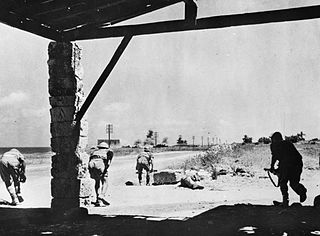
The 17th Brigade was an infantry brigade in the Australian Army. First raised in 1912 as a Militia formation to provide training under the compulsory training scheme, the brigade was later re-raised as part of the First Australian Imperial Force during World War I. Established in 1917 in the United Kingdom, it was broken up and disbanded without seeing action, and its personnel used as reinforcements for other formations. Reformed during World War II, it took part in fighting in Libya, Greece, Crete, Syria in 1941–1942. Following Japan's entry into the war, the Australian government pressed for the 6th Division's return, and the 17th Brigade was subsequently brought back from the Middle East, via Ceylon where they undertook defensive duties until July 1942. Following the brigade's return to Australia, it was deployed to New Guinea for two campaigns: the Salamaua–Lae campaign in 1943 and the Aitape–Wewak campaign in 1944–1945. After the war, the brigade was disbanded in January 1946. Today, its name is perpetuated by the 17th Combat Service Support Brigade, which was raised as a logistics formation in May 2006.

The 3rd Battalion was an infantry battalion of the Australian Army. Originally raised as part of the First Australian Imperial Force for service during World War I, the battalion formed part of the 1st Brigade, attached to the 1st Division. It was formed shortly after the war broke out and was among the first Australian units to be sent overseas, arriving in Egypt in December 1914. In April 1915 the battalion participated in the Landing at Anzac Cove, coming ashore in the second and third waves. In December 1915 the 3rd Battalion was evacuated from the Gallipoli peninsula and withdrawn to Egypt again, where it took part in the defence of the Suez Canal before being sent to France to fight on the Western Front in March 1916. For the next two and a half years the unit would serve in the trenches in France and Belgium and would take part in many of the major battles fought during that time. In May 1919, following the end of the war, the battalion was disbanded and its personnel repatriated back to Australia.
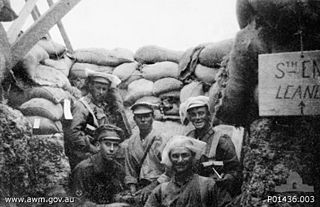
The 12th Battalion was an infantry battalion originally raised for the First Australian Imperial Force during the First World War. The battalion was recruited from Tasmania, South Australia and Western Australia and formed part of the 3rd Brigade, 1st Division. It served throughout the war, firstly during the Gallipoli Campaign and then on the Western Front. During the interwar years, the 12th Battalion was re-raised as a part-time military unit and during the Second World War undertook garrison duties in Australia, but did not see combat. Today its lineage is perpetuated by the 12th/40th Battalion, Royal Tasmania Regiment, a unit which continues to serve in the Australian Army Reserve.

A pioneer is a soldier employed to perform engineering and construction tasks. The term is in principle similar to sapper.

8th Brigade is an Australian Army Reserve training formation. It is headquartered in Sydney, and has subordinate units in various locations around New South Wales and the rest of Australia. These units are tasked with delivering basic and initial employment training to Reserve soldiers.

5th Brigade is a brigade of the Australian Army. Originally raised as a militia formation in 1912, the 5th Brigade was re-raised for overseas service in 1915 as part of the Australian Imperial Force during the First World War. The brigade then served during the Gallipoli Campaign and on the Western Front. During the inter-war years, it was re-raised as a part-time formation as part of Citizens Military Force. It undertook garrison duties in Australia during the Second World War, but was not deployed overseas before being disbanded in 1944. Following the war, the brigade was re-raised in 1948 once again and it is currently a Reserve combined arms formation based in New South Wales and forms part of the 2nd Division.
The 6th Combat Support Brigade is an Australian Army brigade. First formed in 1912 as a Militia formation to provide training under the compulsory training scheme, the brigade was re-raised during the First World War as an infantry unit of the all volunteer Australian Imperial Force. It subsequently served at Gallipoli and in France and Belgium on the Western Front. In the 1920s, as part of a reorganisation of the Australian Army, it became part of the 3rd Military District of the Citizens Military Force, encompassing units from Victoria and South Australia. In 1991, it became part of the Ready Reserve Scheme, based at Enoggera Barracks, in Brisbane, Queensland, before being disbanded in 1996 when the scheme was discontinued. The brigade was re-raised on 1 March 2010 to oversee the Army's command support and intelligence, surveillance, target acquisition and reconnaissance units.
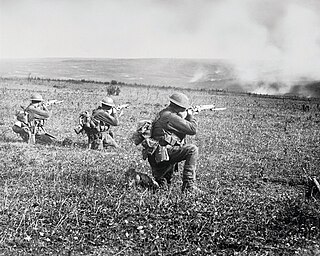
The 12th Brigade was an infantry brigade of the Australian Army. Formed in 1912 as a Militia formation, it was later re-raised in 1916 as part of the all volunteer First Australian Imperial Force that was raised for overseas service during the First World War. The brigade was part of the 4th Division and fought on the Western Front until the end of the war in November 1918. During the inter-war years, the brigade was re-formed in Australia as a part-time unit; during the Second World War, it was mobilised for full-time service, but did not serve overseas, undertaking garrison duties in Australia until 1945 when it was used to raise Timor Force.

The 29th Battalion was an infantry battalion of the Australian Army. First formed in 1915 for service during the First World War as part of the Australian Imperial Force (AIF), it fought in the trenches of the Western Front in France and Belgium before being disbanded in late 1918 to provide reinforcements for other heavily depleted Australian units. In 1921, following the demobilisation of the AIF, the battalion was re-raised as a unit of Australia's part-time military forces, based in Melbourne, Victoria, before being amalgamated with the 22nd Battalion in 1930. It was later re-raised in its own right and, following the outbreak of the Second World War, undertook garrison duties in Australia before being amalgamated with the 46th Battalion to form the 29th/46th Battalion in late 1942, subsequently seeing service against the Japanese in New Guinea and on New Britain.
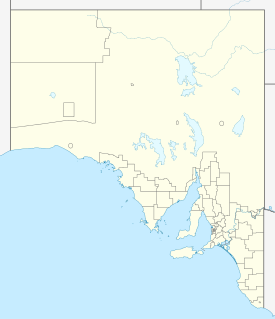
Woodside Barracks is an Australian Army base located near Inverbrackie and Woodside in South Australia.

The 56th Battalion was an infantry battalion of the Australian Army. It was originally raised in 1916 for service during the World War I and took part in the fighting in the trenches of the Western Front in France and Belgium before being amalgamated with the 54th Battalion in late 1918 following the German Spring Offensive reduced the numbers in both battalions. After the war, the battalion was re-raised as a part-time unit in New South Wales. During World War II the battalion was mobilised and undertook garrison duties in Australia until it was disbanded in 1944. It was briefly re-raised in 1956, but was disbanded the following year and its personnel used to re-raise the 4th Battalion, which later became part of the Royal New South Wales Regiment.

The 2nd Pioneer Battalion was an Australian infantry and light engineer unit raised for service during the First World War as part of the all volunteer Australian Imperial Force (AIF). Formed in Egypt in March 1916, the battalion subsequently served on the Western Front in France and Belgium, after being transferred to the European battlefields shortly after its establishment. Assigned to the 2nd Division, the 2nd Pioneer Battalion fought in most of the major battles that the AIF participated in between mid-1916 and the end of the war in November 1918. It was subsequently disbanded in early 1919.

The 4th Pioneer Battalion was an Australian infantry and light engineer unit raised for service during the First World War as part of the all volunteer Australian Imperial Force (AIF). Formed in Egypt in March 1916, the battalion subsequently served on the Western Front in France and Belgium, after being transferred to the European battlefields shortly after its establishment. Assigned to the 4th Division, the 4th Pioneer Battalion fought in most of the major battles that the AIF participated in between mid-1916 and the end of the war in November 1918. It was subsequently disbanded in early 1919.
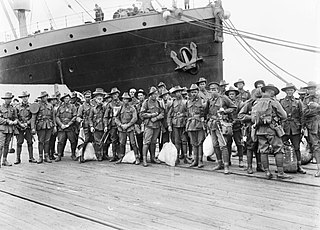
The 5th Machine Gun Battalion was an infantry support unit of the Australian Army. Originally formed in March 1918 for service during World War I as part of the all volunteer Australian Imperial Force, it was one of five such units raised as part of the AIF during the war. The battalion consisted of four machine gun companies, which had previously existed as independent companies assigned mainly at brigade level. The battalion took part in the final stages of the war, seeing action during the Allied defensive operations during the German Spring Offensive and then the Allied Hundred Days Offensive, which finally brought an end to the war. The battalion was disbanded in mid-1919 during the demobilisation of the AIF following the conclusion of hostilities. During World War II, the battalion was re-raised as part of the Militia in September 1942, and undertook garrison duties in the Torres Strait, until it was disbanded in May 1944.

The 4th Machine Gun Battalion was an infantry support unit of the Australian Army. Originally formed in March 1918 for service during World War I as part of the all volunteer Australian Imperial Force, it was one of five such units raised as part of the AIF during the war. The battalion consisted of four machine gun companies, which had previously existed as independent companies assigned mainly at brigade level. The battalion took part in the final stages of the war, seeing action during the Allied defensive operations during the German Spring Offensive and then the Allied Hundred Days Offensive, which finally brought an end to the war. The battalion was disbanded in mid-1919 during the demobilisation of the AIF following the conclusion of hostilities.