A referendum is a direct vote in which an entire electorate is invited to vote on a particular proposal. This may result in the adoption of a new law. In some countries, it is synonymous with a plebiscite or a vote on a ballot question.
Devolution is the statutory delegation of powers from the central government of a sovereign state to govern at a subnational level, such as a regional or local level. It is a form of administrative decentralization. Devolved territories have the power to make legislation relevant to the area.
Home rule is government of a colony, dependent country, or region by its own citizens. It is thus the power of a constituent part of a state to exercise such of the state's powers of governance within its own administrative area that have been decentralized to it by the central government.
Scottish independence is the political movement for Scotland to become a sovereign state independent from the United Kingdom. In 2014, a national referendum was held in Scotland. Voters were asked: "Should Scotland be an independent country?" 45 percent of voters answered "Yes" and 55 percent answered "No" with a turnout of 85 percent.

Referendums in the United Kingdom are occasionally held at a national, regional or local level. National referendums can be permitted by an Act of Parliament and regulated through the Political Parties, Elections and Referendums Act 2000, but they are by tradition extremely rare due to the principle of parliamentary sovereignty meaning that they cannot be constitutionally binding on either the Government or Parliament, although they usually have a persuasive political effect.

The Scottish devolution referendum of 1997 was a pre-legislative referendum held in Scotland on 11 September 1997 over whether there was support for the creation of a Scottish Parliament with devolved powers, and whether the Parliament should have tax-varying powers. The result was "Yes–Yes": a majority voted in favour of both proposals, and the Parliament was established following an election in 1999. Turnout for the referendum was 60.4%.

The Welsh devolution referendum of 1997 was a pre-legislative referendum held in Wales on 18 September 1997 over whether there was support for the creation of a National Assembly for Wales, and therefore a degree of self-government. The referendum was a Labour manifesto commitment and was held in their first term after the 1997 election under the provisions of the Referendums Act 1997. Unlike the referendum in Scotland the previous week, there was no proposal for the assembly to have tax-varying powers. This was the second referendum held in Wales over the question of devolution: the first was held in 1979 and was defeated by a large majority.
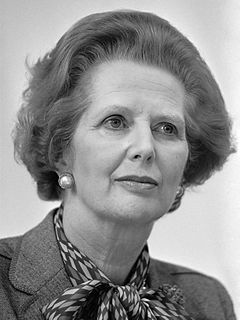
The European Assembly Election, 1979, was the first European election to be held in the United Kingdom after the European Communities (EC) decided to directly elect representatives to the European Parliament. It was held on 7 June. Elections were also held in eight other EC states. European elections were incorporated into UK law by the European Assembly Elections Act 1978. Out of the 410 members of the European Parliament, 81 were elected from the UK. The electoral system was First Past the Post in England, Scotland and Wales and Single Transferable Vote in Northern Ireland.
Unionism in Scotland is a political movement which seeks to keep Scotland within the United Kingdom (UK). Scotland is one of four countries of the United Kingdom which has its own devolved government and Scottish Parliament, as well as representation in the UK Parliament. There are many strands of political Unionism in Scotland, some of which have ties to Unionism and Loyalism in Northern Ireland. The three main political parties in the UK: the Conservatives, Labour and Liberal Democrats all support Scotland remaining part of the UK.
Scottish devolution referendum may refer to:
George Cunningham was a British politician.
The Wales Act 1978 was an Act of the Parliament of the United Kingdom intended to introduce a limited measure of self-government in Wales through the creation of a Welsh Assembly. The act never took effect as a result of the "no" vote in 1979 Welsh devolution referendum and was repealed in 1979.
The Declaration of Perth was a statement made by British Conservative Party leader Edward Heath on 18 May 1968, at the party conference in Perth, Scotland, which committed the party to supporting some form of Scottish devolution.
The decision of the Parliament of Scotland to ratify the Treaty of Union in 1707 was not unanimous and, from that time, individuals and organisations have advocated the reinstatement of a Scottish Parliament. Some have argued for devolution – a Scottish Parliament within the United Kingdom – while others have advocated complete independence. The people of Scotland first got the opportunity to vote in a referendum on proposals for devolution in 1979 and, although a majority of those voting voted 'Yes', the referendum legislation also required 40% of the electorate to vote 'Yes' for the plans to be enacted and this was not achieved. A second referendum opportunity in 1997, this time on a strong proposal, resulted in an overwhelming 'Yes' victory, leading to the Scotland Act 1998 being passed and the Scottish Parliament being established in 1999.
In the United Kingdom, devolution is the statutory granting of powers from the Parliament of the United Kingdom to the Scottish Parliament, the National Assembly for Wales, the Northern Ireland Assembly and the London Assembly and to their associated executive bodies the Scottish Government, the Welsh Government, the Northern Ireland Executive and in England, the Greater London Authority and combined authorities.
Scottish referendum may refer to any one of several referendums in Scotland:
In March 1978 a referendum was held in Shetland regarding the position of the isles within a potential Scottish Assembly. The isles' MP Jo Grimond had submitted an amendment to the Scotland Bill seeking to establish a commission in the event of a successful vote for a Scottish Assembly. This amendment faced opposition from the Secretary of State for Scotland, Bruce Millan. With Jo Grimond's support, the Shetland Islands Council held the referendum to gauge the electorate's support for its position in the hope that it would give the Council a mandate to push for separate consideration for Shetland in the Bill.
This page is based on this
Wikipedia article Text is available under the
CC BY-SA 4.0 license; additional terms may apply.
Images, videos and audio are available under their respective licenses.


