Related Research Articles

John Manners, 8th Earl of Rutland, was an English politician who sat in the House of Commons from 1640 until 1641 when he inherited the title Earl of Rutland on the death of his second cousin George Manners, 7th Earl of Rutland.
Robert Montagu, 3rd Earl of Manchester JP was an English courtier and politician who sat in the House of Commons from 1660 to 1671 when he inherited the peerage as Earl of Manchester.
Thomas Willoughby, 1st Baron Middleton, was a Tory politician who sat in the English and British House of Commons between 1698 and 1711 when he was raised to the peerage as Baron Middleton as one of Harley's Dozen.

Sir Michael Stanhope of Shelford in Nottinghamshire, was an influential courtier who was beheaded on Tower Hill, having been convicted of conspiring to assassinate John Dudley, 1st Duke of Northumberland, and others.
Sir John Pakington, 2nd Baronet of Westwood House, near Droitwich, Worcestershire was an English politician who sat in the House of Commons at various times between 1640 and 1679. He supported the Royalist cause in the English Civil War.
The Sheriff of Nottinghamshire, Derbyshire and the Royal Forests is a position established by the Normans in England.
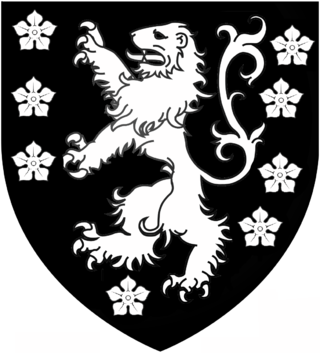
Sir Gervase Clifton of Clifton, Nottinghamshire and London was a 15th-century English knight and landowner. He was beheaded after the Battle of Tewkesbury.
Sir Gervase Clifton, 1st Baronet, K.B. was an English politician who sat in the House of Commons at various times between 1614 and 1666. He supported the Royalist cause in the English Civil War. He was educated at St John's College, Cambridge.

John Digby, 3rd Earl of Bristol was an English landowner and politician who sat in the House of Commons from 1675 to 1677 when he inherited the peerage as Earl of Bristol. He was styled Lord Digby from 1653 to 1677.

Sir John Pakington, 4th Baronet (1671–1727) of Westwood, near Droitwich, Worcestershire was an English Tory politician who sat in the English and British House of Commons between 1690 and 1727.
Sir Samuel Sandys was an English politician who sat in the House of Commons at various times between 1640 and 1685. He fought for the Royalists in the English Civil War.
Sir John Pakington, was Chirographer of the Court of Common Pleas, a Member of Parliament for Gloucester, and Sheriff of Herefordshire and Worcestershire. In 1529 he received an extraordinary grant from Henry VIII permitting him to wear his hat in the King's presence.

Sir John Newton, 2nd Baronet was an English politician who sat in the House of Commons from 1660 to 1685.
Sir Anthony Cope, 4th Baronet was an English politician who sat in the House of Commons from 1660 to 1675.
Sir Clifford Clifton was an English landowner and politician who sat in the House of Commons from 1659.
Sir Anthony Babington, was an English politician.
Gervase Eyre was an English MP for Nottinghamshire.
Sir Herbert Perrott Pakington, 5th Baronet, of Westwood, near Droitwich, Worcestershire, was an English Tory politician who sat in the House of Commons from 1727 to 1741.
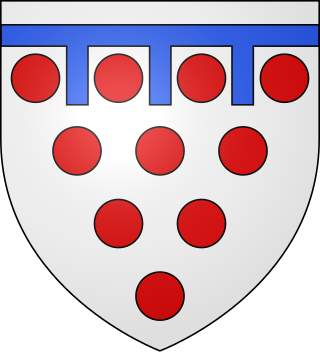
Babington is the name of an Anglo-Irish and English gentry family. The Anglo-Irish branch of the family is still extant today.
Anthony Eyre was a British landowner and politician who sat in the House of Commons between 1774 and 1784.
References
- 1 2 John Burke A genealogical and heraldic history of the commoners of Great Britain and Ireland 1838
- ↑ "EYRE, Anthony (1634-71), of Rampton, Notts". History of Parliament Online. Retrieved 26 October 2017.