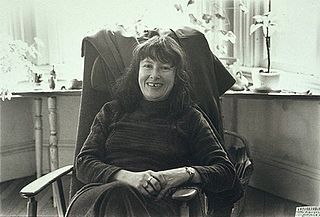
"August Houseplant" is a poem from the collection A Door in the Hive written by Denise Levertov. This collection was written in 1989.
Priscilla Denise Levertov was an American poet. She was a recipient of the Lannan Literary Award for Poetry. Levertov's 'What Were They Like?' is currently included in the Pearson Edexcel GCSE (9–1) English Literature Poetry Anthology.
The Poem
The first thing a reader notices about "August Houseplant" (without even having to read the poem) is the chaotic structure of the poem. This muddled structure is used to represent the structural pattern of a philodendron plant (see line 8-9). The title is used not only as name for this poem, but also in order to provide a false feeling simplicity to the poem. After all, it is unlikely that a reader will expect anything startling from a poem with a title like "August Houseplant".
The overall mood in the poem seems to be a bit downcast. For example, during the first few lines, the protagonist seems to be overly cautious about her security, "Is there someone, an intruder, in my back yard?". Towards the end of the poem, the protagonist seems quite anxious over whether or not she will bring her houseplant inside her house for the winter period "How am I going to carry you in, when it gets cold?".
A protagonist is the leading character of a story.
"August Houseplant" has two characters, the protagonist and the plant itself. The statement that the plant is a character (as opposed to being an object, as the title implies) is backed by the personification of the plant, "As if you knew fall is coming, you seem to desire everything that surrounds you...". The protagonist of the story seems to be emotionally attached plant. There are several factors that confirm my view. First of all, the protagonist treats the plant like a living person (as mentioned above). This would certainly require a degree of emotional attachment as it is quite hard for us, humans to empathize with a plant, we tend to consider them as objects rather than living things. Secondly, the protagonist seems to view the dilemma from an emotional viewpoint as opposed to a practical one (e.g. the plant takes up too much space), "And when you're maneuvered in, how small the room will become;". Overall throughout the poem, the thoughts of the protagonist become solemn and she seems to be more anxious as she has to sort out her dilemma.
The punctuation throughout the poem is also rather disorganized. Denise Levertov uses a lot of commas and long sentences in this poem. Like with the structure, this is done in order to represent the philodendron plant. Denise Levertov uses quite simple language which makes the situation in the poem a bit more realistic. The poet uses enjambment and caesura to have the desired structure.
Philodendron is a large genus of flowering plants in the Araceae family. As of September 2015, the World Checklist of Selected Plant Families accepted 489 species; other sources accept different numbers. Regardless of number of species, the genus is the second-largest member of the Araceae family. Taxonomically, the genus Philodendron is still poorly known, with many undescribed species. Many are grown as ornamental and indoor plants. The name derives from the Greek words philo- or "love, affection" and dendron or "tree". They are commonly called by their generic name.
There are several contrasts throughout the poem. First of all, there is the large dominating plant and the small room. This contrast is used to demonstrate the protagonists dilemma about bringing the plant indoors. The second contrast is in the seasons, in the second stanza the protagonist's words seem to be related to warmth and summer, "...summering on the deck,". However, in the last stanza her thoughts become darker and she starts thinking about the oncoming autumn.
This page is based on this Wikipedia article Text is available under the CC BY-SA 4.0 license; additional terms may apply. Images, videos and audio are available under their respective licenses.