This page is based on this
Wikipedia article Text is available under the
CC BY-SA 4.0 license; additional terms may apply.
Images, videos and audio are available under their respective licenses.

Michael Bruce Sterling is an American science fiction author known for his novels and work on the Mirrorshades anthology. This work helped to define the cyberpunk genre.

A heterocyclic compound or ring structure is a cyclic compound that has atoms of at least two different elements as members of its ring(s). Heterocyclic chemistry is the branch of organic chemistry dealing with the synthesis, properties, and applications of these heterocycles.
Titan most often refers to:
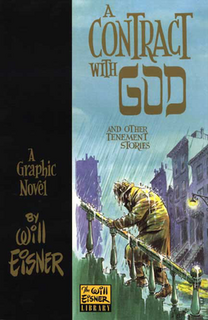
A graphic novel is a book made up of comics content. Although the word "novel" normally refers to long fictional works, the term "graphic novel" is applied broadly and includes fiction, non-fiction, and anthologized work. It is distinguished from the term "comic book", which is generally used for comics periodicals.

Regent's Park is one of the Royal Parks of London. It lies within north-west London, partly in the City of Westminster and partly in the London Borough of Camden. It contains Regent's University London and the London Zoo.

Frankenstein's monster, often erroneously referred to as "Frankenstein", is a fictional character who first appeared in Mary Shelley's 1818 novel Frankenstein; or, The Modern Prometheus. Shelley's title thus compares the monster's creator, Victor Frankenstein, to the mythological character Prometheus, who fashioned humans out of clay and gave them fire.
Wizard, the wizard, or wizards and the female counterparts wizardess or wizardesses may refer to:
Avenger, Avengers, The Avenger or The Avengers may refer to:

In the United States, a design patent is a form of legal protection granted to the ornamental design of a functional item. Design patents are a type of industrial design right. Ornamental designs of jewelry, furniture, beverage containers and computer icons are examples of objects that are covered by design patents.
Gothic science fiction, also known as space goth, is a subgenre of science fiction that involves gothic conventions. By definition, the subgenre attempts to capture the dark atmosphere of gothic fiction while also incorporating elements of science fiction.
A book cover is any protective covering used to bind together the pages of a book. Beyond the familiar distinction between hardcovers and paperbacks, there are further alternatives and additions, such as dust jackets, ring-binding, and older forms such as the nineteenth-century "paper-boards" and the traditional types of hand-binding. The term "Bookcover" is often used for a book cover image in library management software. This article is concerned with modern mechanically produced covers.

Otenabant (CP-945,598) is a drug which acts as a potent and highly selective CB1 antagonist. It was developed by Pfizer for the treatment of obesity, but development for this application has been discontinued following the problems seen during clinical use of the similar drug rimonabant.

A dihydrofolate reductase inhibitor is a molecule that inhibits the function of dihydrofolate reductase, and is a type of antifolate.

A novel is a relatively long work of narrative fiction, normally written in prose form, and which is typically published as a book.

Org 28312 is a drug developed by Organon International which acts as a potent cannabinoid receptor full agonist at both the CB1 and CB2 receptors. It was developed with the aim of finding a water-soluble cannabinoid agonist suitable for intravenous use as an analgesic, but did not proceed to human trials, with the related compound Org 28611 chosen instead due to its better penetration into the brain. The structure-activity relationships of these compounds have subsequently been investigated further leading to the development of a number of more potent analogues, derived by cyclisation around the indole or piperazine rings.

MN-25 (UR-12) is a drug invented by Bristol-Myers Squibb, that acts as a reasonably selective agonist of peripheral cannabinoid receptors. It has moderate affinity for CB2 receptors with a Ki of 11 nM, but 22x lower affinity for the psychoactive CB1 receptors with a Ki of 245 nM. The indole 2-methyl derivative has the ratio of affinities reversed however, with a Ki of 8 nM at CB1 and 29 nM at CB2, which contrasts with the usual trend of 2-methyl derivatives having increased selectivity for CB2 (cf. JWH-018 vs JWH-007, JWH-081 vs JWH-098).


