
The Dunblane school massacre took place at Dunblane Primary School near Stirling, Stirlingshire, Scotland, on 13 March 1996, when Thomas Hamilton shot 16 children and one teacher dead before killing himself. It remains the deadliest mass shooting in British history.

The Hillsborough disaster was a fatal human crush during an FA Cup semi-final football match between Liverpool and Nottingham Forest at Hillsborough Stadium in Sheffield, England, on 15 April 1989. With 96 fatalities and 766 injuries, it remains the worst disaster in British sporting history. The crush occurred in the two standing-only central pens in the Leppings Lane stand, allocated to Liverpool supporters. Shortly before kick-off, in an attempt to ease overcrowding outside the entrance turnstiles, the police match commander, chief superintendent David Duckenfield, ordered exit gate C to be opened, leading to an influx of even more supporters to the already overcrowded central pens.

The Tangiwai disaster occurred at 22:21 on 24 December 1953 when the Whangaehu River bridge collapsed beneath Wellington-to-Auckland express passenger train No. 626 at Tangiwai, in the central North Island of New Zealand. The locomotive and first six carriages derailed into the river, killing 151 people. The subsequent Board of Inquiry found that the accident was caused by the collapse of the tephra dam holding back nearby Mount Ruapehu's crater lake, creating a large lahar in the Whangaehu River, which destroyed one of the bridge piers at Tangiwai only minutes before the train reached the bridge. The disaster remains New Zealand's worst rail accident.
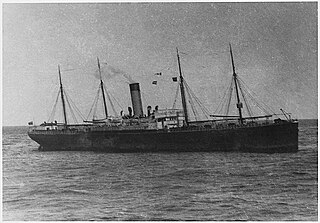
SS Californian was a British Leyland Line steamship that is best known for its inaction during the sinking of the RMS Titanic on 15 April 1912, despite being the closest ship in the area. The United States Senate inquiry and British Wreck Commissioner's inquiry into the sinking both concluded that the Californian could have saved many or all of the lives that were lost, had a prompt response been mounted to the Titanic's distress rockets. The U.S. Senate inquiry was particularly critical of the vessel's Captain, Stanley Lord, calling his inaction during the disaster "reprehensible".
The Hillsborough Stadium Disaster Inquiry report is the report of an inquiry which was overseen by Lord Justice Taylor, into the causes of the Hillsborough disaster on 15 April 1989, as a result of which, at the time of the report, 95 Liverpool F.C. fans had died. An interim report was published in August 1989, and the final report was published in January 1990. It sought to establish the causes of the tragedy, and make recommendations regarding the provision of safety at sporting events in future.

The Aberfan disaster was the catastrophic collapse of a colliery spoil tip at around 9:15 am on 21 October 1966. The tip had been created on a mountain slope above the Welsh village of Aberfan, near Merthyr Tydfil and overlaid a natural spring. A period of heavy rain led to a build-up of water within the tip which caused it to suddenly slide downhill as a slurry, killing 116 children and 28 adults as it engulfed the local junior school and other buildings. The tip was the responsibility of the National Coal Board (NCB), and the subsequent inquiry placed the blame for the disaster on the organisation and nine named employees.
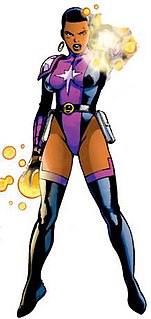
Kid Quantum is the name of three fictional superheroes that appear in comic books published by DC Comics who are members of different incarnations of the Legion of Super-Heroes.

A fatal accident inquiry is a Scottish judicial process which investigates and determines the circumstances of some deaths occurring in Scotland. Until 2009, they did not apply to any deaths occurring in other jurisdictions, when the Coroners and Justice Act 2009 extended the Fatal Accidents and Sudden Deaths Inquiry (Scotland) Act 1976 to service personnel at the discretion of the Chief Coroner or the Secretary of State. The equivalent process in England and Wales is an inquest. A major review of the fatal accident inquiries was undertaken by Lord Cullen of Whitekirk, at the request of the Scottish Government, which resulted in the passing of the Inquiries into Fatal Accidents and Sudden Deaths etc. (Scotland) Act 2016.

SS Southern Cross was a steam-powered sealing vessel that operated primarily in Norway and Newfoundland and Labrador.
The Ellis Park Stadium disaster was the worst sporting accident in South African history where, on 11 April 2001, spectators poured into the Ellis Park Stadium in the city of Johannesburg, Gauteng, South Africa, for the local Soweto derby association football match between Kaizer Chiefs and Orlando Pirates, crushing 43 people to death. There was a 60,000 capacity crowd in the stadium, but reports suggest a further 30,000 more fans were trying to gain entry to the stadium. Reports also suggest that 120,000 fans were admitted into the stadium. An Orlando Pirates equaliser sparked a further surge by the fans trying to gain entry as they scrambled to see what had happened.
Paul Benedict Cullen, Lord Pentland is a former Solicitor General for Scotland, a Senator of the College of Justice and former Chairman of the Scottish Law Commission.
The Cullen Report can refer to one of three reports of public inquiries into disasters that were overseen by William Cullen, Baron Cullen of Whitekirk.

The sinking of the RMS Titanic on April 15, 1912 resulted in an inquiry by the United States Senate. Chaired by Senator William Alden Smith, the inquiry was a subcommittee of the Senate's Commerce Committee. The hearings began in New York on April 19, 1912, later moving to Washington, D.C., concluding on May 25, 1912 with a return visit to New York.

The sinking of the RMS Titanic on 15 April 1912 resulted in an inquiry by the British Wreck Commissioner on behalf of the British Board of Trade. The inquiry was overseen by High Court judge Lord Mersey, and was held in London from 2 May to 3 July 1912. The hearings took place mainly at the London Scottish Drill Hall, at 59 Buckingham Gate, London SW1.

The 1971 Ibrox disaster was a crush among the crowd at an Old Firm football game, which led to 66 deaths and more than 200 injuries. It happened on 2 January 1971 in an exit stairway at Ibrox Park in Glasgow, Scotland. It was the worst British football disaster until the Hillsborough disaster in Sheffield, England, in 1989.
On 24 April 2014, Oliver Duggan, in the Liverpool Echo, reported that users of computers that used IP addresses registered to the Government Secure Intranet had added derogatory and offensive material to Wikipedia articles, particularly the article about the Hillsborough disaster. The vandalism was quickly re-reported by other media, and subsequent reports have highlighted other acts of vandalism, on various articles, originated by computers using those IP addresses. After an investigation by The Daily Telegraph and Wikipediocracy the person behind the edits was identified as a "junior civil servant" within the UK government and was dismissed.


