
The Legend of Zelda is an action-adventure video game franchise created by Japanese game designers Shigeru Miyamoto and Takashi Tezuka. It is primarily developed and published by Nintendo, although some portable installments and re-releases have been outsourced to Capcom, Vanpool, and Grezzo. The gameplay incorporates action-adventure and elements of action RPG games.

The Legend of Zelda: Ocarina of Time is an action-adventure game developed and published by Nintendo for the Nintendo 64. It was released in Japan and North America in November 1998, and in Europe, Australia and New Zealand the following month. Ocarina of Time is the fifth game in The Legend of Zelda series, and the first with 3D graphics. Originally developed for the 64DD peripheral, it was instead released on a 256-megabit (32-megabyte) cartridge, the largest-capacity cartridge Nintendo produced at that time.

The Legend of Zelda is a 1986 action-adventure video game developed and published by Nintendo and designed by Shigeru Miyamoto and Takashi Tezuka. Set in the fantasy land of Hyrule, the plot centers on a boy named Link, the playable protagonist, who aims to collect the eight fragments of the Triforce of Wisdom in order to rescue Princess Zelda from the antagonist, Ganon. During the course of the game, the player navigates throughout the overworld and several dungeons, defeating enemies and uncovering secrets along the way.

The Legend of Zelda: A Link to the Past is an action-adventure game developed and published by Nintendo for the Super Nintendo Entertainment System. It is the third game in The Legend of Zelda series and was released in 1991 in Japan and 1992 in North America and Europe.

The Legend of Zelda: Majora's Mask is an action-adventure game developed and published by Nintendo for the Nintendo 64. It was released in 2000 as the sixth main installment in The Legend of Zelda series and was the second to use 3D graphics, following 1998's The Legend of Zelda: Ocarina of Time. Designed by a creative team led by Eiji Auonuma, Yoshiaki Koizumi, and Shigeru Miyamoto, Majora's Mask was completed in less than two years. It featured enhanced graphics and several gameplay changes from its predecessor, though it reused a number of elements and character models, which the game's creators called a creative decision made necessary by time constraints.

The Legend of Zelda: The Wind Waker is a 2002 action-adventure game developed and published by Nintendo for the GameCube. The tenth installment in The Legend of Zelda series, The Wind Waker is set on a group of islands in a vast sea, a departure for the series. It follows series protagonist Link as he attempts to save his sister from the sorcerer Ganon and becomes embroiled in a struggle for the Triforce, a sacred wish-granting relic. Aided by allies including pirate captain Tetra—an incarnation of Princess Zelda—and a talking boat named the King of Red Lions, Link sails the ocean, explores islands, and traverses dungeons to acquire the power necessary to defeat Ganon.
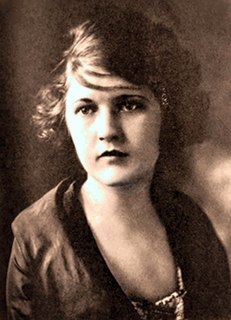
Zelda Fitzgerald was an American novelist, socialite, painter and wife of author F. Scott Fitzgerald.

The Legend of Zelda: Oracle of Seasons and The Legend of Zelda: Oracle of Ages are two action-adventure games in the Legend of Zelda series, developed by Flagship. They were released in 2001 for Nintendo's Game Boy Color handheld console and re-released on the Virtual Console for the Nintendo 3DS in 2013. The games make up the seventh and eighth installment in the Zelda series.

Zelda II: The Adventure of Link is an action role-playing video game with platforming elements. The second installment in The Legend of Zelda series, it was developed and published by Nintendo for the Family Computer Disk System on January 14, 1987, less than a year after the original The Legend of Zelda was released and seven months before North America saw the release of the first Zelda title. The game was released in North America and the PAL region for the Nintendo Entertainment System in late 1988, almost two years after its initial release in Japan.
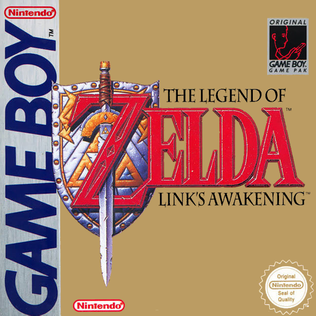
The Legend of Zelda: Link's Awakening is a 1993 action-adventure game developed and published by Nintendo for the Game Boy. It is the fourth installment in the Legend of Zelda series and the first for a handheld game console. Link's Awakening is one of the few Zelda games not to take place in the land of Hyrule, and does not feature Princess Zelda or the Triforce relic. Instead, protagonist Link begins the game stranded on Koholint Island, a place guarded by a whale-like deity called the Wind Fish. Assuming the role of Link, the player fights monsters and solves puzzles while searching for eight musical instruments that will awaken the sleeping Wind Fish and allow him to escape from the island.

Princess Zelda is the titular character in Nintendo's The Legend of Zelda video game series. She was created by Shigeru Miyamoto and introduced in the original 1986 game The Legend of Zelda. She appears in several incarnations throughout the series, generally as a member of Hyrule's royal family and an associate of the protagonist Link.

Link is the main protagonist of Nintendo's video game series The Legend of Zelda. He appears in several incarnations over the course of the games, and also features in other Nintendo media, including merchandising comic books and animated series. He is one of Nintendo's main icons and one of the most well-known and popular characters in video game history.

Ganon, also known as Ganondorf in his Gerudo form, is a fictional character and the main antagonist of Nintendo's The Legend of Zelda video game series. Ganon is the final boss in many Zelda titles.

The Legend of Zelda is an American animated series based on the Japanese video game series The Legend of Zelda by Nintendo. The plot follows the adventures of Link and Princess Zelda as they defend the kingdom of Hyrule from an evil wizard named Ganon. It is heavily based on the first game of the Zelda series, The Legend of Zelda, but includes some references to the second, Zelda II: The Adventure of Link. The show was produced by DIC Enterprises and distributed by Viacom Enterprises in association with Nintendo of America, Inc. It comprises thirteen episodes which first aired in North America from September 8, 1989, to December 1, 1989.

The Legend of Zelda: Twilight Princess is an action-adventure game developed and published by Nintendo for the Wii and GameCube home video game consoles. It is the thirteenth installment in the Legend of Zelda series. Originally planned for release on the GameCube in November 2005, Twilight Princess was delayed by Nintendo to allow its developers to refine the game, add more content, and port it to the Wii. The Wii version was a launch game in North America in November 2006, and in Japan, Europe, and Australia the following month. The GameCube version was also released worldwide in December 2006, and was the final first-party game released for the console.
Link: The Faces of Evil, Zelda: The Wand of Gamelon and Zelda's Adventure are action-adventure games produced by Philips for their CD-i format as part of Nintendo's The Legend of Zelda video game series. Not designed for Nintendo platforms, the games owe their existence to negotiations related to Nintendo's decision not to have Philips create a CD add-on to the Super NES. During these negotiations, Philips secured the rights to use Nintendo characters in CD-i third-party developer games. The Faces of Evil and The Wand of Gamelon were developed by Animation Magic and were both released in North America on October 10, 1993, and Zelda's Adventure was developed by Viridis and was released in North America on June 5, 1994. The games were given little funding or development time, and Nintendo provided only cursory input. None of the games are canonical to the Zelda franchise.

The Legend of Zelda: Skyward Sword is an action-adventure game developed and published by Nintendo for the Wii. The sixteenth mainline entry in The Legend of Zelda series, it was released worldwide in November 2011. The game was made available worldwide on the Wii U eShop in September 2016. Taking the role of series protagonist Link, players navigate the floating island of Skyloft and the land below it, completing quests that advance the story and solving environmental and dungeon-based puzzles. Gameplay mechanics and combat, the latter focusing on attacking and blocking with sword and shield, are reliant on the Wii MotionPlus peripheral.

Francis Scott Key Fitzgerald was an American fiction writer, whose works helped to illustrate the flamboyance and excess of the Jazz Age. While he achieved popular success, fame, and fortune in his lifetime, he did not receive much critical acclaim until after his death. Perhaps the most notable member of the "Lost Generation" of the 1920s, Fitzgerald is now widely regarded as one of the greatest American writers of the 20th century. He finished four novels: This Side of Paradise, The Beautiful and Damned, The Great Gatsby, and Tender Is the Night. A fifth, unfinished novel, The Last Tycoon, was published posthumously. Four collections of his short stories were published, as well as 164 short stories in magazines during his lifetime.

The Legend of Zelda: Breath of the Wild is an action-adventure game developed and published by Nintendo, released for the Nintendo Switch and Wii U consoles on March 3, 2017. Breath of the Wild is set at the end of the Zelda timeline; the player controls Link, who awakens from a hundred-year slumber to defeat Calamity Ganon before it can destroy the kingdom of Hyrule.

