Related Research Articles

Agritourism or agrotourism, as it is defined most broadly, involves any agriculturally based operation or activity that brings visitors to a farm or ranch. Agritourism has different definitions in different parts of the world, and sometimes refers specifically to farm stays, as in Italy. Elsewhere, agritourism includes a wide variety of activities, including buying produce direct from a farm stand, navigating a corn maze, slopping hogs, picking fruit, feeding animals, or staying at a bed and breakfast (B&B) on a farm.
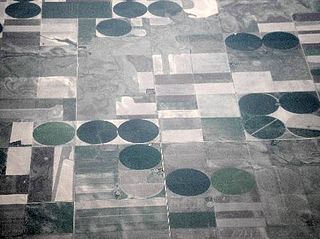
A farm is an area of land that is devoted primarily to agricultural processes with the primary objective of producing food and other crops; it is the basic facility in food production. The name is used for specialised units such as arable farms, vegetable farms, fruit farms, dairy, pig and poultry farms, and land used for the production of natural fibres, biofuel and other commodities. It includes ranches, feedlots, orchards, plantations and estates, smallholdings and hobby farms, and includes the farmhouse and agricultural buildings as well as the land. In modern times the term has been extended so as to include such industrial operations as wind farms and fish farms, both of which can operate on land or sea.

Rural sociology is a field of sociology traditionally associated with the study of social structure and conflict in rural areas although topical areas such as food and agriculture or natural resource access transcend traditional rural spatial boundaries. It is an active field in much of the world, originating in the United States in the 1910s with close ties to the national Department of Agriculture and land-grant university colleges of agriculture.

Corporate farming is the practice of large-scale agriculture on farms owned or greatly influenced by large companies. This includes corporate ownership of farms and selling of agricultural products, as well as the roles of these companies in influencing agricultural education, research, and public policy through funding initiatives and lobbying efforts.

Agriculture is a major industry in the United States, which is a net exporter of food. As of the 2007 census of agriculture, there were 2.2 million farms, covering an area of 922 million acres (3,730,000 km2), an average of 418 acres per farm.

Community-supported agriculture is a system that connects the producer and consumers within the food system more closely by allowing the consumer to subscribe to the harvest of a certain farm or group of farms. It is an alternative socioeconomic model of agriculture and food distribution that allows the producer and consumer to share the risks of farming. The model is a subcategory of civic agriculture that has an overarching goal of strengthening a sense of community through local markets.
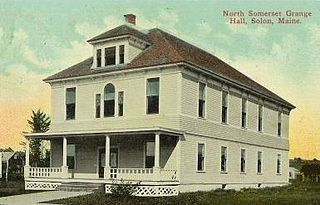
The Grange, officially named The National Grange of the Order of Patrons of Husbandry, is a fraternal organization in the United States that encourages families to band together to promote the economic and political well-being of the community and agriculture. The Grange, founded after the Civil War in 1867, is the oldest American agricultural advocacy group with a national scope. The Grange actively lobbied state legislatures and Congress for political goals, such as the Granger Laws to lower rates charged by railroads, and rural free mail delivery by the Post Office.
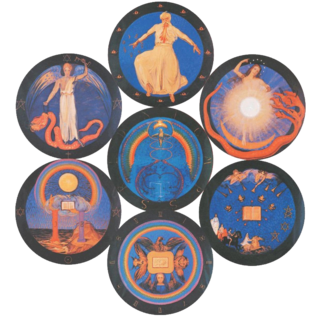
Biodynamic agriculture is a form of alternative agriculture very similar to organic farming, but it includes various esoteric concepts drawn from the ideas of Rudolf Steiner (1861–1925). Initially developed in 1924, it was the first of the organic agriculture movements. It treats soil fertility, plant growth, and livestock care as ecologically interrelated tasks, emphasizing spiritual and mystical perspectives.

Urban agriculture,urban farming, or urban gardening is the practice of cultivating, processing and distributing food in or around urban areas. Urban agriculture can also involve animal husbandry, aquaculture, agroforestry, urban beekeeping, and horticulture. These activities occur in peri-urban areas as well, and peri-urban agriculture may have different characteristics.

Dryland farming and dry farming encompass specific agricultural techniques for the non-irrigated cultivation of crops. Dryland farming is associated with drylands, areas characterized by a cool wet season followed by a warm dry season. They are also associated with arid conditions, areas prone to drought and those having scarce water-resources.
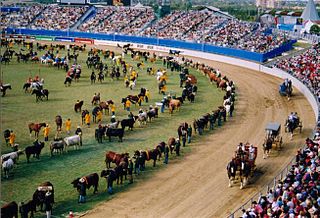
An agricultural show is a public event exhibiting the equipment, animals, sports and recreation associated with agriculture and animal husbandry. The largest comprise a livestock show, a trade fair, competitions, and entertainment. The work and practices of farmers, animal fanciers, cowboys, and zoologists may be displayed. The terms agricultural show and livestock show are synonymous with the North American terms county fair and state fair.

Victor Moritz Goldschmidt was a Norwegian mineralogist considered to be the founder of modern geochemistry and crystal chemistry, developer of the Goldschmidt Classification of elements.
The Nomlaki are a Wintun people native to the area of the Sacramento Valley, extending westward to the Coast Range in Northern California. Today some Nomlaki people are enrolled in the federally recognized tribes: Round Valley Indian Tribes, Grindstone Indian Rancheria or the Paskenta Band of Nomlaki Indians. The Nomlaki were bordered by the Wintu (Wintun) in the north, the Yana in the northeast and east, the Konkow (Maiduan) in the east, the Patwin (Wintun) in the south, and the Yuki in the west.
A food cooperative or food co-op is a food distribution outlet organized as a cooperative, rather than a private or public company. Food cooperatives are usually consumer cooperatives, where the decisions regarding the production and distribution of its food are chosen by its members. Like all cooperatives, food cooperatives are often based on the 7 Rochdale Principles, and they typically offer natural foods. Since decisions about how to run a cooperative are not made by outside shareholders, cooperatives often exhibit a higher degree of social responsibility than their corporate analogues.

Agriculture in Nigeria is a branch of the economy in Nigeria, providing employment for about 30% of the population as of 2010. The sector is being transformed by commercialization at the small, medium and large-scale enterprise levels.
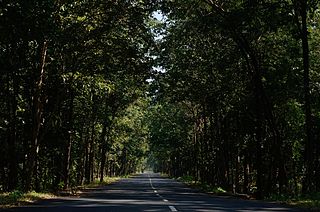
Social forestry is the management and protection of forest and afforestation of barren and deforested lands with the purpose of helping environmental, social and rural development.
The Food, Conservation, and Energy Act of 2008 was a $288 billion, five-year agricultural policy bill that was passed into law by the United States Congress on June 18, 2008. The bill was a continuation of the 2002 Farm Bill. It continues the United States' long history of agricultural subsidies as well as pursuing areas such as energy, conservation, nutrition, and rural development. Some specific initiatives in the bill include increases in Food Stamp benefits, increased support for the production of cellulosic ethanol, and money for the research of pests, diseases and other agricultural problems.

Pesticide drift refers to the unintentional diffusion of pesticides and the potential negative effects of pesticide application, including off-target contamination due to spray drift as well as runoff from plants or soil. This can lead to damage in human health, environmental contamination, and property damage.

Agriculture is a significant sector in California's economy, producing nearly $50 billion in revenue in 2018. There are more than 400 commodity crops grown across California, including a significant portion of all fruits and nuts for the United States.
References

- Goldschmidt, Walter R. (1947). As You Sow: Three Studies in the Social Consequences of Agribusiness. Montclair, N.J: Allanheld, Osmun and Co. Publishers, Inc.


The Congressional Research Service (CRS), known as Congress's think tank, is a public policy research institute of the United States Congress. As a legislative branch agency within the Library of Congress, CRS works primarily and directly for Members of Congress, their Committees and staff on a confidential, nonpartisan basis.