
Io was, in Greek mythology, one of the mortal lovers of Zeus. She was an ancestor of many kings and heroes such as Perseus, Cadmus, Heracles, Minos, Lynceus, Cepheus, and Danaus. The astronomer Simon Marius named a moon of Jupiter after Io in 1614.

Antigone is a tragedy by Sophocles written in or before 441 BC.

In Greek mythology, Argo was the ship on which Jason and the Argonauts sailed from Iolcos to Colchis to retrieve the Golden Fleece. She was named after her builder, Argus.

Ismene is the name of the daughter and half-sister of Oedipus, daughter and granddaughter of Jocasta, and sister of Antigone, Eteocles, and Polynices. She appears in several plays of Sophocles: at the end of Oedipus Rex, in Oedipus at Colonus and in Antigone. She also appears at the end of Aeschylus' Seven Against Thebes.

In Greek mythology, Jocasta, also known as Iocaste or Epicaste, was a daughter of Menoeceus, a descendant of the Spartoi, and queen consort of Thebes. She was the wife of first Laius, then of their son Oedipus, and both mother and grandmother of Antigone, Eteocles, Polynices and Ismene. She was also sister of Creon and mother-in-law of Haimon.

Oedipus at Colonus is one of the three Theban plays of the Athenian tragedian Sophocles. It was written shortly before Sophocles's death in 406 BC and produced by his grandson at the Festival of Dionysus in 401 BC.
Ismene is a very large main belt asteroid. It was discovered by German-American astronomer C. H. F. Peters on September 22, 1878, in Clinton, New York, and named after Ismene, the sister of Antigone in Greek mythology.
Byzantine romance represents a revival of the ancient Greek romance of Roman times. Works in this category were written by Byzantine Greeks of the Eastern Roman Empire during the 12th century.

Argus Panoptes (All-seeing) or Argos is a many-eyed giant in Greek mythology. The figure is known for having generated the saying "the eyes of Argus", as in to be "followed by", "trailed by", "watched by", et cetera, the eyes; the saying is used to describe being subject to strict scrutiny in one's actions to an invasive, distressing degree. The monstrous entity has been either directly included or indirectly alluded to in a wide variety of works influenced by Greco-Roman thought over the past several centuries.
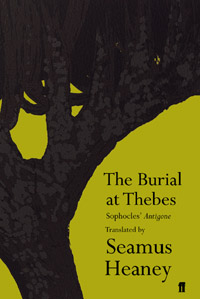
The Burial at Thebes: A version of Sophocles' Antigone is a play by Irish Nobel laureate Seamus Heaney, based on the fifth century BC tragedy Antigone by Sophocles. It is also an opera by Dominique Le Gendre
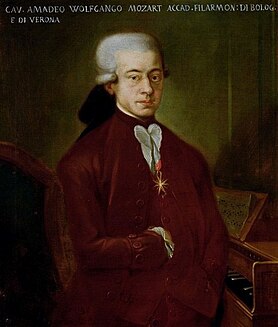
Mitridate, re di Ponto, K. 87 (74a), is an early opera seria in three acts by Wolfgang Amadeus Mozart. The libretto is by Vittorio Amedeo Cigna-Santi, after Giuseppe Parini's Italian translation of Jean Racine's play Mithridate.
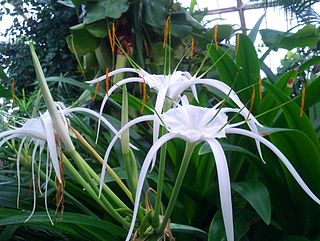
Hymenocallis (US) or (UK) is a genus of American plants in the amaryllis family.

Antigona (Antigone) is an opera in three acts in Italian by the composer Tommaso Traetta. The libretto, by Marco Coltellini, is based on the tragedy Antigone by Sophocles. But there is also an opera Antigona by Josef Mysliveček.

Antigone is a 1961 Greek film adaptation of the Ancient Greek tragedy Antigone by Sophocles. It stars Irene Papas in the title role and was directed by Yorgos Javellas.

Hercules and the Conquest of Atalantis is a 1961 film directed by Vittorio Cottafavi and starring Reg Park in his film debut as Ercole/Hercules. It was originally released in Super Technirama 70.
In Greek mythology, Argus was the king and eponym of Argos.
In Greek mythology, Euryganeia is occasionally named as Oedipus' second wife and the mother of his children, Polynices, Eteocles, Ismene and Antigone. She was either a daughter of Hyperphas or Jocasta's sister. According to Pausanias, the statement at Odyssey 11.274—that the gods soon made the incestuous marriage between Oedipus and his mother Jocasta known—is incompatible with her bearing four children to him. The geographer cites the Oedipodeia as evidence for the fact that Euryganeia was actually the mother of Oedipus' brood. Pherecydes, on the other hand, attributed two sons to the marriage of Jocasta and Oedipus, but agreed that the more famous foursome were the children of Euryganeia. There was a painting of her at Plataea in which she was depicted as mournful because of the strife between her children. Following Euryganeia's death, Oedipus married Astymedusa, who plotted against her stepsons.
In Greek mythology, Iasus or Iasius was a king of Argos.

