This page is based on this
Wikipedia article Text is available under the
CC BY-SA 4.0 license; additional terms may apply.
Images, videos and audio are available under their respective licenses.

Chiang Kai-shek, also known as Generalissimo Chiang or Chiang Chungcheng and romanized as Chiang Chieh-shih or Jiang Jieshi, was a Chinese politician and military leader who served as the leader of the Republic of China between 1928 and 1975, first in mainland China until 1949 and then in Taiwan until his death. He was recognized by much of the world as the head of the legitimate government of China until 1971, during which the United Nations passed Resolution 2758.
The Kuomintang of China is a major political party in the Republic of China on Taiwan, based in Taipei, that was founded in 1911, and is currently an opposition political party in the Legislative Yuan.

Chiang Ching-kuo was a politician of the Republic of China (Taiwan). Son of Chiang Kai-shek, he held numerous posts in the government of the Republic of China. He succeeded his father to serve as Premier of the Republic of China between 1972–78 and was the President of the Republic of China from 1978 until his death in 1988.

Yen Chia-kan, also known as C. K. Yen, was a Kuomintang politician. He succeeded Chiang Kai-shek as President of the Republic of China upon Chiang's death on 5 April 1975 and served out the remainder of Chiang's term until 20 May 1978.
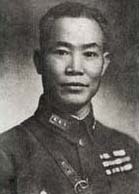
Chen Cheng was a Chinese political and military leader, and one of the main National Revolutionary Army commanders during the Second Sino-Japanese War and the Chinese Civil War. After moving to Taiwan at the end of the civil war, he served as the Governor of Taiwan Province, Vice President and Premier of the Republic of China (ROC). He represented the ROC in visits to the United States. He also helped to initiate land reforms and tax reduction programs that caused Communism to become unattractive in Taiwan, where peasants were able to own land. His alias was Chen Tsyr-shiou.

Chiang Hsiao-yen or John Chiang, formerly surnamed Chang, is a Taiwanese politician affiliated with the Kuomintang. He is the grandson of Chiang Kai-shek, former leader of the Republic of China.
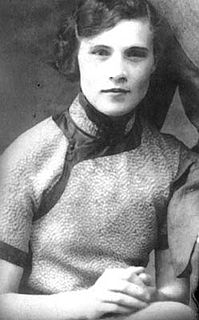
Faina Chiang Fang-liang was the wife of President Chiang Ching-kuo and served as First Lady of the Republic of China on Taiwan from 1978 to 1988.
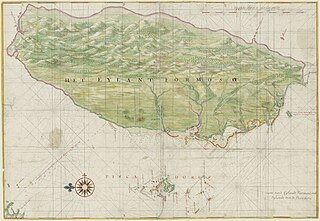
As a result of the surrender of Japan at the end of World War II, the island of Taiwan was placed under the governance of the Republic of China (ROC), ruled by the Kuomintang (KMT), on 25 October 1945. Following the February 28 massacre in 1947, martial law was declared in 1949 by the Governor of Taiwan Province, Chen Cheng, and the ROC Ministry of National Defense. Following the Chinese Civil War in 1949, the ROC government was forcibly expelled from the mainland by the Communists, who proclaimed the establishment of the People's Republic of China. The KMT retreated to Taiwan and declared Taipei the temporary capital of the ROC. For many years, the ROC and PRC each continued to claim in the diplomatic arena to be the sole legitimate government of "China". In 1971, the United Nations expelled the ROC and replaced it with the PRC.
Jiang can be a pinyin transliteration of one of several Chinese surnames:

Chiang Hsiao-yung was a politician of the Republic of China.

Chiang Wei-shui was a founder of the Taiwanese Cultural Association and the Taiwanese People's Party. He is seen as one of the most important figures in Taiwan's resistance movement against Japanese rule.

Jiang Menglin, also known as Chiang Monlin, was a Chinese educator, writer, and politician. Between 1919 and 1927, he also served as the President of Peking University. He later became the president of National Chekiang University. In the early 1950s, he was head of the Joint Commission on Rural Reconstruction in Taiwan.
Lee Huan was a politician in the Republic of China. He was Premier of the Republic of China from 1989 to 1990, serving for one year under former President Lee Teng-hui. He was the father of Lee Ching-hua and Diane Lee. He was born in Hankou, Hubei.
The fourth supplementary elections for the National Assembly and Legislative Yuan were held in the Republic of China (Taiwan) on 6 December 1980.
Events from the year 2009 in Taiwan, Republic of China. This year is numbered Minguo 98 according to the official Republic of China calendar.
Events from the year 2006 in Taiwan, Republic of China. This year is numbered Minguo 95 according to the official Republic of China calendar.

Wayne Chiang or Chiang Wan-an ; born 26 December 1978, formerly surnamed Chang, is a Kuomintang politician in Taiwan. He is the son of John Chiang and a grandson of Chiang Ching-kuo. Chiang Wan-an worked as a business lawyer in the United States prior to beginning a political career in Taiwan.

Shen Chang-huan was a Chinese politician and diplomat in the Republic of China (Taiwan). He is the longest-serving Minister of Foreign Affairs in the Republic of China's history, in office for a cumulative total of over twelve years from 1960 to 1966 and from 1972 to 1978.


