
Cheshire Constabulary is the territorial police force responsible for policing the ceremonial county of Cheshire in North West England, comprising the unitary authorities of Cheshire East, Cheshire West and Chester, Borough of Halton and Borough of Warrington. The force is responsible for policing an area of 946 square miles (2,450 km2) with a population of approximately 1 million people.

Avon and Somerset Police is the territorial police force responsible for law enforcement in the five unitary authority areas of Bristol, Bath and North East Somerset, North Somerset, Somerset, and South Gloucestershire, all in South West England.

Cambridgeshire Constabulary is the local territorial police force that covers the county of Cambridgeshire and Peterborough unitary authority. It provides law enforcement and security for an area of 1,311 square miles (3,400 km2) and population of 856,000 people, in a predominantly rural county. The force of Cambridgeshire includes the cities of Cambridge, Ely and Peterborough, the market towns of Chatteris, Huntingdon, March, Ramsey, St Ives, St Neots, Whittlesey, and town and Port of Wisbech. Its emblem is a crowned Brunswick star containing the heraldic badge of Cambridgeshire County Council.

Cleveland Police is a territorial police force in England responsible for the policing the boroughs of Middlesbrough and Redcar and Cleveland in North Yorkshire and Hartlepool and Stockton-on-Tees in County Durham within North East England. The force is overseen by the Cleveland Police and Crime Commissioner. Since 2022, the chief constable has been Mark Webster.

Cumbria Constabulary is the territorial police force in England covering the unitary authority areas of Cumberland and Westmorland and Furness in the ceremonial county of Cumbria. As of September 2017, the force had 1,108 police officers, 535 police staff, 93 police community support officers, and 86 special constables.

South Wales Police is one of the four territorial police forces in Wales. It is headquartered in Bridgend.

Leicestershire Police is the territorial police force responsible for policing the counties of Leicestershire and Rutland in England. Its headquarters are at Enderby, Leicestershire.

Lancashire Constabulary is the territorial police force responsible for policing the ceremonial county of Lancashire in North West England. The force's headquarters are at Hutton, near the city of Preston. As of September 2020, the force has 3,088 police officers, 190 special constables, and 280 police community support officers (PCSO), 300 police support volunteers (PSV), and 2,287 staff.

Dorset Police is the territorial police force responsible for policing the county of Dorset in South West England, which includes the largely rural area covered by Dorset Council, and the urban conurbation of Bournemouth, Christchurch and Poole.

Durham Constabulary is the territorial police force responsible for policing the council areas of County Durham and Darlington in North East England. It does not cover all of the ceremonial or historic area of Durham, parts of which are covered by the neighbouring forces of Cleveland Police and Northumbria Police. The other neighbouring forces are Cumbria Constabulary to the west and North Yorkshire Police to the south.

His Majesty's Inspectorate of Constabulary and Fire & Rescue Services (HMICFRS), formerly Her Majesty's Inspectorate of Constabulary (HMIC), has statutory responsibility for the inspection of the police forces of England and Wales, and since July 2017 the fire and rescue services of England. HMICFRS is headed by the Chief Inspector of Constabulary and Chief Inspector of Fire & Rescue Services. It has taken over the responsibilities of His Majesty's Fire Service Inspectorate.

Gloucestershire Constabulary is the territorial police force responsible for policing the non-metropolitan county of Gloucestershire in South West England.
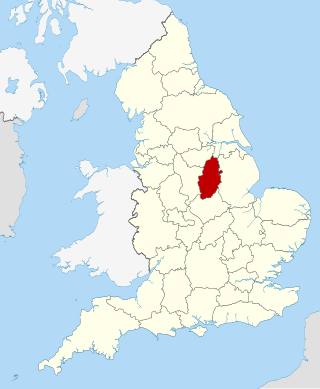
Nottinghamshire Police is the territorial police force responsible for policing the shire county of Nottinghamshire and the unitary authority of Nottingham in the East Midlands area of England. The area has a population of just over 1 million.

The Surrey Fire and Rescue Service is the statutory fire and rescue service for the County of Surrey, England, with 25 fire stations. It comes under the administrative and legislative control of Surrey County Council, acting as the fire authority who fund the service by collecting a precept via council tax, and from central government funds, known as a grant settlement, and provide the political leadership for the service.

Greater Manchester Fire and Rescue Service (GMFRS) is the statutory emergency fire and rescue service for the metropolitan county of Greater Manchester, England. It is part of the Greater Manchester Combined Authority.

East Sussex Fire & Rescue Service (ESFRS) is the statutory fire and rescue service for the county of East Sussex and city of Brighton and Hove, England. It is headquartered in Lewes. The service has a total of 24 fire stations.

The Northamptonshire Fire and Rescue Service (NFRS) is a fire and rescue service covering the county of Northamptonshire, United Kingdom. NFRS covers an area of 948 square miles (2,460 km2) area with a population of around 750,000.
Crime statistics in the United Kingdom refers to the data collected in the United Kingdom, and that collected by the individual areas, England and Wales, Scotland and Northern Ireland, which operate separate judicial systems. It covers data related to crime in the United Kingdom. As with crime statistics elsewhere, they are broadly divided into victim studies and police statistics. More recently, third-party reporting is used to quantify specific under-reported issues, for example, hate crime.

Dorset & Wiltshire Fire and Rescue Service is a statutory emergency fire and rescue service covering the local authority areas of Wiltshire, Swindon, Dorset and Bournemouth, Christchurch and Poole in England.

In England and Wales, the principle of the National Crime Recording Standard is to direct how statistics about notifiable offences are collected by police forces. An important distinction is made between notifiable offence recording and police incident reporting. The National Crime Recording Standard is about how statistics about notifiable offences are recorded. The National Standard for Incident Recording direct how information and statistics about police non-crime incidents are recorded. The Government has delegated the task of inspecting a police forces compliance with the National Crime Recording Standard to Her Majesty’s Inspectorate of Constabulary and Fire Rescue Service (HMICFS), previously called Her Majesty’s Inspectorate of Constabulary.
