An assault is the act of inflicting physical harm or unwanted physical contact upon a person or, in some specific legal definitions, a threat or attempt to commit such an action. It is both a crime and a tort and, therefore, may result in either criminal and/or civil liability. Generally, the common law definition is the same in criminal and tort law.

The Australian Capital Territory, formerly known as the Federal Capital Territory until 1938 and commonly referred to as the ACT, is a federal territory of Australia containing the Australian capital city of Canberra and some surrounding townships. It is located in the south-east of the country and enclaved within the state of New South Wales. Founded after federation as the seat of government for the new nation, all important institutions of the Australian federal government are centred in the Territory.

The Parliament of the United Kingdom of Great Britain and Northern Ireland, commonly known internationally as the UK Parliament, British Parliament, or Westminster Parliament, and domestically simply as Parliament, is the supreme legislative body of the United Kingdom, the Crown dependencies and the British Overseas Territories. It alone possesses legislative supremacy and thereby ultimate power over all other political bodies in the UK and the overseas territories. Parliament is bicameral but has three parts, consisting of the Sovereign, the House of Lords, and the House of Commons. The two houses meet in the Palace of Westminster in the City of Westminster, one of the inner boroughs of the capital city, London.
Money laundering is the process of concealing the origins of money obtained illegally by passing it through a complex sequence of banking transfers or commercial transactions.

In law, treason is criminal disloyalty to the state. It is a crime that covers some of the more extreme acts against one's nation or sovereign. This usually includes things such as participating in a war against one's native country, attempting to overthrow its government, spying on its military, its diplomats, or its secret services for a hostile and foreign power, or attempting to kill its head of state. A person who commits treason is known in law as a traitor.
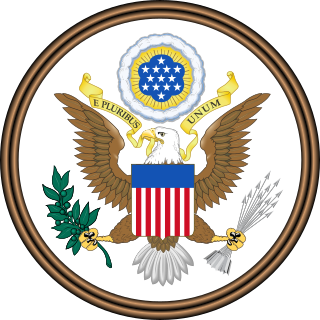
The USA PATRIOT Act is an Act of the U.S. Congress that was signed into law by President George W. Bush on October 26, 2001. The title of the Act is a contrived three letter initialism (USA) preceding a seven letter acronym (PATRIOT), which in combination stand for Uniting and Strengthening America by Providing Appropriate Tools Required to Intercept and Obstruct Terrorism Act of 2001. The acronym was created by a 23 year old Congressional staffer, Chris Kyle.

Canberra
is the capital city of Australia. With a population of 410,301, it is Australia's largest inland city and the eighth-largest city overall. The city is located at the northern end of the Australian Capital Territory, 280 km (170 mi) south-west of Sydney, and 660 km (410 mi) north-east of Melbourne. A resident of Canberra is known as a Canberran. Although Canberra is the capital and seat of government, many federal government ministries have secondary seats in state capital cities, as do the Governor-General and the Prime Minister.

Lyndon Baines Johnson, often referred to as LBJ, was an American politician who served as the 36th president of the United States from 1963 to 1969. Formerly the 37th vice president of the United States from 1961 to 1963, he assumed the presidency following the assassination of President John F. Kennedy. A Democrat from Texas, Johnson also served as a United States Representative and as the Majority Leader in the United States Senate. Johnson is one of only four people who have served in all four federal elected positions.

The United States Department of Transportation is a federal Cabinet department of the U.S. government concerned with transportation. It was established by an act of Congress on October 15, 1966, and began operation on April 1, 1967. It is governed by the United States Secretary of Transportation.

The United States Department of Agriculture (USDA), also known as the Agriculture Department, is the U.S. federal executive department responsible for developing and executing federal laws related to farming, forestry, and food. It aims to meet the needs of farmers and ranchers, promote agricultural trade and production, work to assure food safety, protect natural resources, foster rural communities and end hunger in the United States and internationally.

The United States Department of Education, also referred to as the ED for (the) Education Department, is a Cabinet-level department of the United States government. It began operating on May 4, 1980, having been created after the Department of Health, Education, and Welfare was split into the Department of Education and the Department of Health and Human Services by the Department of Education Organization Act, which President Jimmy Carter signed into law on October 17, 1979.
The ACT is a standardized test used for college admissions in the United States. It was first introduced in November 1959 by University of Iowa professor Everett Franklin Lindquist as a competitor to the Scholastic Aptitude Test (SAT). It is currently administered by ACT, a nonprofit organization of the same name.
The Provinces of the Philippines are the primary political and administrative divisions of the Philippines. There are 81 provinces at present, further subdivided into component cities and municipalities. The National Capital Region, as well as independent cities, are independent of any provincial government. Each province is governed by an elected legislature called the Sangguniang Panlalawigan and by an elected governor.
The Civil Rights Act of 1964 is a landmark civil rights and labor law in the United States that outlaws discrimination based on race, color, religion, sex, or national origin. It prohibits unequal application of voter registration requirements, and racial segregation in schools, employment, and public accommodations.
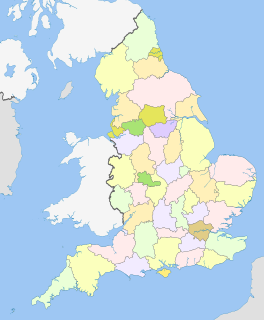
The ceremonial counties, also referred to as the lieutenancy areas of England, are areas of England to which a Lord Lieutenant is appointed. Legally the areas in England, as well as in Wales and Scotland, are defined by the Lieutenancies Act 1997 as counties and areas for the purposes of the lieutenancies in Great Britain, in contrast to the areas used for local government. They are also informally known as geographic counties, as often representing more permanent features of English geography, and to distinguish them from counties of England which have a present-day administrative function.

India is a federal union comprising 29 states and 7 union territories, for a total of 36 entities. The states and union territories are further subdivided into districts and smaller administrative divisions.

Succession to the British throne is determined by descent, sex, legitimacy, and religion. Under common law, the Crown is inherited by a sovereign's children or by a childless sovereign's nearest collateral line. The Bill of Rights 1689 and the Act of Settlement 1701 restrict succession to the throne to the legitimate Protestant descendants of Sophia of Hanover who are in "communion with the Church of England". Spouses of Roman Catholics were disqualified from 1689 until the law was amended in 2015. Protestant descendants of those excluded for being Roman Catholics are eligible.

The conservation status of a group of organisms indicates whether the group still exists and how likely the group is to become extinct in the near future. Many factors are taken into account when assessing conservation status: not simply the number of individuals remaining, but the overall increase or decrease in the population over time, breeding success rates, and known threats. Various systems of conservation status exist and are in use at international, multi-country, national and local levels as well as for consumer use.

The United Kingdom (UK) comprises four countries: England, Scotland and Wales and Northern Ireland.

