Paul M. A. Charles Paray was a French conductor, organist and composer. He is best remembered in the United States for being the resident conductor of the Detroit Symphony Orchestra for more than a decade.

Carlos Schwabe was a Swiss Symbolist painter and printmaker.

Jacques Grévin was a French playwright.

Charles Oberthür was a French entomologist specializing in Lepidoptera. He was the son of François-Charles Oberthür.
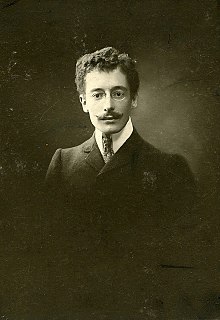
Victor Segalen was a French naval doctor, ethnographer, archeologist, writer, poet, explorer, art-theorist, linguist and literary critic.

Martha Angelici, was a French operatic soprano of Corsican origin, particularly associated with the French lyric repertoire.

Polyphème is an opera composed by Jean Cras with a libretto by Albert Samain. It was written by Cras during World War I and was premiered in Paris in 1922, giving Cras a burst of notoriety in the French press.
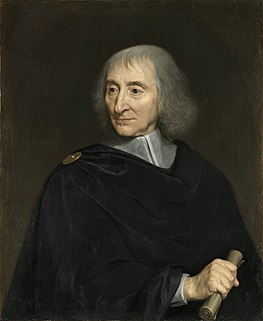
Robert Arnauld d’Andilly was a Frenchconseiller d’État, specialising in financial questions, in the court of Marie de' Medici. By the elegance of his language, he was among the major poets, writers and translators of 17th century French classicism. A fervent Catholic, he played an important role in the history of Jansenism and was one of the Solitaires of Port-Royal-des-Champs. He was also renowned for his part in the development of the pruning of fruit trees, to which he was devoted.

Germaine Cernay, born Germaine Pointu was a French mezzo-soprano who was active both in the opera house and on the concert platform.
Marcel Claudel was a Belgian operatic tenor. He debuted at La Monnaie as Wilhelm Meister in Ambroise Thomas' Mignon in 1922. During the 1960s he taught at the Conservatoire of Mons. Musique en Wallonie issued a disc of his recordings in 2003.
Marcelle Fanny Henriette Soulage was a French pianist, music critic and composer.

Les deux aveugles de Tolède is an opéra comique in one act by the French composer Étienne Méhul. It premiered at the Opéra-Comique, Paris on 28 January 1806. The libretto, by Benoît-Joseph Marsollier, is a revision of the same author's Les deux aveugles de Bagdad, set by A.J. Fournier in 1782.

Paul-Napoléon Roinard was a French anarchist poet.
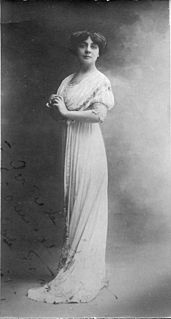
Rosalie Gautier, Rose Féart on stage, was a Franco-Swiss singer (soprano) and singing teacher.
Robert Planel was a French composer, music pedagogue and violinist.
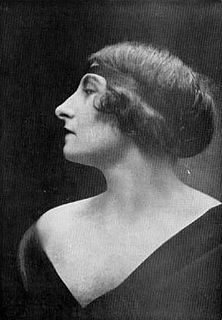
Suzanne Berchut, called Suzanne Balguerie was a French operatic singer. Admired by Fauré, Dukas, Poulenc, and Messiaen, she was one of the greatest sopranos of the interwar period.
Gérard Condé is a French composer and music critic.


