
John Paul Vann was a lieutenant colonel in the United States Army, later retired, who became well known for his role in the Vietnam War. Although separated from the military before the Vietnam War reached its peak, he returned to service as a civilian and by the waning days of the war was the first American civilian to command troops in regular combat there. He received the Presidential Medal of Freedom and was the only civilian in Vietnam to receive the Distinguished Service Cross. He died in a helicopter crash in 1972 at 47 years old.
This is a list of non-U.S. recipients of U.S. gallantry awards.

Campaign streamers are decorations attached to military flags to recognize particular achievements or events of a military unit or service. Attached to the headpiece of the assigned flag, the streamer often is an inscribed ribbon with the name and date denoting participation in a particular battle, military campaign, or theater of war; the ribbon's colors are chosen accordingly and frequently match an associated campaign medal or ribbon bar. They often are physical manifestations of battle honours, though this does not mean all streamers are battle honours. They should not be confused with a tassel, which is usually purely decorative in nature.

The orders and decorations conferred upon civilians and military personnel in the Republic of the Philippines, are listed by order of precedence. The first list is of civilian awards, which take precedence over and above military awards. The next list is of awards conferred upon the military or formerly military units. Philippine civilian orders and decorations are conferred by the President of the Philippines, in his or her capacity as head of state. In certain instances, the conferment of certain orders and decorations requires the concurrence of the Congress of the Philippines, or of certain advisory bodies.
Authorized foreign decorations of the United States military are those military decorations which have been approved for wear by members of the United States armed forces but whose awarding authority is the government of a country other than the United States.
Awards and decorations of the Vietnam War were military decorations which were bestowed by the major warring parties during the years of the Vietnam War. North Vietnam, South Vietnam, and the United States all issued awards and decorations during the conflict.
The Republic of Korea Presidential Unit Citation is a military unit award of the government of South Korea that may be presented to South Korean military units, and foreign military units for outstanding performance in defense of the Republic of Korea. In recognition of allied military service to South Korea during the Korean War, all United States military departments were authorized the unit award for that period.

1st Battalion, 4th Marines (1/4) is an infantry battalion in the United States Marine Corps based out of Marine Corps Base Camp Pendleton, California consisting of approximately 800 Marines and sailors. They fall under the command of the 1st Marine Regiment and the 1st Marine Division.
The 27th Infantry Regiment, nicknamed the "Wolfhounds", is a unit of the United States Army established in 1901, that served in the Philippine–American War, in the Siberian Intervention after World War I, and as part of the 25th Infantry Division during World War II, the Korean War, and later the Vietnam War. More recently the regiment deployed to Afghanistan for the second time, following two deployments to Iraq. The regimental march is the Wolfhound March.
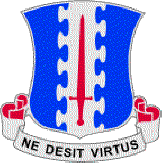
The 3rd Battalion, 187th Infantry Regiment, also known as the Iron Rakkasans, is a battalion of the US Army 187th Infantry Regiment. The battalion was activated on 25 February 1943, and first saw action in the Pacific Theater of the Second World War, during the battle to regain US control of the Philippines. Troops from the battalion then served in the four-year occupation of Japan, where they earned their nickname "Rakkasans", before stationing in Fort Campbell, Kentucky. The battalion served in the Korean War from 1950 as the 187th Airborne Regimental Combat Team and participated in 12 major missions during the Vietnam War, emerging from that conflict as the US’s most highly decorated airborne battalion. In the 1990s the battalion served in Iraq as part of Operation Desert Shield and Operation Desert Storm, then in the first decade of the 21st century in Afghanistan and again in Iraq as part of Operation Iraqi Freedom. The battalion has received numerous awards and commendations, including six Presidential Unit Citations and four Valorous Unit Awards.

The 38th Infantry Regiment is a United States Army infantry regiment.

The Philippine Expeditionary Forces to Korea (PEFTOK) was the Philippine Army contingent of the United Nations forces that fought in the Korean War (1950–1953). The unit arrived in Korea in August 1950. It was composed of 1,468 troops, and was the fifth largest force under the United Nations Command. The PEFTOK took part in the Battle of Yultong and the Battle of Hill Eerie. The unit operated alongside the United States 1st Cavalry Division, 3rd Infantry Division, 25th Infantry Division, and 45th Infantry Division.
The 46th Engineer Battalion is a military engineer unit in the United States Army that was formally established in 1917.
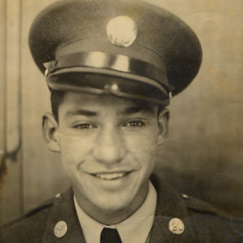
Mike Castaneda Pena was a U.S. Army veteran of World War II and the Korean War, and a recipient of the Medal of Honor for his actions at the Battle of Tabu-dong.

The 122nd Signal Battalion was constituted 1 July 1916 in the United States Regular Army, then organized to Fort Bliss in Texas on 10 October 1916. On 21 September 1917, the unit was assigned to the 2nd Infantry Division.
This page is based on this
Wikipedia article Text is available under the
CC BY-SA 4.0 license; additional terms may apply.
Images, videos and audio are available under their respective licenses.

