See also
 | This disambiguation page lists articles associated with the title South Sulawesi campaign. If an internal link led you here, you may wish to change the link to point directly to the intended article. |
South Sulawesi campaign or South Sulawesi expedition may refer to:
| | This disambiguation page lists articles associated with the title South Sulawesi campaign. If an internal link led you here, you may wish to change the link to point directly to the intended article. |

Sulawesi, formerly known as Celebes, is one of the four Greater Sunda Islands. It is governed by Indonesia. The world's eleventh-largest island, it is situated east of Borneo, west of the Maluku Islands, and south of Mindanao and the Sulu Archipelago. Within Indonesia, only Sumatra, Borneo and Papua are larger in territory, and only Java and Sumatra have larger populations.
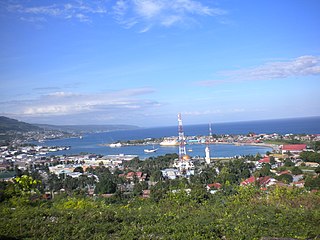
Central Sulawesi is a province of Indonesia located at the centre of the island of Sulawesi. The administrative capital and largest city is located in Palu. The 2010 census recorded a population of 2,633,420 for the province, while the latest official estimate is 2,839,290. Central Sulawesi has an area of 61,841.29 km2 (23,877 sq mi), the largest area among all provinces on Sulawesi Island, and has the second-largest population on Sulawesi Island after the province of South Sulawesi. It is bordered by the provinces of Gorontalo to the north, West Sulawesi, South Sulawesi and South East Sulawesi to the south, by Maluku to the east, and by the Makassar Strait to the west. The province is inhabited by many ethnic groups, such as the Kaili, Tolitoli, etc. The official language of the province is Indonesian, which is used for official purposes and inter-ethnic communication, while there are several indigenous language spoken by the Indigenous peoples of Central Sulawesi. Islam is the dominant religion in the province, followed by Christianity which are mostly adhered by the people in the eastern part of the province.

South Sulawesi is a province in the southern peninsula of Sulawesi. The Selayar Islands archipelago to the south of Sulawesi is also part of the province. The capital is Makassar. The province is bordered by Central Sulawesi and West Sulawesi to the north, the Gulf of Bone and Southeast Sulawesi to the east, Makassar Strait to the west, and Flores Sea to the south.

North Sulawesi is a province of Indonesia. It is located on the northeastern peninsula of the island of Sulawesi, on the Minahasa Peninsula, lies south of Philippines and southeast of Sabah, Malaysia. It borders Davao and Soccsksargen regions of the Philippines to the north, the Maluku Sea to the east, Gorontalo and Celebes Sea to the west and the Gulf of Tomini to the southwest. The province's area is 13851.64 sq.km, and its population was 2,270,596 according to the 2010 census; this rose to 2,409,921 at the 2015 Intermediate Census, and the latest official estimate is 2,512,900.
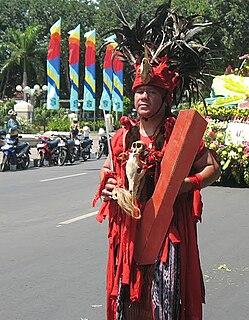
The Minahasans are an ethnic group located in the North Sulawesi province of Indonesia, formerly known as North Celebes. The Minahasa people sometimes refer to themselves as Manado people. Despite the fact that the Minahasan pre-Christian creation myth entails some form of ethnic unification, before the nineteenth century the Minahasa region was in no way unified. Instead, a number of politically independent groups (walak) existed together, often in a permanent state of war.

Bone was a Bugis sultanate in the south-west peninsula of Sulawesi, now part of modern-day Indonesia. Covering an area of 2,600 square kilometres (1,000 sq mi), Bone's chief town Watampone, lies 130 kilometres (81 mi) northeast of the city of Makassar. Its rulers were called the arumpone or the arung (ruler) of Bone.

The Java War or Diponegoro War was fought in central Java from 1825 – 1830, between the colonial Dutch Empire and native Javanese rebels. The war started as a rebellion led by Prince Diponegoro, a leading member of the Javanese aristocracy who had previously cooperated with the Dutch.

Kendari is the capital of the Indonesian province of Southeast Sulawesi. The city lies along Kendari Bay. Moramo Waterfall is located 65 km east of Kendari. The city has a population of 359,371 at 2017, making it the fourth-largest city in Sulawesi, behind Makassar, Manado, and Palu.
This is a list of some of the Regions of Indonesia. Many regions are defined in law or regulations by the central government. At different times of Indonesia's history, the nation has been designated as having regions that do not necessarily correlate to the current administrative or physical geography of the territory of the nation.
The Sultanate of Ternate, previously also known as The Kingdom of Gapi is one of the oldest Muslim kingdoms in Indonesia besides Tidore, Jailolo, and Bacan. Sultanate of Ternate was established by Momole Ciko, the first leader of Ternate, with the title Baab Mashur Malamo, in 1257. It reached its Golden Age during the reign of Sultan Baabullah (1570–1583) and encompassed most of the eastern part of Indonesia and a part of southern Philippines. Ternate was a major producer of cloves and a regional power from the 15th to 17th centuries.

The Second Bone War was fought from 20 February 1859 until 20 January 1860 between the forces of the Dutch East Indies and the Kingdom of Bone.
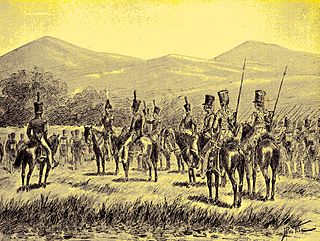
The First Bone War was a series of punitive expeditions of the Royal Netherlands East Indies Army against the Bone state in South Sulawesi in 1824–25.
The South Sulawesi Campaign was a campaign of the Indonesian National Revolution. It pitted local Indonesian Republicans on the island of Sulawesi against the Dutch who sought to re-assert their authority. The Dutch counter-insurgency offensive was masterminded by the controversial Raymond Westerling, a Captain in the KNIL. Westerling's operation, which started in December 1946 and ended in February 1947, succeeded in eliminating the insurgency and undermining local support for the Republicans by instituting summary executions of suspected enemy fighters.
The Makassar Uprising was a skirmish in Makassar, Sulawesi between former Royal Dutch East Indies Army soldiers under Captain Andi Aziz and the Republic of the United States of Indonesia government. The purpose of the uprising was to revolt against the incorporation of the Indonesian federated "states" into the Indonesian Republic. However, the uprising was quashed in a little over two weeks when troops under Lieutenant Colonel Suharto and Colonel Alexander Evert Kawilarang arrived at Makassar to find light only resistance.
Pong Tiku, known among his Buginese allies as Ne' Baso, was a Torajan leader and guerrilla fighter who operated in southern Sulawesi, part of modern-day Indonesia.
The South Sulawesi expeditions of 1905, which included the Third Bone War and the Gowa War, were undertaken by the Royal Netherlands East Indies Army (KNIL) to force the states of south Sulawesi (Celebes) to sign the Korte Verklaring, the standard agreement whereby a native Indonesian ruler agreed to accept Dutch sovereignty. According to certain Dutch historians, the expeditions were an "obligation", because the Dutch had responsibility for law and order. One Indonesian historian has argued that it was actually strategic: that south Sulawesi was the "key" to controlling the so-called Great East. There was also an economic motive: to extend the tax-collecting powers of the government of Sulawesi. The expeditions received the imprimatur of the Governor of Sulawesi, Alexander Kroesen, in a letter dated 11 February 1904.

The military history of Indonesia includes the military history of the modern nation of Republic of Indonesia, as well as the military history of the states which preceded and formed it. It encompassed a kaleidoscope of conflicts spanning over a millennia. The ancient and medieval part of it began as tribal warfare began among indigenous populations, and escalated as kingdoms emerged. The modern part is defined by foreign colonial occupations, battles for independence through guerrilla warfare during Indonesian National Revolution, regional conquests and disputes with neighbouring countries, as well as battles between the Republic and separatist factions. Since the formation of the Republic, the military has played significant role in state affairs. However, in Post-Suharto era, the Indonesian military has retreated from politics, yet it still possesses some influences.
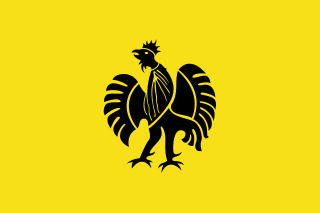
Sultanate of Gowa was one of the great kingdoms and the most successful kingdom in the South Sulawesi region. People of this kingdom come from the Makassar tribe who lived in the south end and the west coast of southern Sulawesi.

Gorontalo is a province of Indonesia on the island of Sulawesi. Located on the Minahasa Peninsula, Gorontalo was formerly part of the province of North Sulawesi until its inauguration on 5 December 2000. In Indonesia history, the only Indonesian President from the Gorontaloan people is the 3rd President of the Republic of Indonesia, Prof. DR. Ing. B.J. Habibie. His father, Alwi Abdul Jalil Habibie comes from the "Habibie" clan.

Arung Palakka, or La Tenritatta to Unru' was a 17th-century Bugis prince and warrior. He supported the Dutch East India Company (VOC) in the Makassar War (1666–1669) against the Gowa Sultanate in his native South Sulawesi. After the defeat of Gowa, he became the King of Bone and South Sulawesi's most powerful man.