This page is based on this
Wikipedia article Text is available under the
CC BY-SA 4.0 license; additional terms may apply.
Images, videos and audio are available under their respective licenses.

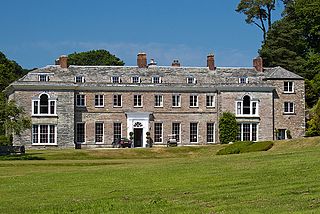
William Wyndham Grenville, 1st Baron Grenville, was a British Pittite Tory and politician who served as Prime Minister of the United Kingdom from 1806 to 1807, though he was a supporter of the British Whig Party for the duration of the Napoleonic Wars.
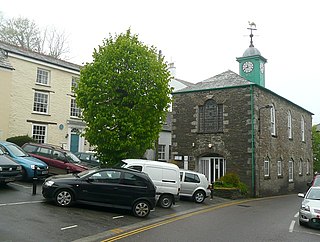
Camelford is a town and civil parish in north Cornwall, England, United Kingdom, situated in the River Camel valley northwest of Bodmin Moor. The town is approximately ten miles (16 km) north of Bodmin and is governed by Camelford Town Council. Lanteglos-by-Camelford is the ecclesiastical parish in which the town is situated. The ward population at the 2011 Census was 4,001. The Town population at the same census was 865 only
Thomas Coventry may refer to:

Earl of Londonderry is a title that has been created three times in the Peerage of Ireland. The first creation came in 1622 in favour of Thomas Ridgeway, 1st Baron Ridgeway, who served as Treasurer of Ireland and was involved in the colonisation of Ulster. He had already been created a Baronet, of Torrington in the County of Devon, in 1611, Lord Ridgeway, Baron of Gallen-Ridgeway, in the Peerage of Ireland, in 1616, and was made Viscount Gallen-Ridgeway at the same time as he was granted the earldom, also in the Peerage of Ireland. The titles became extinct on the death of his great-grandson, the fourth Earl, in 1714.
Thomas Lyttelton may refer to:

Earl of Chatham, in the County of Kent, was a title in the Peerage of Great Britain. It was created in 1766 for William Pitt the Elder on his appointment as Lord Privy Seal, along with the subsidiary title Viscount Pitt, of Burton Pynsent in the County of Somerset, also in the Peerage of Great Britain.
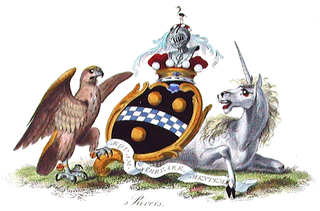
Baron Rivers was a title that was created four times in British history, twice in the Peerage of England, once in the Peerage of Great Britain and once in the Peerage of the United Kingdom.

Lord Camelford, Baron of Boconnoc, in the County of Cornwall, was a title in the Peerage of Great Britain. It was created in 1784 for Thomas Pitt, who had previously represented Old Sarum and Okehampton in Parliament. A member of the famous Pitt family, he was the son of Thomas Pitt of Boconnoc, the great-grandson of Thomas Pitt, the great-nephew of Thomas Pitt, 1st Earl of Londonderry, the nephew of William Pitt, 1st Earl of Chatham and the cousin of William Pitt the Younger. Lord Camelford was also the father-in-law of William Grenville, 1st Baron Grenville. The title became extinct on the death of his only son, the second Baron, who was killed in a duel in 1804.
Thomas Pitt, 2nd Baron Camelford was a British peer, naval officer and wastrel, best known for bedevilling George Vancouver during and after the latter's great voyage of exploration.
Sir Thomas Lyttelton, 4th Baronet, of Hagley Hall, Worcestershire, was an English landowner and Whig politician who sat in the House of Commons from 1721 to 1741. He held office as one of the Lords of the Admiralty from 1727 to 1741.
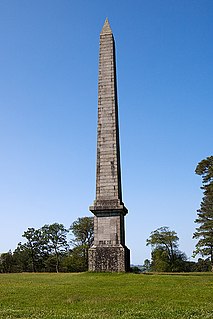
Lt-General Sir Richard Lyttelton KB was a British soldier and politician who served in the British Army.
John Pitt (1698–1754) was a British Army officer, colonial administrator and politician who sat in the House of Commons between 1720 and 1734.
Ridgeway Pitt, 3rd Earl of Londonderry was a British politician and peer.
Josias Du Pré Porcher was an English politician. After following his uncle into the service of the British East India Company, he became wealthy and returned to England, although he was frustrated in an attempt to obtain a directorship of the company. His wealth and his friendship with Lord Caledon enabled him to sit in Parliament for various boroughs until 1818, although he was not a particularly conspicuous member. He died at his country home in Devonshire in 1820.
The Pitt family were an English aristocratic family whose members included the Earls of Chatham, the Earls of Londonderry and the Barons Camelford. The family produced two British Prime Ministers: William Pitt, 1st Earl of Chatham, and his son William Pitt the Younger.

Anne Grenville, Baroness Grenville was an English noblewoman and author, part of the Pitt family which at the time dominated British politics.
Pinckney Wilkinson was a British merchant and politician who sat in the House of Commons from 1774 to 1784.