| |
|---|
A thromde (Dzongkha: ཁྲོམ་སྡེ་; Wylie: khrom-sde) is a second-level administrative division in Bhutan. The legal administrative status of thromdes was most recently codified under the Local Government Act of 2009, and the role of thromdes in elections in Bhutan was defined in the Election Act of 2008
Thromde administration is a product of the Bhutanese program of decentralization and devolution of power and authority. [1] : Preamble Thromdes are administered independently by a Thromde Tshogde if sufficiently developed and populated (Class A Thromdes); or directly by Dzongkhag Administration or the Gewog Administration as decided by the Government (Class B Thromdes and Yenlag Thromdes). From time to time, Parliament decides the boundaries of Thromde in consultation with the National Land Commission Secretariat and local authorities. [1] : §§ 11–18, 85
Each Thromde Tshogde is composed of seven to ten elected members and headed by a Thrompon. Thromde Tshogdes are empowered to regulate advertising, enforce public health and safety rules, and to levy taxes on land, property, property transfer (sales tax) and, "betterment." The municipal governments are also authorized to levy special taxes on vacant and underdeveloped land to encourage development, and to raise and spend money in to promote local economic development. [1] : §§ 61–65
The administrations overseeing Class B Thromdes and Yenlag Thromdes are tasked with encouraging and overseeing their progressive development into Class A Thromdes – locally governed municipalities. [1] : § 17
Although Class A and Class B Thromdes were established ahead of local elections in 2011, Yenlag Thromdes were to be declared only after the second parliamentary elections in 2013. This would be followed by another delimitation of the 16 Dzongkhag Thromdes (Class B) and a review of chiwog numbers and boundaries affected by the declaration of the Yenlag Thromdes. [2] In 2015 a list was approved by parliament of updated Dzongkhag and Yenlag Thromdes boundaries. [3] As of 2017 there are only four self-governing Thromde (Dzongkhag Thromde class A) : Thimphu, [4] Phuentsholing, [5] Gelephu [6] and Samdrup Jongkhar. [7] [8]
Under the Geog Yargay Tshochung of 2002, gewog administration included non-votingTshogpa, representatives of villages or village clusters. [9] Through the enactment of the Act of 2009, gewogs were divided administratively into representatives by chiwogs, or village groups. [10]
The Local Government Act of 2007 was the first piece of Bhutanese legislation to provide distinctions among thromdes, dividing them into two classes: Dzongkhag Thromdes, which lacked the developmental capacity to form administrations in their own right; and Gyelong Thromdes, which were independent, non-legislating municipalities administered by a Gyelyong Thromde Tshogdu (Gyelyong administration). Each Gyelong administration was headed by an Executive Secretary. The administrative role of Gyelong Thromde Tshogdus were largely analogous to later roles for more developed municipalities. [10] [11] [9]
The Constitution of 2008 confirmed the status of thromdes, providing for Thromde Tshogdes as the most basic level of some local government administration; for other thromdes, administration was provided directly through Dzongkhag Thromde representation by one elected member from Dzongkhag Thromdes, and a second from Dzongkhag Yenlag Thromdes. The Constitution provided the basic legal framework for thromde administrations in the terms that continue today. [12]
The following is a list of thromdes by dzongkhag, gewog, and rank: [13] [14]
| Dzongkhag | Gewog | Thromde. [15] [16] | Rank [17] [18] |
|---|---|---|---|
Bumthang [19] | Chhoekhor ཆོས་འཁོར་ | Jakar or Bumthang [20] | Dzongkhag Thromde Class B |
Chhukha [21] | Bjachho བྱག་ཕྱོགས་ | Tsimasham | Yenlag Thromde |
| Phuentsholing ཕུན་ཚོགས་གླིང་ | Phuentsholing | Dzongkhag Thromde Class A | |
| Sampheling བསམ་འཕེལ་གླིང་ | |||
Dagana [22] | Goshi སྒོ་བཞི་ | Daga or Dagana | Dzongkhag Thromde Class B |
| Lhamoy Zingkha སྒོ་བཞི་ | Lhamoyzhingkha | Yenlag Thromde | |
Gasa [23] | Khatoe ཁ་སྟོད་ | Gasa | Dzongkhag Thromde Class B |
| Khatoe ཁ་སྟོད་ | Damji | Yenlag Thromde | |
Haa [24] | Katsho སྐར་ཚོགས་ | Ha or Haa | Dzongkhag Thromde Class B |
| Uesu དབུས་སུ་ | |||
| Sama ས་དམར་་ | Jyenkana | Yenlag Thromde | |
Lhuentse [25] | Gangzur སྒང་ཟུར་ | Lhuentse | Dzongkhag Thromde Class B |
| Tsenkhar སྒང་ཟུར་ | Autsho | Yenlag Thromde | |
Mongar [26] | Mongar མོང་སྒར་ | Mongar | Dzongkhag Thromde Class B |
| Ngatshang སྔ་ཚང་ | Yadi | Yenlag Thromde | |
Paro [27] | Wangchang ཝང་ལྕང་ | Paro | Dzongkhag Thromde Class B |
Pema Gatshel [28] | Shumar ཤུ་མར་ | Pemagatshel | Dzongkhag Thromde Class B |
Punakha [29] | Guma གུ་མ་ | Punakha | Dzongkhag Thromde Class B |
| Guma གུ་མ་ | Lobeysa | Yenlag Thromde | |
Samdrup Jongkhar [30] | Dewathang དབེ་བ་ཐང་ | Samdrup Jongkhar | Dzongkhag Thromde Class A |
| Dewathang or Deothang (merged with Samdrup Jongkhar Thromde) [31] | Yenlag Thromde | ||
| Phuentshothang ཕུན་ཚོགས་ཐང | Samdrupcholing | Yenlag Thromde | |
Samtse [32] | Samtse བསམ་རྩེ་ | Samtse | Dzongkhag Thromde Class B |
| Phuentshogpelri ཕུན་ཚོགས་དབལ་རི་་ | Gomtu | Yenlag Thromde | |
Sarpang [33] | Gelephu དགེ་ལེགས་ཕུ་ | Gelephu | Dzongkhag Thromde Class A |
| Gakiling, Shompangkha | Sarpang [34] | Dzongkhag Thromde Class B | |
Thimphu [35] | Chang ལྕང་ | Thimphu | Dzongkhag Thromde Class A |
| Kawang ཀ་ཝང་ | |||
| Mewang སྨད་ཝང | Khasadrapchu | Yenlag Thromde | |
Trashigang [36] | Samkhar བསམ་མཁར་ | Trashigang | Dzongkhag Thromde Class B |
| Shongpu ་ཤོང་ཕུག | Rangjung | Yenlag Thromde | |
Trashi Yangtse [37] | Bumdeling བུམ་སྡེ་གླིང་ | Trashiyangtse | Dzongkhag Thromde Class B |
| Khamdang བུམ་སྡེ་གླིང་ | Duksum [38] | Yenlag Thromde | |
Trongsa [39] | Nubi ནུ་སྦིས་ | Trongsa | Dzongkhag Thromde Class B |
| Dragteng ་བྲག་སྟེང | Kuengarabten | Yenlag Thromde | |
Tsirang [40] | Kikhorthang དཀྱིལ་འཁོར་ཐང་ | Damphu [38] | Dzongkhag Thromde Class B |
| Mendrelgang མནྜལ་སྒང | Mendrelgang | Yenlag Thromde | |
Wangdue Phodrang [41] | Thedtsho ཐེད་ཚོ་ | Wangdue Phodrang | Dzongkhag Thromde Class B |
Wangdue Phodrang [42] | Dangchhu ཐེད་ཚོ་ | Nobding [38] | Yenlag Thromde |
Zhemgang [43] | Trong ཀྲོང་ | Zhemgang | Dzongkhag Thromde Class B |
| Ngangla ངང་ལ་ | Panbang | Yenlag Thromde | |
The Kingdom of Bhutan is divided into 20 districts. Bhutan is located between the Tibet Autonomous Region of China and India on the eastern slopes of the Himalayas in South Asia.
Dagana District is a district located in Bhutan. Most of the district is populated by Dzongkha speakers. However, in the southwest part near the Sarpang District, Nepali is also spoken as a native language.
Elections in Bhutan are conducted at national (Parliamentary) and local levels. Suffrage is universal for citizens 18 and over, and under applicable election laws. In national elections, political party participation is mainly restricted to the lower house of Parliament, and by extension, to the executive nominated by its majority.
A gewog, in the past also spelled as geog, refers to a group of villages in Bhutan. The head of a gewog is called a gup. Gewogs form a geographic administrative unit below dzongkhag districts, and above Dzongkhag Thromde class B and Yenlag Thromde municipalities. Dzongkhag Thromde class A municipalities have their own independent local government body.
A dungkhag is a sub-district of a dzongkhag (district) of Bhutan. The head of a dungkhag is a Dungpa. As of 2007, nine of the twenty dzongkhags had from one to three dungkhags, with sixteen dungkhags in total.
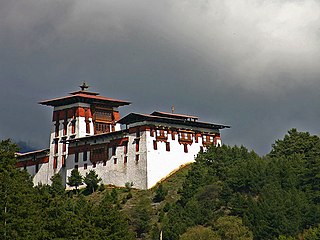
Jakar is a town in the central-eastern region of Bhutan. It is the district capital of Bumthang District and the location of Jakar Dzong, the regional dzong fortress. The name Jakar roughly translates as "white bird" in reference to its foundation myth, according to which a roosting white bird signalled the proper and auspicious location to found a monastery around 1549.
Zhemgang is a town in Zhemgang District, Bhutan. It is the capital of the district, and is located in Trong Gewog.
The development of Bhutanese democracy has been marked by the active encouragement and participation of reigning Bhutanese monarchs since the 1950s, beginning with legal reforms such as the abolition of slavery, and culminating in the enactment of Bhutan's Constitution. The first democratic elections in Bhutan began in 2007, and all levels of government had been democratically elected by 2011. These elections included Bhutan's first ever partisan National Assembly election. Democratization in Bhutan has been marred somewhat by the intervening large-scale expulsion and flight of Bhutanese refugees during the 1990s; the subject remains somewhat taboo in Bhutanese politics.
The Parliament of Bhutan consists of the King of Bhutan together with a bicameral parliament. This bicameral parliament is made up of an upper house, the National Council and a lower house, the National Assembly. The current parliamentary framework replaced the unicameral Tshogdu in 2007, with the first members taking seats in 2008.
Daga , also officially referred to as Dagana, is a town in Goshi Gewog, Dagana District in southwestern Bhutan. It is the administrative capital, Dzongkhag Thromde, of the district.
Deothang, also known as Dewathang, is a town in south-eastern Bhutan which falls under Samdrup Jongkhar District. In 2010 it became part of Samdrup Jongkhar municipality (thromde).
The Constitution of Bhutan was enacted 18 July 2008 by the Royal Government of Bhutan. The Constitution was thoroughly planned by several government officers and agencies over a period of almost seven years amid increasing democratic reforms in Bhutan. The current Constitution is based on Buddhist philosophy, international Conventions on Human Rights, comparative analysis of 20 other modern constitutions, public opinion, and existing laws, authorities, and precedents. According to Princess Sonam Wangchuck, the constitutional committee was particularly influenced by the Constitution of South Africa because of its strong protection of human rights.
Gangteng Gewog is a gewog of Wangdue Phodrang District, Bhutan. It used to be known as Gangte or Gangtey.
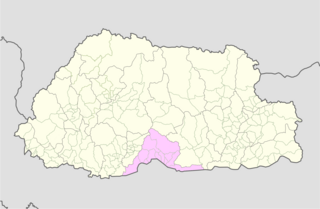
Jigmechholing Gewog, also transliterated as Jigmecholing or Jigmechoeling and formerly known as Surey is a gewog of Sarpang District, Bhutan.
Umling Gewog is a gewog of Sarpang District, Bhutan.
Shumar Gewog is a gewog in Pemagatshel District, Bhutan.
The Local Government Act of Bhutan was enacted on September 11, 2009, by parliament of Bhutan in order to further implement its program of decentralization and devolution of power and authority. It is the most recent reform of the law on Bhutan's administrative divisions: Dzongkhags, Dungkhags, Gewogs, Chiwogs, and Thromdes (municipalities). The Local Government Act of Bhutan has been slightly amended in 2014.
Barshong Gewog is a gewog of Tsirang District, Bhutan.
The Bhutanese local government elections of 2011 were originally slated for 2008, but were delayed until 2011. Elections began on January 20, 2011, however polls opened in only 3 of 20 districts – Thimphu, Chukha District (Phuentsholing), and Samdrup Jongkhar – as part of a staggered election schedule. Polls closed June 27, 2011. Ahead of elections, 1,042 chiwogs, the basis of Bhutan's single-constituency electoral scheme, were slated to elect the leadership of Dzongkhag, Gewog, and Thromde governments.