
Caransebeș is a city in Caraș-Severin County, part of the Banat region in southwestern Romania. One village, Jupa, is administered by the city.

Brașov County is a county (județ) of Romania, in Transylvania. Its capital city is Brașov. The county incorporates within its boundaries most of the Medieval "lands" (țări) Burzenland and Făgăraș.

Sălaj County is a county (județ) of Romania, located in the north-west of the country, in the historical regions of Crișana and Transylvania. It is bordered to the north by Satu Mare and Maramureș counties, to the west and south-west by Bihor County, and to the south-east by Cluj County. Zalău is the county seat, as well as its largest city.

Vršac is a city in the autonomous province of Vojvodina, Serbia. As of 2022, the city urban area had a population of 31,946, while the city administrative area had 45,462 inhabitants. It is located in the geographical region of Banat.

Berettyóújfalu is a town in Hajdú-Bihar county, in center of the Northern Great Plain region of eastern Hungary, near the border with Romania. It is strategically located, being 35 km south of Debrecen, the second largest city in Hungary, and 40 km west of Oradea, the tenth largest city in Romania. Berettyóújfalu is named after the river Berettyó.
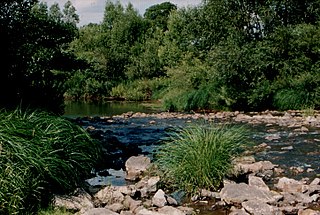
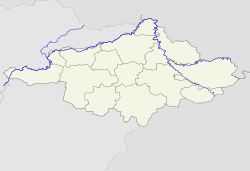
Szabolcs–Szatmár–Bereg is an administrative county in north-eastern Hungary, bordering Slovakia, Ukraine, and Romania. It shares borders with the Hungarian counties Hajdú––Bihar and Borsod–Abaúj–Zemplén. The capital of Szabolcs–Szatmár–Bereg county is Nyíregyháza.

Žitište is a town and municipality located in the Central Banat District of the autonomous province of Vojvodina, Serbia. The town has a population of 2,898, while Žitište municipality has 16,786 inhabitants.
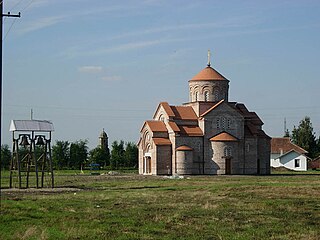
Plandište is a village and municipality located in the South Banat District of the autonomous province of Vojvodina, Serbia. The village has a population of 3,832, while Plandište municipality has 11,336 inhabitants. One of municipality's best known landmarks is Kapetanovo Castle, located in Stari Lec.

Mihai Viteazu is a commune in Cluj County, Transylvania, Romania. It is composed of three villages: Cheia (Mészkő), Cornești (Sinfalva), and Mihai Viteazu.
Angelica Bella was a Hungarian pornographic actress. She worked primarily and enjoyed her greatest popularity in Italy.

Bistra is a commune in Maramureș County, Maramureș, Romania. The Ukrainian border is located to the north of the commune. It is made up of three villages: Bistra, Crasna Vișeului and Valea Vișeului. The first documentary mention of the settlement dates to 1411.

Vállaj is a village in Szabolcs-Szatmár-Bereg county, in the Northern Great Plain region of eastern Hungary. Vállaj is a settlement in the south-eastern corner of Szabolcs-Szatmár-Bereg county, by the Kraszna river, next to the Hungarian-Romanian border.

Ömböly is a village in the Nyírbátor District, in Szabolcs-Szatmár-Bereg county, in the Northern Great Plain region of eastern Hungary.
The history of Cluj-Napoca covers the time from the Roman conquest of Dacia, when a Roman settlement named Napoca existed on the location of the later city, through the founding of Cluj and its flourishing as the main cultural and religious center in the historical province of Transylvania, until its modern existence as a city, the seat of Cluj County in north-western Romania.

Gătaia is a town in Timiș County, Romania. It administers five villages: Butin, Percosova, Sculia, Șemlacu Mare, and Șemlacu Mic. Declared a town in 2004, it also administered four other villages until that time, when they were split off to form Birda commune.

Dumbrava is a commune in Timiș County, Romania. It is composed of three villages: Bucovăț, Dumbrava and Răchita. It is located in the east of Timiș County and borders Făget to the northeast, Fârdea to the southeast, Traian Vuia to the southwest and Mănăștiur to the northwest.

Arad is the capital city of Arad County, at the edge of Crișana and the Banat. No villages are administred by the city. It is the third largest city in Western Romania, behind Timișoara and Oradea, and the 12th largest in Romania, with a population of 145,078.
Szentmihály is the Hungarian name for three places in Romania:

Tiszavasvári is a district in western part of Szabolcs-Szatmár-Bereg County. Tiszavasvári is also the name of the town where the district seat is found. The district is located in the Northern Great Plain Statistical Region.
The 1998–99 Nemzeti Bajnokság II is Hungary's second-level football competition. The championship was won by Lombard FC Tatabánya and they were also promoted to the 1999–2000 Nemzeti Bajnokság I along with Nagykanizsa and Szeged LC. Four teams including Salgótarjáni BTC, Tiszavasvári, Soroksár and Soproni FAC were relegated to the 1999–2000 Nemzeti Bajnokság III.



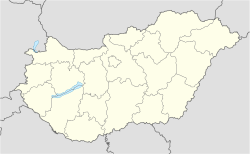
 Hungary


