
An alphabet is a standard set of letters that represent the phonemes of any spoken language it is used to write. This is in contrast to other types of writing systems, such as syllabaries and logographic systems.

The Arabic alphabet or Arabic abjad is the Arabic script as it is codified for writing Arabic. It is written from right to left in a cursive style and includes 28 letters. Most letters have contextual letterforms.
Collation is the assembly of written information into a standard order. Many systems of collation are based on numerical order or alphabetical order, or extensions and combinations thereof. Collation is a fundamental element of most office filing systems, library catalogs, and reference books.
The identity of the longest word in English depends upon the definition of what constitutes a word in the English language, as well as how length should be compared. In addition to words derived naturally from the language's roots, English allows new words to be formed by coinage and construction; place names may be considered words; technical terms may be arbitrarily long. Length may be understood in terms of orthography and number of written letters, or phonology and the number of phonemes.

In linguistics, a grapheme is the smallest unit of a writing system of any given language. An individual grapheme may or may not carry meaning by itself, and may or may not correspond to a single phoneme of the spoken language. Graphemes include alphabetic letters, typographic ligatures, Chinese characters, numerical digits, punctuation marks, and other individual symbols. A grapheme can also be construed as a graphical sign that independently represents a portion of linguistic material.

The Ugaritic script is a cuneiform abjad used from around either the fifteenth century BCE or 1300 BCE for Ugaritic, an extinct Northwest Semitic language, and discovered in Ugarit, Syria, in 1928. It has 30 letters. Other languages were occasionally written in the Ugaritic script in the area around Ugarit, although not elsewhere.
Alphabetical order is a system whereby strings of characters are placed in order based on the position of the characters in the conventional ordering of an alphabet. It is one of the methods of collation. In mathematics, a lexicographical order is the generalization of the alphabetical order to other data types, such as sequences of digits or numbers.
The Greek alphabet has been used to write the Greek language since the late ninth or early eighth century BC. It is derived from the earlier Phoenician alphabet, and was the first alphabetic script to have distinct letters for vowels as well as consonants. In Archaic and early Classical times, the Greek alphabet existed in many different local variants, but, by the end of the fourth century BC, the Eucleidean alphabet, with twenty-four letters, ordered from alpha to omega, had become standard and it is this version that is still used to write Greek today. These twenty-four letters are: Α α, Β β, Γ γ, Δ δ, Ε ε, Ζ ζ, Η η, Θ θ, Ι ι, Κ κ, Λ λ, Μ μ, Ν ν, Ξ ξ, Ο ο, Π π, Ρ ρ, Σ σ/ς, Τ τ, Υ υ, Φ φ, Χ χ, Ψ ψ, and Ω ω.
In the main type of anagram dictionary, the letters in words or phrases are rearranged in alphabetical order, and these transpositions are themselves then ordered alphabetically within word-length groups, so that any words consisting of this group of letters can be found. This arrangement is designed for use in solving word puzzles such as crosswords, or for playing games such as Scrabble. The first such anagram dictionary was The Crossword Anagram Dictionary by R.J. Edwards

In chemistry the descriptor vicinal, abbreviated vic, describes any two functional groups bonded to two adjacent carbon atoms. For example, the molecule 2,3-dibromobutane carries two vicinal bromine atoms and 1,3-dibromobutane does not. Mostly, the use of the term vicinal is restricted to two identical functional groups.

The Abjad numerals, also called Hisab al-Jummal, are a decimal numeral system in which the 28 letters of the Arabic alphabet are assigned numerical values. They have been used in the Arabic-speaking world since before the eighth century when Arabic numerals were adopted. In modern Arabic, the word ʾabjadīyah (أبجدية) means 'alphabet' in general.

A letter is a segmental symbol of a phonemic writing system. The inventory of all letters forms the alphabet. Letters broadly correspond to phonemes in the spoken form of the language, although there is rarely a consistent, exact correspondence between letters and phonemes.

According to the alphabetic principle, letters and combinations of letters are the symbols used to represent the speech sounds of a language based on systematic and predictable relationships between written letters, symbols, and spoken words. The alphabetic principle is the foundation of any alphabetic writing system.
Mising or Mishing, also known as Plains Miri, is a Tani language spoken by the Mising people. There are 517,170 speakers, who inhabit mostly the Lakhimpur, Sonitpur, Dhemaji, Dibrugarh, Sibsagar, Jorhat, Golaghat, Tinsukia districts of Assam. The primary literary body of Mising is known as 'Mising Agom Kébang '.
Depending on the way one counts, the West Frisian alphabet contains between 25 and 32 characters.
The ISO basic Latin alphabet is a Latin-script alphabet and consists of two sets of 26 letters, codified in various national and international standards and used widely in international communication. They are the same letters that comprise the English alphabet.

A writing system is any conventional method of visually representing verbal communication. While both writing and speech are useful in conveying messages, writing differs in also being a reliable form of information storage and transfer. The processes of encoding and decoding writing systems involve shared understanding between writers and readers of the meaning behind the sets of characters that make up a script. Writing is usually recorded onto a durable medium, such as paper or electronic storage, although non-durable methods may also be used, such as writing on a computer display, on a blackboard, in sand, or by skywriting.
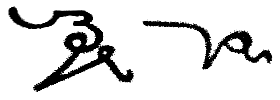
The Duployan shorthand, or Duployan stenography, was created by Father Émile Duployé in 1860 for writing French. Since then, it has been expanded and adapted for writing English, German, Spanish, Romanian, and Chinook Jargon. The Duployan stenography is classified as a geometric, alphabetic, stenography and is written left-to-right in connected stenographic style. The Duployan shorthands, including Chinook writing, Pernin's Universal Phonography, Perrault's English Shorthand, the Sloan-Duployan Modern Shorthand, and Romanian stenography, were included as a single script in version 7.0 of the Unicode Standard / ISO 10646
Irish Braille is the braille alphabet of the Irish language. It is augmented by specifically Irish letters for vowels that take acute accents in print:
