Voluntary Service Overseas (VSO) is a not-for-profit international development organization charity with a vision for a "world without poverty" and a mission to "bring people together to fight poverty and marginalisation". VSO delivers development impact through a blend volunteer model consisting of international, national, and community volunteers working together to develop the systems and conditions for positive social change
As of 2018, VSO worked in 24 countries in Africa and Asia
Pro bono publico is a Latin phrase for professional work undertaken voluntarily and without payment. Unlike traditional volunteerism, it is service that uses the specific skills of professionals to provide services to those who are unable to afford them.
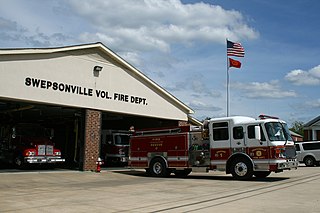
A volunteer fire department (VFD) is a fire department composed of volunteers who perform fire suppression and other related emergency services for a local jurisdiction.
The voluntary sector or community sector is the duty of social activity undertaken by organizations that are nonprofit organizations and non-governmental. This sector is also called the third sector,
in contrast to the public sector and the private sector. Civic sector or social sector are other terms for the sector, emphasizing its relationship to civil society. Given the diversity of organizations that comprise the sector, Peter Frumkin prefers "non-profit and voluntary sector".

The National Service Scheme (NSS) is an Indian government-sponsored public service program conducted by the Ministry of Youth Affairs and Sports of the Government of India. Popularly known as NSS, the scheme was launched in Gandhiji's Centenary year in 1969. Aimed at developing student's personality through community service, NSS is a voluntary association of young people in Colleges, Universities and at +2 level working for a campus-community linkage.

The United Nations Volunteers (UNV) programme is a United Nations organization that contributes to peace and development through volunteerism worldwide.

European Voluntary Service (EVS) is the European Commission's project that allows a young person to become a volunteer in another country for a specified period, normally between 2–12 months. The service activities can be, for example, in the field of environment, arts and culture, activities with children, young people or the elderly, heritage or sports and leisure activities. Each project has three partners, a volunteer, a sending organisation and a host organisation. The project has to take place in a country other than where the volunteers lives, is non-profit-making and unpaid and lasts for a limited period.

The National Council for Voluntary Organisations (NCVO) is the umbrella body for the voluntary and community sector in England. It is a registered charity NCVO works to support the voluntary and community sector and to create an environment in which an independent civil society can flourish. NCVO has a membership of more than 14,000 voluntary organisations. These range from large national bodies to community groups, volunteer centres, and development agencies working at a local level.
A military reserve force is a military organization composed of citizens of a country who combine a military role or career with a civilian career. They are not normally kept under arms and their main role is to be available to fight when their military requires additional manpower. Reserve forces are generally considered part of a permanent standing body of armed forces. The existence of reserve forces allows a nation to reduce its peacetime military expenditures while maintaining a force prepared for war. It is analogous to the historical model of military recruitment before the era of standing armies.
A regular army is the official army of a state or country, contrasting with irregular forces, such as volunteer irregular militias, private armies, mercenaries, etc. A regular army usually has the following:

A nature center is an organization with a visitor center or interpretive center designed to educate people about nature and the environment. Usually located within a protected open space, nature centers often have trails through their property. Some are located within a state or city park, and some have special gardens or an arboretum. Their properties can be characterized as nature preserves and wildlife sanctuaries. Nature centers generally display small live animals, such as reptiles, rodents, insects, or fish. There are often museum exhibits and displays about natural history, or preserved mounted animals or nature dioramas. Nature centers are staffed by paid or volunteer naturalists and most offer educational programs to the general public, as well as summer camp, after-school and school group programs.
Voluntarism, sometimes referred to as voluntary action, is the principle that individuals are free to choose goals and how to achieve them within the bounds of certain societal and cultural constraints, as opposed to actions that are coerced or predetermined.

The Queen's Award for Voluntary Service, also known as The Queen's Golden Jubilee Award for Voluntary Service by Groups in the Community and The Queen's Diamond Jubilee Volunteering Award is an annual award given to groups in the voluntary sector of the United Kingdom. Winning groups are announced in the London Gazette on 2 June each year, the anniversary of the coronation of Queen Elizabeth II. The award is equivalent to the MBE and is the highest award that can be made to a voluntary group. The award is managed by the Department of Culture, Media and Sport.
A voluntary society, voluntary community or voluntary city is one in which all property and all services are provided through voluntary means, such as private or cooperative ownership. In a voluntary society, the notion of something being "privately" or "cooperatively" owned would be radically different from monopolistic "privatization" with state subsidies, or monopolistic control of public resources by the state, respectively. Instead, courts might be replaced with dispute resolution organizations; police with volunteer-based community defense organizations or private security agencies and crime insurers; transportation authorities with community road associations and rail counterparts; etc. These services were the subject of the book, The Voluntary City, which dealt with them chapter-by-chapter.

The National Defence Volunteer Forces or NDVF is an important part of the Lithuanian Armed Forces. Volunteer forces were officially established on 17 January 1991 by the law of the Supreme Council of Lithuania on the National Defence Volunteer Service providing basis for establishing Voluntary National Defence Service. This decision made legal already existing volunteer formations that began appearing as early as 1990. Voluntary National Defence Service was reorganised into the National Defence Volunteer Force. In 2003 Volunteer Force was integrated into the Lithuanian Land Force. Tasks of volunteer soldiers were inevitably altered when Lithuania became a full-fledged member of NATO: approach of territorial defence was changed into territorial defence and training of modern active reserve. There are around 5000 volunteers and around 800 professional soldiers in the force.
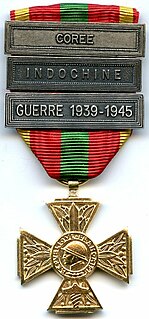
The Volunteer combatant's cross was a French decoration that originally recognized those who volunteered to serve in a combat unit during World War II. It is the equivalent of the "1914–1918 Volunteer combatant's cross".

International Voluntary Service (IVS), is a peace organisation working for the sustainable development of local and global communities throughout the world. The organisation was formed in 1931 and is a registered charity in England, Wales and Scotland.

Epilepsy Outlook is a charity based in Hartlepool which provides free and confidential practical support, advice and information for people with epilepsy and their carers.
Their support services include supported volunteer placements, a drop-in centre, epilepsy awareness training, an art therapy group and welfare benefits advice. Each year it provides placements for 50 volunteers on the volunteer development programme, 280 people receive advice, including at least 100 carers. 50 plus people receive epilepsy awareness training. 6 people use their drop-in each week. The services are provided for people across the North-East area.
In September–October 2014, Epilepsy Outlook's headquarters, advice centre and art club moved around the corner to larger premises in The Arches, Park Road.
International volunteering is when volunteers contribute their time to work for organisations or causes outside their respective home countries. In most such cases, volunteers work in developing countries on international development programmes with local volunteer organisations that conduct activities such as health promotion, education and environmental conservation. Trends show that international volunteering has become increasingly popular across many countries over the past few decades. International volunteering is a broad term which is used to capture multi-year, skilled placements as well as short term roles, recently termed voluntourism, and a range of activities in between conducted by governments, charities and travel agents.


