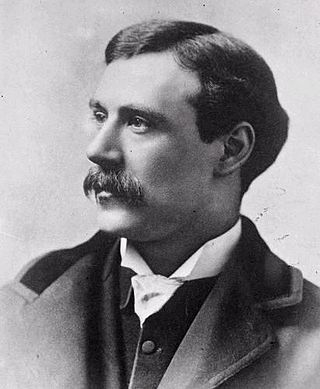
William Friese-Greene was a prolific English inventor and professional photographer. He was known as a pioneer in the field of motion pictures, having devised a series of cameras in 1888–1891 and shot moving pictures with them in London. He went on to patent an early two-colour filming process in 1905. Wealth came with inventions in printing, including photo-typesetting and a method of printing without ink, and from a chain of photographic studios. However, he spent it all on inventing, went bankrupt three times, was jailed once, and died in poverty.

Pictorialism is an international style and aesthetic movement that dominated photography during the later 19th and early 20th centuries. There is no standard definition of the term, but in general it refers to a style in which the photographer has somehow manipulated what would otherwise be a straightforward photograph as a means of creating an image rather than simply recording it. Typically, a pictorial photograph appears to lack a sharp focus, is printed in one or more colors other than black-and-white and may have visible brush strokes or other manipulation of the surface. For the pictorialist, a photograph, like a painting, drawing or engraving, was a way of projecting an emotional intent into the viewer's realm of imagination.
Edwin George Herbert Smith was an English photographer. He is best known for his distinctive vignettes of English gardens, landscapes, and architecture. On his own or in partnership with his wife, the artist and writer Olive Cook, he authored or contributed to numerous books during his lifetime and his photographs are still regularly used today.

George Washington Wilson was a pioneering Scottish photographer. In 1849, he began a career as a portrait miniaturist, switching to portrait photography in 1852. He received a contract to photograph the Royal Family, working for Queen Victoria and Prince Albert. He pioneered various techniques for outdoor photography and the mass production of photographic prints as he gradually began to largely do landscape photography in the 1860s. By 1864 he claimed to have sold over half a million copies

William Notman was a Scottish-Canadian photographer and businessman. The Notman House in Montreal was his home from 1876 until his death in 1891, and it has since been named after him.

Karl Struss, A.S.C. was an American photographer and a cinematographer of the 1900s through the 1950s. He was also one of the earliest pioneers of 3-D films. While he mostly worked on films, such as F.W. Murnau's Sunrise: A Song of Two Humans and Charlie Chaplin's The Great Dictator and Limelight, he was also one of the cinematographers for the television series Broken Arrow and photographed 19 episodes of My Friend Flicka.

Herbert George Ponting, FRGS was a professional photographer. He is best known as the expedition photographer and cinematographer for Robert Falcon Scott's Terra Nova Expedition to the Ross Sea and South Pole (1910–1913). In this role, he captured some of the most enduring images of the Heroic Age of Antarctic Exploration.
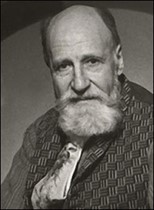
Angus Rowland McBean was a Welsh photographer, set designer and cult figure associated with surrealism.

William Klein was an American-born French photographer and filmmaker noted for his ironic approach to both media and his extensive use of unusual photographic techniques in the context of photojournalism and fashion photography. He was ranked 25th on Professional Photographer's list of 100 most influential photographers.
Gill Robb Wilson was an American pilot, Presbyterian minister, and military advocate. Wilson was a founder of the Civil Air Patrol.
Robert John is an American music photographer. He was the primary photographer for the hard rock band Guns N' Roses for almost two decades.

W. & D. Downey were Victorian studio photographers operating in London from the 1860s to the 1910s.

Alfred Seaman was a professional Victorian and Edwardian photographer who ran a network of photographic portrait studios in the Midlands and North of England. He published a large series of stereoscopic photographs of Great Britain, Ireland and the Isle of Man. Alfred Seaman was born in Norfolk in 1844. He began his working life as a builder and took up photography as a hobby in the 1860s. He opened his first studio in Chesterfield Derbyshire in 1880 and subsequently ran studios in, Ilkeston, Alfreton, Matlock, Sheffield, Leeds, Newcastle, Liverpool, Hull and Brighton.

Elmer Chickering (1857–1915) was a photographer specializing in portraits in Boston, Massachusetts, in the late 19th and early 20th centuries. He kept a studio on West Street, and photographed politicians, actors, athletes and other public figures such as Kyrle Bellew, John Philip Sousa, Sarah Winnemucca, Edmund Breese, and the Boston Americans.

The Church of St Mary the Virgin is the historic parish church of Islington, in the Church of England Diocese of London. The present parish is a compact area centered on Upper Street between Angel and Highbury Corner, bounded to the west by Liverpool Road, and to the east by Essex Road/Canonbury Road. The church is a Grade II listed building.

Andrew Paterson was an internationally renowned and multi-award winning Scottish portrait photographer whose services were sought over several decades by many leading political and commercial figures.

Frederick Gutekunst was an American photographer from Philadelphia, Pennsylvania. He opened his first photographic portrait studio with his brother in 1854 and successfully ran his business for sixty years. He grew to national prominence during the American Civil War and expanded his business to include two studios and a large phototype printing operation. He is known as the "Dean of American Photographers" due to his high quality portraits of dignitaries and celebrities. He worked as the official photographer of the Pennsylvania Railroad and received national and international recognition for his photographs of the Gettysburg battlefield and an innovative 10-foot long panoramic photograph of the Centennial Exposition.

Maybelle D. Goodlander was an American commercial and portrait photographer based in Muncie, Indiana, in partnership with her older sister Maude Goodlander.
The Camera: A Practical Monthly Magazine for Photographers was originally issued by the Columbia Photographic Society of Philadelphia under various subtitles, and continued publication until July 1953.
Muriel Darton was a British suffrage activist and professional photographer who recorded the Church League for Women's Suffrage campaign and worked in London.


