Related Research Articles

Sejong,personal name Yi Do,commonly known as Sejong the Great,was the fourth monarch of the Joseon dynasty of Korea. Today,he is regarded as one of the greatest rulers in Korean history,and is remembered as the inventor of Hangul,the native alphabet of the Korean language.

Joseon,officially Great Joseon State,was the last dynastic kingdom of Korea,lasting just over 500 years. It was founded by Taejo of Joseon in July 1392 and replaced by the Korean Empire in October 1897. The kingdom was founded following the aftermath of the overthrow of Goryeo in what is today the city of Kaesong. Early on,Korea was retitled and the capital was relocated to modern-day Seoul. The kingdom's northernmost borders were expanded to the natural boundaries at the rivers of Amnok and Tuman through the subjugation of the Jurchens.
Seong Sam-mun was a scholar-official of early Joseon who rose to prominence in the court of King Sejong the Great. He was executed after being implicated in a plot to dethrone King Sejo and restore his predecessor King Danjong,and is known as one of the sayuksin with reference to this plot.

Danjong,personal name Yi Hong-wi,was the sixth monarch of the Joseon dynasty of Korea. He was forced to abdicate by his uncle,Grand Prince Suyang,and was put to death after being exiled to Yeongwol.

The Goryeosa,or History of Goryeo,is the main surviving historical record of Korea's Goryeo dynasty. Its compilation was started during the reign of Taejo as a justification for the regime change. As such,it presents the view that the king should be a faithful and wise servant of the state:he should be good;should accept the advice of his subjects;and maintain good diplomatic relations. "broadly speaking,it can be said to be a view of Confucianism".

The Hall of Worthies,or Jiphyeonjeon,was a royal research institute set up by Sejong the Great of the Korean Joseon Dynasty in March 1420. Set up during the beginning of his reign,King Sejong staffed the Hall of Worthies with talented scholars and instructed them to conduct a variety of research activities to strengthen his rule and the nation. The Hall of Worthies is known for its role in compiling the Hunminjeongeum,the original treatise on Hangul.
The six martyred ministers or Sayuksin were six ministers of the Joseon Dynasty who were executed by King Sejo in 1456 for plotting to assassinate him and restore the former king Danjong to the throne.
Park Paeng-nyeon was a scholar-official of the early Joseon Dynasty,and is known as one of the six martyred ministers. He was born to a yangban family of the Suncheon Park clan,and was the son of high minister Park Jeong-rim. He passed the lower national service examination at a royal visitation in 1434,and was later appointed to the Hall of Worthies by Sejong. In the 1440s,he participated with other members of the Hall of Worthies in the creation of the Hunminjeongeum and the creation of the Hangul alphabet. He passed the higher literary examination in 1447,and rose to vice-minister of justice under Danjong in 1454. He was an 8th cousin of Park Won-jong,the maternal uncle of Yun Im and Queen Janggyeong,the second wife of King Jungjong.
Ha Wiji (1387–1456) was a scholar-official of the early Joseon Dynasty,and is remembered as one of the six martyred ministers. He was born to a yangban family of the Jinju Ha lineage. He passed the lower national service examination in 1435 and received the top score on the higher examination in 1438. He was appointed to the Hall of Worthies by Sejong,and became the leader (gyori) of that institution in 1442. He participated in the editing of histories and other texts.
Yi Gae was a scholar-official of the Joseon period who came from the yangban family Hansan Yi clan and one of the six martyred ministers. He was the great-grandson of Goryeo period philosopher Yi Saek and third cousin of Yi San-hae.
Yu Seong-won was a scholar-official of the early Joseon Dynasty,who is remembered as one of the six murdered ministers. He was born to a yangban family of the Munhwa Ryu lineage,but his date of birth is not known.
An,also romanized Ahn,is a Korean family name. A total of 109 Korean clans are named 'An',but with different origins. In 2000,there were 637,786 people bearing this surname in South Korea,making it the 20th most common family name in the country,with roughly 2% of the country's population. North Korea does not release figures for surnames,but the percentage is expected to be more than in South Korea.
Kim Jong-seo was a prominent military official and politician of the early Joseon dynasty. His ancestral home was Suncheon. He was also known under the names Gukgyeong (國卿) and Jeoljae (節齋),and his posthumous name is Chungik (忠翼). In 1405,he passed the state examination and became a rank 13 official. He served King Sejong the Great as a general during the campaign against the Jurchens. In 1453,he was assassinated on the order of Prince Suyang along with his two sons. His tomb is located near Sejong City.
Hongmungwan,or the Office of Special Advisors,was one of the Three Offices of Joseon;it acted as the Joseon dynasty's administrative and research agency.

Saenamteo (Korean: 새남터) is a location on the north bank of the Han River in Seoul,South Korea. During the Joseon Dynasty it was a sandy area outside the city walls. that was used punishment of political prisoners,including Roman Catholic believers,priests,and missionaries among the Korean Martyrs. A memorial church,consecrated in 1987,now stands on the site and houses a Martyrs' Memorial.
Princess Gyeonghye,also known before as Princess Pyeongchang before her marriage,was a Joseon princess and the eldest child of Munjong of Joseon. She served as guardian for her only younger brother,Danjong of Joseon,when he ascended the throne underage.
Queen Jeongsun,of the Yeosan Song clan,was a posthumous name bestowed to the wife and queen consort of Yi Hong-wi,King Danjong,the 6th Joseon monarch. She was queen consort of Joseon from 1454 until her husband's abdication in 1455,after which she was honoured as Queen Dowager Uideok (의덕왕대비) until her deposition in 1457.
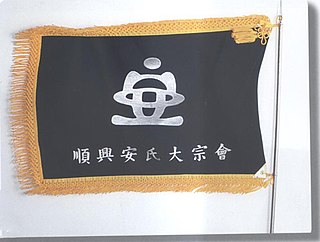
The Sunheung Ahn clan is a clan connected with the town of Sunheung,South Korea,and was well known during the Goryeo Dynasty and in the early Joseon Dynasty for its so-called "blue-blood" status.
Queen Hyeondeok,of the Andong Gwon clan,was the primary consort of Crown Prince Yi Hyang. She died giving birth to the future Danjong of Joseon and was posthumously honoured as Queen Hyeondeok (현덕왕후) in 1450,later demoted by Sejo of Joseon after he deposed her son,then restored by Jungjong of Joseon.
Yi Gu,formally known as Grand Prince Imyeong (Korean: 임영대군),was an imperial prince of the Joseon dynasty. He was the fourth son of King Sejong. His brothers were King Munjong of Joseon and King Sejo of Joseon.
References
  | This biographical article about the military of South Korea is a stub. You can help Wikipedia by expanding it. |