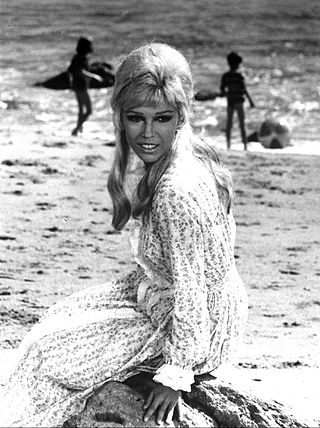
Nancy Sandra Sinatra is an American singer-songwriter, actress, film producer and author. She is the elder daughter of Frank Sinatra and Nancy Sinatra and is known for her 1965 signature hit "These Boots Are Made for Walkin'".

The Rolling Stones are an English rock band formed in London in 1962. Active for over six decades, they are one of the most popular and enduring bands of the rock era. In the early 1960s, the band pioneered the gritty, rhythmically driven sound that came to define hard rock. Their first stable line-up consisted of vocalist Mick Jagger, guitarist Keith Richards, multi-instrumentalist Brian Jones, bassist Bill Wyman, and drummer Charlie Watts. During their early years, Jones was the primary leader. Andrew Loog Oldham became their manager in 1963 and encouraged them to write their own songs. The Jagger–Richards partnership soon became the band's primary songwriting and creative force.

Mary Isobel Catherine Bernadette O'Brien, better known by her stage name Dusty Springfield, was an English singer. With her distinctive mezzo-soprano sound, she was a popular singer of blue-eyed soul, pop and dramatic ballads, with French chanson, country, and jazz in her repertoire. During her 1960s peak, she ranked among the most successful British female performers on both sides of the Atlantic. Her image–marked by a peroxide blonde bouffant/beehive hairstyle, heavy makeup and evening gowns, as well as stylised, gestural performances–made her an icon of the Swinging Sixties.

The Lovin' Spoonful is an American folk-rock band formed in Greenwich Village, New York City, in 1964. The band were among the most popular groups in the United States for a short period in the mid-1960s and their music and image influenced many of the contemporary rock acts of their era. Beginning in July 1965 with their debut single "Do You Believe in Magic", the band had seven consecutive singles reach the Top Ten of the U.S. charts in the eighteen months that followed, including the number-two hits "Daydream" and "Did You Ever Have to Make Up Your Mind?" and the chart-topping "Summer in the City".
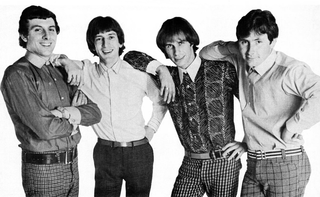
The Troggs are an English beat music band formed in Andover, Hampshire in May 1964. Their most famous songs include the US chart-topper "Wild Thing", "With a Girl Like You" and "Love Is All Around", all of which sold over 1 million copies and were awarded gold discs. "Wild Thing" is ranked No. 257 on the Rolling Stone magazine's list of The 500 Greatest Songs of All Time and was an influence on garage rock and punk rock.

Blonde on Blonde is the seventh studio album by the American singer-songwriter Bob Dylan, released as a double album on June 20, 1966, by Columbia Records. Recording sessions began in New York in October 1965 with numerous backing musicians, including members of Dylan's live backing band, the Hawks. Though sessions continued until January 1966, they yielded only one track that made it onto the final album—"One of Us Must Know ". At producer Bob Johnston's suggestion, Dylan, keyboardist Al Kooper, and guitarist Robbie Robertson moved to the CBS studios in Nashville, Tennessee. These sessions, augmented by some of Nashville's top session musicians, were more fruitful, and in February and March all the remaining songs for the album were recorded.
911, 9/11 or Nine Eleven may refer to:
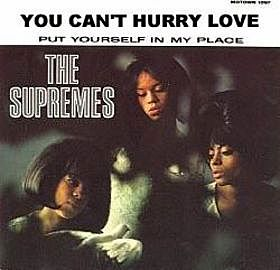
"You Can't Hurry Love" is a 1966 song originally recorded by the Supremes on the Motown label. It was released on July 25, 1966 as the second single from their studio album The Supremes A' Go-Go (1966).

"You Keep Me Hangin' On" is a song written and composed by Holland–Dozier–Holland. It was first recorded in 1966 by American Motown group the Supremes, reaching number one on the Billboard Hot 100.

"I'll Be Doggone" is a 1965 song recorded by American soul singer Marvin Gaye and released on the Tamla label. The song talks about how a man tells his woman that he'll be "doggone" about simple things but if she did him wrong that he'd be "long gone". The song was written by Miracles members Smokey Robinson, Pete Moore and Marv Tarplin, initially for The Temptations, who rejected the song.
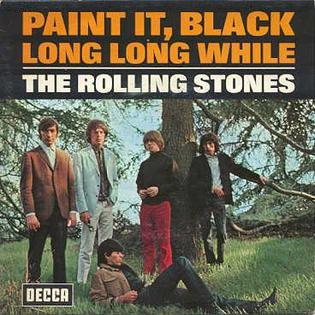
"Paint It Black" is a song by the English rock band the Rolling Stones. A product of the songwriting partnership of Mick Jagger and Keith Richards, it is a raga rock song with Indian, Middle Eastern and Eastern European influences and lyrics about grief and loss. London Records released the song as a single on 7 May 1966 in the United States, and Decca Records released it on 13 May in the United Kingdom. Two months later, London Records included it as the opening track on the American version of the band's 1966 studio album Aftermath, though it is not on the original UK release.

"I Put a Spell on You" is a 1956 song written and recorded by "Screamin' Jay" Hawkins. The selection became a classic cult song, covered by a variety of artists. It was Hawkins' greatest commercial success, reportedly surpassing a million copies in sales, even though it failed to make the Billboard pop or R&B charts.
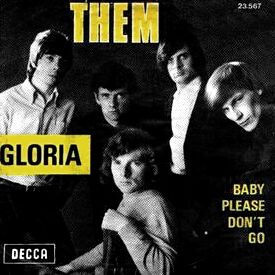
"Gloria" is a rock song written by Northern Irish singer-songwriter Van Morrison, and originally recorded by Morrison's band Them in 1964. It was released as the B-side of "Baby, Please Don't Go". The song became a garage rock staple and a part of many rock bands' repertoires.

"Tell It Like It Is" is a song written by George Davis and Lee Diamond and originally recorded and released in 1966 by Aaron Neville. In 2010, the song was ranked No. 391 on Rolling Stone magazine's list of The 500 Greatest Songs of All Time.

"My World Is Empty Without You" is a 1965 song recorded and released as a single by the Supremes for the Motown label.
"You Don't Have to Say You Love Me" is a 1966 song recorded by English singer Dusty Springfield, based on "Io che non vivo (senza te)" ("I, who can't live (without you)"), an Italian song with music by Pino Donaggio and lyrics by Vito Pallavicini, which was very successful in Italy.
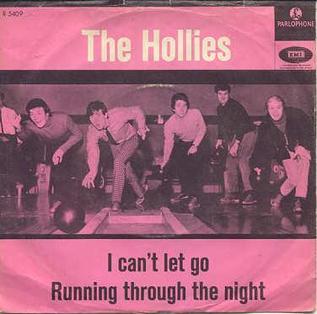
"I Can't Let Go" is a song co-written by Al Gorgoni and Chip Taylor, who also wrote "Wild Thing". "I Can't Let Go" was originally recorded by the blue-eyed soul singer Evie Sands on George Goldner's Blue Cat label, which was popular in New York City in 1965. The song became popular in 1966 for the group the Hollies, who charted at number two in the UK Singles Chart with their version. Linda Ronstadt covered the song in 1980 and had a number 31 hit on the US Billboard Hot 100 chart.

"Loving You Is Sweeter Than Ever" is a 1966 song written by Ivy Jo Hunter and Stevie Wonder. It was performed by the Four Tops via the Motown label. In addition to co-writing the song, Wonder also instrumentally contributed drums to the track.

How Does That Grab You? is the second studio album by Nancy Sinatra, released on Reprise Records in 1966. Arranged and conducted by Billy Strange, the album was produced by Lee Hazlewood. It peaked at number 41 on the Billboard 200 chart. The single, "How Does That Grab You, Darlin'?", reached number 7 on the Billboard Hot 100 chart, as well as number 19 on the UK Singles Chart.
