Related Research Articles

The Democratic Convergence of Catalonia, frequently shortened as Convergence was a Catalan nationalist, liberal political party in Catalonia (Spain), currently still existing without any political activity.

Artur Mas i Gavarró is a Catalan politician from Spain. He was president of the Government of Catalonia from 2010 to 2015 and acting president from September 2015 to 12 January 2016.
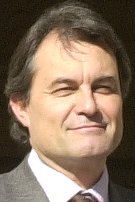
The 2003 Catalan regional election was held on Sunday, 16 November 2003, to elect the 7th Parliament of the autonomous community of Catalonia. All 135 seats in the Parliament were up for election.

The 2016 Spanish general election was held on Sunday, 26 June 2016, to elect the 12th Cortes Generales of the Kingdom of Spain. All 350 seats in the Congress of Deputies were up for election, as well as 208 of 266 seats in the Senate.
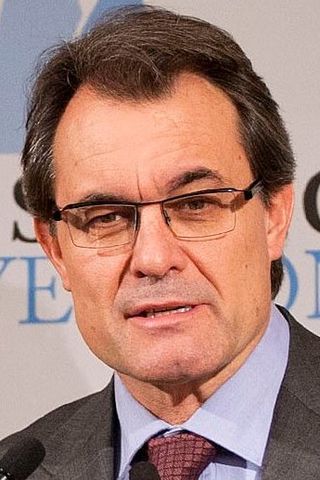
The 2012 Catalan regional election was held on Sunday, 25 November 2012, to elect the 10th Parliament of the autonomous community of Catalonia. All 135 seats in the Parliament were up for election. It was a snap election, announced on 25 September by President Artur Mas following the pro-independence demonstration in Barcelona on 11 September—the National Day of Catalonia—and the failed talks between President Mas and Prime Minister Mariano Rajoy to give greater fiscal autonomy to Catalonia.

The 2015 Catalan regional election was held on Sunday, 27 September 2015, electing the 11th Parliament of the autonomous community of Catalonia. All 135 seats in the Parliament were up for election. This was the third regional Catalan election in only five years, after the 2010 and 2012 elections and the first one in over 37 years in which Democratic Convergence of Catalonia (CDC) and Democratic Union of Catalonia (UDC) ran separately, after the dissolution of Convergence and Union (CiU) in June 2015 over disagreements on the coalition's separatist turn.

Democrats of Catalonia is a Christian-democratic, pro-Catalan independence political party in Catalonia founded in July 2015 from a split in Democratic Union of Catalonia (UDC). Its members included the then-Speaker of the Catalan parliament Núria de Gispert and former UDC president Joan Rigol. The party has received accusations of xenophobia for its controversial statements against Spaniards and for having ties with xenophobic organizations.

Junts pel Sí was a Catalan electoral, political and parliamentary alliance focused on achieving the independence of Catalonia from Spain. Established ahead of the 2015 Catalan regional election, it was formed by Democratic Convergence of Catalonia (CDC), Republican Left of Catalonia (ERC), Democrats of Catalonia (DC), Left Movement (MES) and Independence Rally (RI.cat), as well as a number of independent personalities from pro-independence sectors of civil society, including the pro-independence organizations Catalan National Assembly, Òmnium and the Association of Municipalities for Independence. The Popular Unity Candidacy (CUP) had been invited to participate in the alliance, but refused to do so and ran on its own instead, citing its disagreement with the presence of politicians in the list.
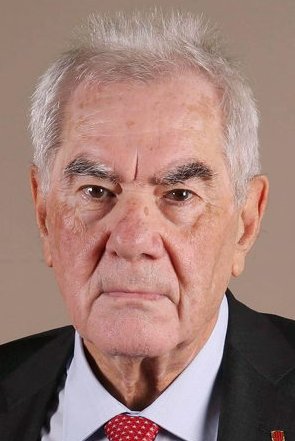
The 2019 Barcelona City Council election, also the 2019 Barcelona municipal election, was held on Sunday, 26 May 2019, to elect the 11th City Council of the municipality of Barcelona. All 41 seats in the City Council were up for election. The election was held simultaneously with regional elections in twelve autonomous communities and local elections all throughout Spain, as well as the 2019 European Parliament election in Spain.

En Comú Podem is an electoral coalition in Catalonia, originally formed in October 2015 by Unidas Podemos, Barcelona en Comú, Initiative for Catalonia Greens, United and Alternative Left, and Equo, and led by the Mayor of Barcelona, Ada Colau, to contest the 2015 Spanish general election.
Left Movement of Catalonia is a social-democratic, pro-independence political party in Catalonia. The party was founded in November 2014 from the merger of New Catalan Left (NECat) and Catalonia Movement, which had both been formed by dissident members of the Socialists' Party of Catalonia (PSC) who were dissatisfied with what they saw as the party's lack of support for the independence movement. Its founders included Marina Geli and Ernest Maragall (NECat), but both have ever since left for other parties—Geli joined the Together for Catalonia alliance ahead of the 2017 Catalan regional election, whereas Maragall defected to Republican Left of Catalonia (ERC) in 2018.

The 2017 Catalan regional election was held on Thursday 21 December 2017 to elect the 12th Parliament of the autonomous community of Catalonia. All 135 seats in the Parliament were up for election. The election was called by Spanish prime minister Mariano Rajoy after the invocation of Article 155 of the 1978 Spanish Constitution to enforce direct rule in Catalonia and the subsequent dismissal of the Catalan government under President Carles Puigdemont. The three pro-Catalan independence parties won a slim majority of parliamentary seats, claiming 70 out of 135, but fell short of a majority in the popular vote by securing 47.6% of the share.
Republican Left of Catalonia–Catalonia Yes was a Catalan pro-independence electoral alliance. The alliance was formed by Republican Left of Catalonia, Catalonia Yes and independents, and in the 2015 and 2016 Spanish general elections it was led by Gabriel Rufián.
The Catalan European Democratic Party, initially branded as the Catalan Democratic Party, was a liberal political party in Spain that supported Catalan independence. The party was founded in Barcelona on 10 July 2016 and dissolved on 28 October 2023. PDeCAT was regarded as the successor party to Democratic Convergence of Catalonia (CDC), which for most its history was a constituent party of the Convergence and Union (CiU) political formation.

Catalunya en Comú, previously Un País en Comú and collectively dubbed as Comuns, is a Catalan-based political party established in December 2016 as an umbrella for Barcelona en Comú, Initiative for Catalonia Greens (ICV), United and Alternative Left (EUiA), Podemos and Equo, which until then had been collaborating through electoral alliances under the Catalunya Sí que es Pot and En Comú Podem labels in the September 2015 regional and December 2015 and June 2016 general elections.
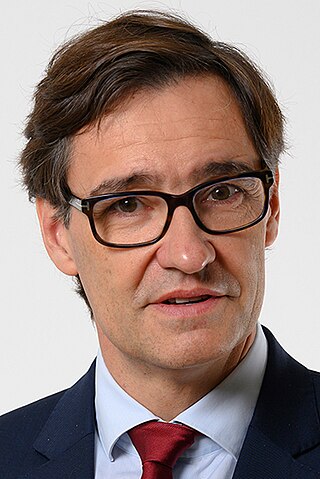
The 2021 Catalan regional election was held on Sunday, 14 February 2021, to elect the 13th/14th Parliament of the autonomous community of Catalonia. All 135 seats in the Parliament were up for election.

Together for Catalonia was an electoral and parliamentary alliance in Catalonia, registered as a political party in the interior ministry in July 2018, originally envisaged as a platform comprising the Catalan European Democratic Party (PDeCAT), successor of the late Democratic Convergence of Catalonia (CDC), and independents and centered around the candidacy of former Catalan president Carles Puigdemont ahead of the 2017 Catalan regional election. Some of these independents went on to form the Action for the Republic (AxR) political party, which is also part of the alliance in the Parliament of Catalonia.

The National Call for the Republic was a pro-independence, big tent political party in Catalonia. It aimed at uniting pro-independence political parties and organisations throughout Catalonia towards the common goal of establishing a Catalan Republic, regardless of political ideology. Its members included both independent figures from the civil society and aligned to the Together for Catalonia (JxCat) alliance—such as Quim Torra or Jordi Sànchez—as well as prominent members of the Catalan European Democratic Party (PDeCAT), among others: former Catalan president Carles Puigdemont, former regional ministers Josep Rull, Jordi Turull and Laura Borràs or party vice-president Míriam Nogueras.

Together for Catalonia is a Catalan political party established in July 2020 by former Catalan president Carles Puigdemont, announced on 2 July as a result of the foundering of negotiations with the Catalan European Democratic Party (PDeCAT) over the re-organization of the post-convergent political space under the "Together for Catalonia" umbrella. The party's founding congress took place between 25 July and 3 October, after being launched on 18 July with the public presentation of its imagery and corporate identity by Elsa Artadi and Marta Madrenas.
The next Catalan regional election will be held no later than Monday, 31 March 2025, to elect the 14th Parliament of the autonomous community of Catalonia. All 135 seats in the Parliament will be up for election.
References
- ↑ "Independentists win the election, lose the plebiscite". El País (in Spanish). 27 September 2015.
- ↑ "JxSí and CUP submit in Parliament a motion to "start the process" towards independence". El Periódico de Catalunya (in Spanish). 27 October 2015.
- ↑ "Catalan parliament passes motion declaring start of secession process". El País. 9 November 2015.
- ↑ "JxSí and CUP pave the way for breaking with Spain". El Periódico de Catalunya (in Spanish). 28 October 2015.
- ↑ "Opposition builds a common front against the decision of the "Catalan Republic"". El Periódico de Catalunya (in Spanish). 27 October 2015.
- ↑ "The CUP shield their refusal to Mas' investiture to Forcadell". El Periódico de Catalunya (in Spanish). 5 November 2015.
- ↑ "Artur Mas' re-election fails in the first investiture". eldiario.es (in Spanish). 10 November 2015.
- ↑ "Artur Mas loses the second ballot to be invested after another 'no' of the CUP". eldiario.es (in Spanish). 12 November 2015.
- ↑ "Podemos' triumph against sovereignism". El Mundo (in Spanish). 20 December 2015.
- ↑ "Catalonia leaves its future in Podemos' hands". eldiario.es (in Spanish). 21 December 2015.
- ↑ "Colau propels Podemos and defeats Mas in Catalonia". El País (in Spanish). 21 December 2015.
- ↑ "Podemos' victory in Catalonia, behind the CUP's 'slam' to Artur Mas". El Boletín (in Spanish). 4 January 2016.
- ↑ "Junts pel Sí proposes the CUP for Artur Mas to lead a "transition presidency"". La Vanguardia (in Spanish). 21 December 2015.
- ↑ "CUP's assembly ends in a draw and doesn't unlocks the investiture". El País (in Spanish). 27 December 2015.
- ↑ "Anti-capitalist CUP party unable to agree on Catalan leadership vote". El País. 28 December 2015.
- ↑ "CUP's 'no' condemns Mas to either go or call a new election". El Mundo (in Spanish). 3 January 2016.
- ↑ "Antonio Baños renounces his seat because of the CUP's decision not to invest Mas". La Vanguardia (in Spanish). 4 January 2016.
- ↑ "Antonio Baños resigns because of discrepancies with CUP's decision not to invest Artur Mas". eldiario.es (in Spanish). 4 January 2016.
- ↑ "Junqueras calls for CDC and CUP to keep negotiating to avoid an election". La Vanguardia (in Spanish). 4 January 2016.
- ↑ "Artur Mas assumes the "error" of having trusted the CUP and will sign the election call decree on Monday". La Vanguardia (in Spanish). 5 January 2016.
- ↑ "Spanish PM sees no alternative to new elections in Catalonia". El Economista. 5 January 2016.
- ↑ "Artur Mas Steps Down And Announces 11th-Hour Separatist Deal In Catalonia". The Spain Report. The Spain Report Ltd. 9 January 2016. Archived from the original on 27 January 2016. Retrieved 9 January 2016.