
Look up aggregation in Wiktionary, the free dictionary.
Aggregation may refer to:
Aggregation may refer to:

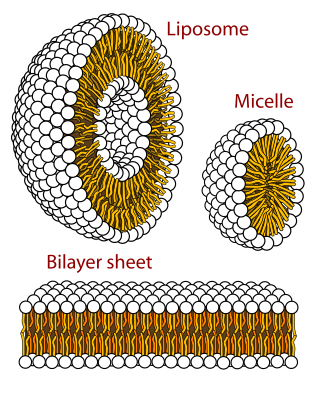
A biological membrane, biomembrane or cell membrane is a selectively permeable membrane that separates the interior of a cell from the external environment or creates intracellular compartments by serving as a boundary between one part of the cell and another. Biological membranes, in the form of eukaryotic cell membranes, consist of a phospholipid bilayer with embedded, integral and peripheral proteins used in communication and transportation of chemicals and ions. The bulk of lipids in a cell membrane provides a fluid matrix for proteins to rotate and laterally diffuse for physiological functioning. Proteins are adapted to high membrane fluidity environment of the lipid bilayer with the presence of an annular lipid shell, consisting of lipid molecules bound tightly to the surface of integral membrane proteins. The cell membranes are different from the isolating tissues formed by layers of cells, such as mucous membranes, basement membranes, and serous membranes.
Filter, filtering or filters may refer to:

A router is a networking device that forwards data packets between computer networks. Routers perform the traffic directing functions between networks and on the global Internet. Data sent through a network, such as a web page or email, is in the form of data packets. A packet is typically forwarded from one router to another router through the networks that constitute an internetwork until it reaches its destination node.
Network throughput refers to the rate of message delivery over a communication channel, such as Ethernet or packet radio, in a communication network. The data that these messages contain may be delivered over physical or logical links, or through network nodes. Throughput is usually measured in bits per second, and sometimes in data packets per second or data packets per time slot.
A network switch is networking hardware that connects devices on a computer network by using packet switching to receive and forward data to the destination device.
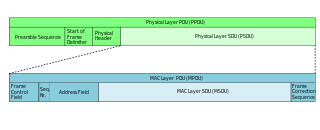
In telecommunications, a protocol data unit (PDU) is a single unit of information transmitted among peer entities of a computer network. It is composed of protocol-specific control information and user data. In the layered architectures of communication protocol stacks, each layer implements protocols tailored to the specific type or mode of data exchange.
Accelerator may refer to:

Platelets or thrombocytes are a component of blood whose function is to react to bleeding from blood vessel injury by clumping, thereby initiating a blood clot. Platelets have no cell nucleus; they are fragments of cytoplasm that are derived from the megakaryocytes of the bone marrow or lung, which then enter the circulation. Platelets are found only in mammals, whereas in other vertebrates, thrombocytes circulate as intact mononuclear cells.
Aggregate or aggregates may refer to:

Thromboxane is a member of the family of lipids known as eicosanoids. The two major thromboxanes are thromboxane A2 and thromboxane B2. The distinguishing feature of thromboxanes is a 6-membered ether-containing ring.
Tilth is a physical condition of soil, especially in relation to its suitability for planting or growing a crop. Factors that determine tilth include the formation and stability of aggregated soil particles, moisture content, degree of aeration, soil biota, rate of water infiltration and drainage. Tilth can change rapidly, depending on environmental factors such as changes in moisture, tillage and soil amendments. The objective of tillage is to improve tilth, thereby increasing crop production; in the long term, however, conventional tillage, especially plowing, often has the opposite effect, causing the soil carbon sponge to oxidize, break down and become compacted.
Networking hardware, also known as network equipment or computer networking devices, are electronic devices which are required for communication and interaction between devices on a computer network. Specifically, they mediate data transmission in a computer network. Units which are the last receiver or generate data are called hosts, end systems or data terminal equipment.
In computer science, object composition and object aggregation are closely related ways to combine objects or data types into more complex ones. In conversation the distinction between composition and aggregation is often ignored. Common kinds of compositions are objects used in object-oriented programming, tagged unions, sets, sequences, and various graph structures. Object compositions relate to, but are not the same as, data structures.

In computer networking, link aggregation is the combining of multiple network connections in parallel by any of several methods. Link aggregation increases total throughput beyond what a single connection could sustain, and provides redundancy where all but one of the physical links may fail without losing connectivity. A link aggregation group (LAG) is the combined collection of physical ports.

Hardware acceleration is the use of computer hardware designed to perform specific functions more efficiently when compared to software running on a general-purpose central processing unit (CPU). Any transformation of data that can be calculated in software running on a generic CPU can also be calculated in custom-made hardware, or in some mix of both.
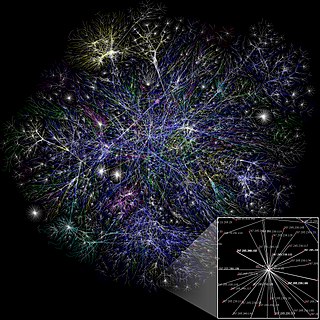
A computer network is a set of computers sharing resources located on or provided by network nodes. Computers use common communication protocols over digital interconnections to communicate with each other. These interconnections are made up of telecommunication network technologies based on physically wired, optical, and wireless radio-frequency methods that may be arranged in a variety of network topologies.
Protein precipitation is widely used in downstream processing of biological products in order to concentrate proteins and purify them from various contaminants. For example, in the biotechnology industry protein precipitation is used to eliminate contaminants commonly contained in blood. The underlying mechanism of precipitation is to alter the solvation potential of the solvent, more specifically, by lowering the solubility of the solute by addition of a reagent.
In digital communications networks, packet processing refers to the wide variety of algorithms that are applied to a packet of data or information as it moves through the various network elements of a communications network. With the increased performance of network interfaces, there is a corresponding need for faster packet processing.
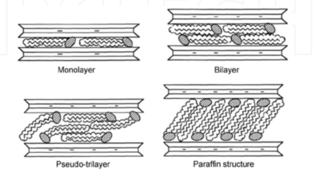
Polymer soil stabilization refers to the addition of polymers to improve the physical properties of soils, most often for geotechnical engineering, construction, or agricultural projects. Even at very small concentrations within soils, various polymers have been shown to increase water retention and reduce erosion, increase soil shear strength, and support soil structure. A wide range of polymers have been used to address problems ranging from the prevention of desertification to the reinforcement of roadbeds.

Soil aggregate stability is a measure of the ability of soil aggregates—soil particles that bind together—to resist breaking apart when exposed to external forces such as water erosion and wind erosion, shrinking and swelling processes, and tillage. Soil aggregate stability is a measure of soil structure and can be affected by soil management.