
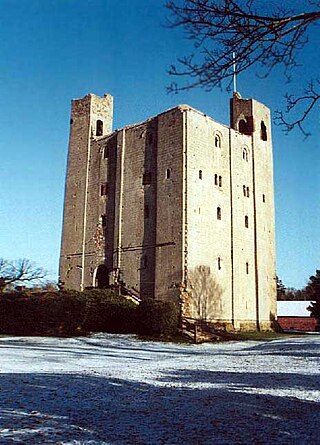
Earl of Oxford is a dormant title in the Peerage of England, first created for Aubrey de Vere by the Empress Matilda in 1141. His family was to hold the title for more than five and a half centuries, until the death of the 20th Earl in 1703. The de Veres were also hereditary holders of the office of Master Chamberlain of England from 1133 until the death of the 18th Earl in 1625. Their primary seat was Hedingham Castle in Essex, but they held lands in southern England and the Midlands, particularly in eastern England. The actual earldom was called 'Oxenford' until at least the end of the 17th century. Medieval sources thus refer to 'my lord of Oxenford' when speaking of the earl.

Duke of St Albans is a title in the Peerage of England. It was created in 1684 for Charles Beauclerk, 1st Earl of Burford, then 14 years old. King Charles II had accepted that Burford was his illegitimate son by Nell Gwyn, an actress, and awarded him the Dukedom just as he had conferred those of Monmouth, Southampton, Grafton, Northumberland and Richmond and Lennox on his other illegitimate sons who married.
Aubrey is traditionally a male English given name. The name is from the French derivation Aubry of the Germanic given name Alberic / Old High German given name Alberich, which consists of the elements ALF "elf" and RIK "king", from Proto-Germanic *albiz "elf", "supernatural being" and *rīkaz "chieftain", "ruler". Before the Norman conquest, the Anglo-Saxons used the corresponding variant Ælf-rīc.

Castle Hedingham is a village in northern Essex, England, located four miles west of Halstead and 3 miles southeast of Great Yeldham in the Colne Valley on the ancient road from Colchester, Essex, to Cambridge.
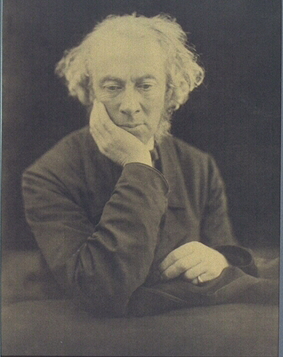
Aubrey Thomas de Vere was an Irish poet and critic.
De Vere is a surname. Notable people with the surname include:
This is a list of people who have served as Lord Lieutenant of Essex. Since 1688, all the Lord Lieutenants have also been Custos Rotulorum of Essex.

Charles Beauclerk, 2nd Duke of St Albans, KG KB was a British politician who sat in the House of Commons from 1718 until 1726 when he succeeded to a peerage as Duke of St Albans. He was an illegitimate grandson of King Charles II.

Aubrey de Vere, 20th Earl of Oxford KG PC was an English peer and military officer who fought on the Royalist side during the English Civil War.
Aubrey de Vere, 2nd Earl of Oxford, hereditary Master Chamberlain of England, served in military campaigns under King Richard and King John. He was succeeded in the earldom by his brother, Robert de Vere, 3rd Earl of Oxford.
Aubrey de Vere, 10th Earl of Oxford was the third son of John de Vere, 7th Earl of Oxford and Maud de Badlesmere, daughter of Bartholomew de Badlesmere, 1st Lord Badlesmere.
Aubrey de Vere, 1st Earl of Oxford was an English noble involved in the succession conflict between King Stephen and Empress Matilda in the mid-twelfth century.
John de Vere, 12th Earl of Oxford, was the son of Richard de Vere, 11th Earl of Oxford, and his second wife, Alice Sergeaux (1386–1452). A Lancastrian loyalist during the latter part of his life, he was convicted of high treason and executed on Tower Hill on 26 February 1462.

Curraghchase is a 774-acre (3 km2) forest park located in County Limerick. It is 20 km from the city of Limerick, between the towns of Adare and Askeaton. The land was the Hunt/de Vere family estate for 300 years (1657–1957), including the period of the de Vere baronets, also serving as the home of renowned poet and critic Aubrey Thomas De Vere.
Sir Stephen Edward De Vere, 4th Baronet was an Anglo-Irish, Whig Party, Member of Parliament for Limerick County, who in the Famine year 1847 bore personal witness to the conditions aboard the "coffin ships" that bore Irish emigrants to North America, and who converted to Roman Catholicism.
Colne Priory at Earls Colne, Essex was a Benedictine priory, initially a dependent cell of Abingdon Abbey, Berkshire. It was founded by Aubrey de Vere I and his wife Beatrice in or before 1111. One piece of research suggests that the original Abbot, Faritius, was appointed in 1101; he initially placed six monks at the site. Their eldest son Geoffrey had died at Abingdon about seven or eight years earlier and was buried there. On his deathbed, Geoffrey had bequeathed to Abingdon the church and lands at Kensington, Middlesex, and his parents and brothers had confirmed that grant, as had King Henry I.

Robert de Vere, hereditary Master Chamberlain of England, was the son of Aubrey de Vere, 1st Earl of Oxford, and Agnes of Essex. He succeeded his brother as the third Earl of Oxford, and was one of the twenty-five guarantors of Magna Carta.
Bridget Norris, Countess of Berkshire was an English noblewoman, the daughter of Edward de Vere, 17th Earl of Oxford. Bridget was brought up by her maternal grandfather, the powerful statesman William Cecil, 1st Baron Burghley. She was also styled Lady Norris of Rycote and Viscountess Thame. She married Francis Norris, 1st Earl of Berkshire; however, the marriage was not a success, and they separated in 1606.
The House of de Vere were an English aristocratic family who derived their surname from Ver, in Lower Normandy, France. The family's Norman founder in England, Aubrey (Albericus) de Vere, appears in Domesday Book (1086) as the holder of a large fief in Essex, Suffolk, Cambridgeshire, and Huntingdonshire. His son and heir Aubrey II became Lord Great Chamberlain of England, an hereditary office, in 1133. His grandson Aubrey III became Earl of Oxford in the reign of King Stephen, but while his earldom had been granted by the Empress Matilda and eventually recognised by Stephen, it was not until January 1156 that it was formally recognised by Henry II and he began to receive the third penny of justice from Oxfordshire.
Sir Aubrey (Hunt) de Vere, 2nd Baronet was an Anglo-Irish poet and landowner.
