
St. Augustine is a city in the Southeastern United States, on the Atlantic coast of northeastern Florida. Founded in 1565 by Spanish explorers, it is the oldest continuously inhabited European-established settlement within the borders of the continental United States.
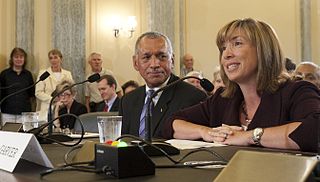
The United States Senate Committee on Commerce, Science, and Transportation is a standing committee of the United States Senate. It is empowered with legislative oversight of the Coast Guard and Merchant Marine, interstate commerce, communications, the Internet, highways, aviation, rail, shipping, transportation security, oceans, fisheries, climate change, natural disasters, science, sports, tourism, consumer protection, economic development, technology, competitiveness, product safety, insurance, and standards and measurement. The committee also has jurisdiction over coastal zone management, inland waterways, the Panama Canal and other interoceanic canals, and commerce aspects of Continental Shelf lands.
The Committee on Science, Space and Technology is a committee of the United States House of Representatives. It has jurisdiction over non-defense federal scientific research and development. More specifically, the committee has complete jurisdiction over the following federal agencies: NASA, NSF, NIST, and the OSTP. The Committee also has authority over R&D activities at the Department of Energy, the EPA, FAA, NOAA, the DOT, the NWS, the DHS and the U.S. Fire Administration.

Fort Matanzas National Monument was designated a United States National Monument on October 15, 1924. The monument consists of a 1740 Spanish fort called Fort Matanzas, and about 100 acres (0.4 km²) of salt marsh and barrier islands along the Matanzas River on the northern Atlantic coast of Florida. It is operated by the National Park Service in conjunction with the Castillo de San Marcos National Monument in the city of St. Augustine.
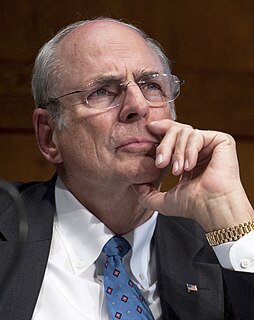
Norman Ralph Augustine is a U.S. aerospace businessman who served as United States Under Secretary of the Army from 1975 to 1977. Augustine served as chairman of the Review of United States Human Space Flight Plans Committee.

The National Aeronautics and Space Act of 1958 is the United States federal statute that created the National Aeronautics and Space Administration (NASA). The Act, which followed close on the heels of the Soviet Union's launch of Sputnik, was drafted by the United States House Select Committee on Astronautics and Space Exploration and on July 29, 1958 was signed by President Eisenhower. Prior to enactment, the responsibility for space exploration was deemed primarily a military venture, in line with the Soviet model that had launched the first orbital satellite. In large measure, the Act was prompted by the lack of response by a US military infrastructure that seemed incapable of keeping up the space race.

The Dirksen Senate Office Building is the second office building constructed for members of the United States Senate in Washington, D.C., and was named for the late Minority Leader Everett Dirksen from Illinois in 1972.
Augustine Henry Shepperd was a Congressional Representative from North Carolina; born in Rockford, North Carolina, February 24, 1792; completed preparatory studies; studied law; was admitted to the bar and commenced practice in Surry County, North Carolina; member of the State house of representatives 1822-1826; elected to the Twentieth through Twenty-third Congresses and elected as a Whig to the Twenty-fourth and Twenty-fifth Congresses ; chairman, Committee on Expenditures in the Department of the Navy, Committee on Expenditures in the Department of War, Committee on Expenditures in the Department of State ; unsuccessful candidate for reelection in 1838 to the Twenty-sixth Congress; elected as a Whig to the Twenty-seventh Congress ; chairman, Committee on Public Expenditures ; elected as a Whig to the Thirtieth and Thirty-first Congresses ; declined to be a candidate for reelection in 1850; resumed the practice of his profession; died at "Good Spring," Salem, North Carolina, July 11, 1864; interment in Salem Cemetery.

The Ares V was the planned cargo launch component of the cancelled NASA Constellation program, which was to have replaced the Space Shuttle after its retirement in 2011. Ares V was also planned to carry supplies for a human presence on Mars. Ares V and the smaller Ares I were named after Ares, the Greek god of war.

Augustine Bernard Kelley was a United States Representative from Pennsylvania.

John Augustine Washington (1736–1787) was a member of the fifth Virginia Convention and a founding member of the Mississippi Land Company. During the American Revolution he was a member of Westmoreland County's
Committee of Safety and the Chairman of the County Committee for Relief of Boston.

Richland is an unincorporated community located within Buena Vista Township in Atlantic County, New Jersey, United States. The area is served as United States Postal Service ZIP Code 08350.
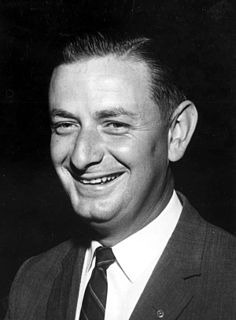
John Donald Fuqua is a U.S. Democratic politician.

The Space Exploration Initiative was a 1989–1993 space public policy initiative of the George H. W. Bush administration.
Two things are known as Augustine report:
The Catholic Home Missions is an organization founded in 1924 by the American Board of Catholic Missions (ABCM) with the aim of helping and supporting poor dioceses in the United States. Their effort focuses principally on providing religious education. Since 1998 U.S. bishops have conducted an annual appeal in parishes across the country, with the proceeds going to dioceses in the United States and its territories.
The space policy of the United States includes both the making of space policy through the legislative process, and the implementation of that policy in the civilian and military US space programs through regulatory agencies. The early history of United States space policy is linked to the US–Soviet Space Race of the 1960s, which gave way to the Space Shuttle program. There is a current debate on the post-Space Shuttle future of the civilian space program.

This is a timeline of the U.S. state of Florida.

