
In vitro studies are performed with microorganisms, cells, or biological molecules outside their normal biological context. Colloquially called "test-tube experiments", these studies in biology and its subdisciplines are traditionally done in labware such as test tubes, flasks, Petri dishes, and microtiter plates. Studies conducted using components of an organism that have been isolated from their usual biological surroundings permit a more detailed or more convenient analysis than can be done with whole organisms; however, results obtained from in vitro experiments may not fully or accurately predict the effects on a whole organism. In contrast to in vitro experiments, in vivo studies are those conducted in living organisms, including humans, and whole plants.
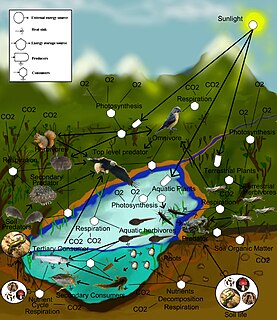
Theoretical ecology is the scientific discipline devoted to the study of ecological systems using theoretical methods such as simple conceptual models, mathematical models, computational simulations, and advanced data analysis. Effective models improve understanding of the natural world by revealing how the dynamics of species populations are often based on fundamental biological conditions and processes. Further, the field aims to unify a diverse range of empirical observations by assuming that common, mechanistic processes generate observable phenomena across species and ecological environments. Based on biologically realistic assumptions, theoretical ecologists are able to uncover novel, non-intuitive insights about natural processes. Theoretical results are often verified by empirical and observational studies, revealing the power of theoretical methods in both predicting and understanding the noisy, diverse biological world.
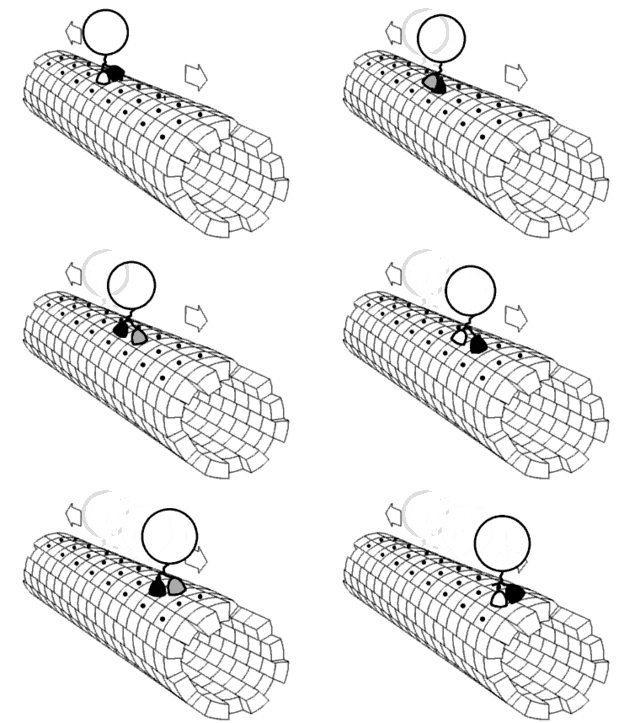
Biophysics is an interdisciplinary science that applies approaches and methods traditionally used in physics to study biological phenomena. Biophysics covers all scales of biological organization, from molecular to organismic and populations. Biophysical research shares significant overlap with biochemistry, molecular biology, physical chemistry, physiology, nanotechnology, bioengineering, computational biology, biomechanics, developmental biology and systems biology.

Stress, either physiological or biological, is an organism's response to a stressor such as an environmental condition. Stress is the body's method of reacting to a condition such as a threat, challenge or physical and psychological barrier. Stimuli that alter an organism's environment are responded to by multiple systems in the body. In humans and most mammals, the autonomic nervous system and hypothalamic-pituitary-adrenal (HPA) axis are the two major systems that respond to stress.
In general, a model is an informative representation of an object, person or system. The term originally denoted the plans of a building in late 16th-century English, and derived via French and Italian ultimately from Latin modulus, a measure. In detail, model may refer to:
Robert Rosen was an American theoretical biologist and Professor of Biophysics at Dalhousie University.
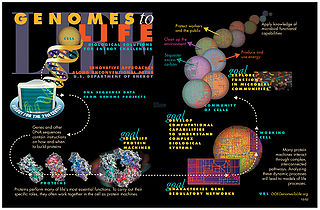
Systems biology is the computational and mathematical analysis and modeling of complex biological systems. It is a biology-based interdisciplinary field of study that focuses on complex interactions within biological systems, using a holistic approach to biological research. When it is crossing the field of systems theory and the applied mathematics methods, it develops into the sub-branch of complex systems biology.
Information metabolism, sometimes referred to as informational metabolism or energetic-informational metabolism, is a psychological theory of interaction between biological organisms and their environment, developed by Polish psychiatrist Antoni Kępiński .

Mathematical and theoretical biology is a branch of biology which employs theoretical analysis, mathematical models and abstractions of the living organisms to investigate the principles that govern the structure, development and behavior of the systems, as opposed to experimental biology which deals with the conduction of experiments to prove and validate the scientific theories. The field is sometimes called mathematical biology or biomathematics to stress the mathematical side, or theoretical biology to stress the biological side. Theoretical biology focuses more on the development of theoretical principles for biology while mathematical biology focuses on the use of mathematical tools to study biological systems, even though the two terms are sometimes interchanged.

Pharmacodynamics (PD) is the study of the biochemical and physiologic effects of drugs. The effects can include those manifested within animals, microorganisms, or combinations of organisms.
Modelling biological systems is a significant task of systems biology and mathematical biology. Computational systems biology aims to develop and use efficient algorithms, data structures, visualization and communication tools with the goal of computer modelling of biological systems. It involves the use of computer simulations of biological systems, including cellular subsystems, to both analyze and visualize the complex connections of these cellular processes.
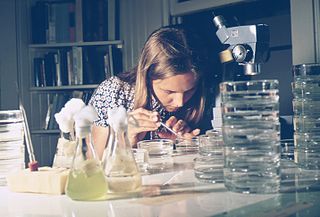
A biologist is a professional who has specialized knowledge in the field of biology, understanding the underlying mechanisms that govern the functioning of biological systems within fields such as health, technology and the environment. Biologists involved in fundamental research attempt to explore and further explain the underlying mechanisms that govern the functioning of living matter. Biologists involved in applied research attempt to develop or improve more specific processes and understanding, in fields such as medicine and industry.

Biological organization is the hierarchy of complex biological structures and systems that define life using a reductionistic approach. The traditional hierarchy, as detailed below, extends from atoms to biospheres. The higher levels of this scheme are often referred to as an ecological organization concept, or as the field, hierarchical ecology.
Pharmacokinetics, sometimes abbreviated as PK, is a branch of pharmacology dedicated to determine the fate of substances administered to a living organism. The substances of interest include any chemical xenobiotic such as: pharmaceutical drugs, pesticides, food additives, cosmetics, etc. It attempts to analyze chemical metabolism and to discover the fate of a chemical from the moment that it is administered up to the point at which it is completely eliminated from the body. Pharmacokinetics is the study of how an organism affects a drug, whereas pharmacodynamics (PD) is the study of how the drug affects the organism. Both together influence dosing, benefit, and adverse effects, as seen in PK/PD models.
Igor Goryanin is a systems biologist, who holds a Henrik Kacser Chair in Computational Systems Biology at the University of Edinburgh, and leads the Computational Systems Biology and Bioinformatics group, School of Informatics. He heads the Biological Systems Unit at Okinawa Institute Science and Technology, Japan.
Systems psychology is a branch of both theoretical psychology and applied psychology that studies human behaviour and experience as complex systems. It is inspired by systems theory and systems thinking, and based on the theoretical work of Roger Barker, Gregory Bateson, Humberto Maturana and others. Groups and individuals are considered as systems in homeostasis. Alternative terms here are "systemic psychology", "systems behavior", and "systems-based psychology".
Some of the research that is conducted in the field of psychology is more "fundamental" than the research conducted in the applied psychological disciplines, and does not necessarily have a direct application. The subdisciplines within psychology that can be thought to reflect a basic-science orientation include biological psychology, cognitive psychology, neuropsychology, and so on. Research in these subdisciplines is characterized by methodological rigor. The concern of psychology as a basic science is in understanding the laws and processes that underlie behavior, cognition, and emotion. Psychology as a basic science provides a foundation for applied psychology. Applied psychology, by contrast, involves the application of psychological principles and theories yielded up by the basic psychological sciences; these applications are aimed at overcoming problems or promoting well-being in areas such as mental and physical health and education.

Creating a cellular model has been a particularly challenging task of systems biology and mathematical biology. It involves developing efficient algorithms, data structures, visualization and communication tools to orchestrate the integration of large quantities of biological data with the goal of computer modeling.

Complex systems biology (CSB) is a branch or subfield of mathematical and theoretical biology concerned with complexity of both structure and function in biological organisms, as well as the emergence and evolution of organisms and species, with emphasis being placed on the complex interactions of, and within, bionetworks, and on the fundamental relations and relational patterns that are essential to life. CSB is thus a field of theoretical sciences aimed at discovering and modeling the relational patterns essential to life that has only a partial overlap with complex systems theory, and also with the systems approach to biology called systems biology; this is because the latter is restricted primarily to simplified models of biological organization and organisms, as well as to only a general consideration of philosophical or semantic questions related to complexity in biology. Moreover, a wide range of abstract theoretical complex systems are studied as a field of applied mathematics, with or without relevance to biology, chemistry or physics.
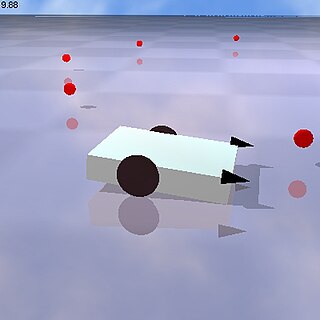
Artificial life is a field of study wherein researchers examine systems related to natural life, its processes, and its evolution, through the use of simulations with computer models, robotics, and biochemistry. The discipline was named by Christopher Langton, an American theoretical biologist, in 1986. In 1987 Langton organized the first conference on the field, in Los Alamos, New Mexico. There are three main kinds of alife, named for their approaches: soft, from software; hard, from hardware; and wet, from biochemistry. Artificial life researchers study traditional biology by trying to recreate aspects of biological phenomena.
