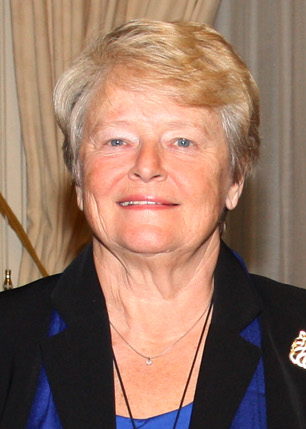
Gro Brundtland is a Norwegian politician (Arbeiderpartiet), who served three terms as the 29th Prime Minister of Norway and as the director-general of the World Health Organization from 1998 to 2003. She is also known for having chaired the Brundtland Commission which presented the Brundtland Report on sustainable development. Educated as a physician, Brundtland joined the Labour Party and entered the government in 1974 as Minister of the Environment. She became the first female Prime Minister of Norway on 4 February 1981, but left office on 14 October 1981; she returned as Prime Minister on 9 May 1986 and served until 16 October 1989. She finally returned for her third term on 3 November 1990. From 1981 to 1992 she was leader of the Labour Party. After her surprise resignation as Prime Minister in 1996, she became an international leader in sustainable development and public health, and served as Director-General of the World Health Organization and as UN Special Envoy on Climate Change from 2007 to 2010. She is also deputy chair of The Elders and a former vice-president of Socialist International.
The politics of Norway take place in the framework of a parliamentary, representative democratic constitutional monarchy. Executive power is exercised by the Council of State, the cabinet, led by the prime minister of Norway. Legislative power is vested in both the government and the legislature, the Storting, elected within a multi-party system. The judiciary is independent of the executive branch and the legislature.

Thorbjørn Jagland is a Norwegian politician from the Labour Party. He served as the Secretary General of the Council of Europe from 2009 to 2019. He served as the 32nd Prime Minister of Norway from 1996 to 1997, as the minister of Foreign Affairs from 2000 to 2001 and as the president of the Storting from 2005 to 2009.

Kåre Isaachsen Willoch was a Norwegian politician who served as the 30th prime minister of Norway from 1981 to 1986 and as leader of the Conservative Party from 1970 to 1974. He previously served as the Minister of Trade and Shipping from August to September 1963 and 1965 to 1970, and as the president of the Nordic Council in 1973.

The Labour Party, formerly The Norwegian Labour Party, is a social-democratic political party in Norway. It is positioned on the centre-left of the political spectrum, and is led by Jonas Gahr Støre. It was the senior partner of the governing red–green coalition from 2005 to 2013, and its former leader Jens Stoltenberg served as the prime minister of Norway.
Parliamentary elections were held in Norway on 10 and 11 September 1989. The Labour Party remained the largest party in the Storting, winning 63 of the 165 seats.

Torstein Rudihagen is a Norwegian politician for the Labour Party.
Kjell Borgen was a Norwegian politician for the Labour Party. He served as Minister of Transport and Communications from 1986 to 1988, Minister of Local Government from 1988 to 1989 and again from 1990 to 1992. He served as County Governor of Hedmark from 1993 until his death.
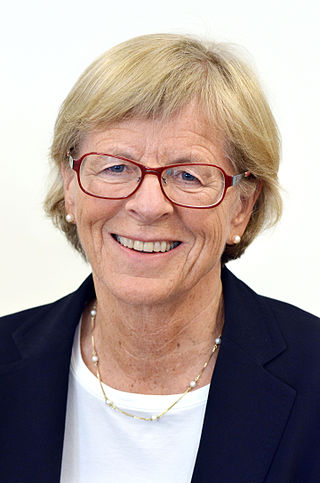
Tove Astri Strand is a Norwegian director and former politician for the Labour Party. She was active in politics between 1963 and 1992, including two periods as a government minister. She headed the Norwegian Agency for Development Cooperation from 1997 to 2005, and since 2005 she is the director of Ullevål University Hospital.
Kari Gjesteby is a Norwegian politician for the Labour Party. She has never been a member of the Norwegian Parliament, but has been State Secretary for three tenures, as well as Minister of Trade and Shipping from February to October 1981 and Minister of Justice and the Police from 1990 to 1992. After her political career she has been a director in the Bank of Norway, director of the National Library of Norway and the Norwegian Library of Talking Books and Braille and, from 2009 to 2013, the first female State Conciliator of Norway.

The Minister of Petroleum and Energy is a councilor of state and chief of the Norway's Ministry of Petroleum and Energy. The current minister is Terje Aasland. The ministry is responsible for the government's energy policy, including management of Norway's energy resources, including the valuable deposits of petroleum and hydroelectricity. Major subordinate agencies and companies include the Water Resources and Energy Directorate, the Petroleum Directorate, Petoro, Gassnova, Gassco, Enova, Statnett and a partial ownership of Statoil. The position was created on 11 January 1978 as a response to the increased importance of oil on the Norwegian continental shelf. The position was merged with the Minister of Trade and Industry between 1992 and 1996.
The Minister of Transport is a Councillor of State and Chief of the Norwegian Ministry of Transport. The post has been held by Jon-Ivar Nygård of the Labour Party since 2021. The ministry is responsible for policy and public operations within postal services, telecommunications, civil aviation, public roads, rail transport and public transport, including ferry services that are part of national roads and coastal transport infrastructure. The ministry has seven agencies and four limited companies, including the airport operator Avinor, railway operator Vy, the Norwegian National Rail Administration, the Norwegian Public Roads Administration and Norway Post. There are also inspectorates and authorities related to accident investigation, civil aviation, and railways.

Brundtland's First Cabinet was a minority, Labour Government of Norway. It succeeded the Labour Cabinet Nordli, and sat between 4 February and 14 October 1981. The cabinet was the first in Norwegian history to be led by a woman. It was replaced by the Conservative Willoch's First Cabinet after the 1981 election.

Brundtland's Second Cabinet was a minority, Labour Government of Norway. It succeeded the Conservative Willoch's Second Cabinet, and sat between 9 May 1986 and 16 October 1989. It was replaced by the Conservative/Centre/Christian Democrat cabinet Syse after the 1989 election. The cabinet was historic in that 8 of the 18 members were female, to then the highest female share in a government ever in the world. Brundtland's cabinet had the following composition.

Brundtland's Third Cabinet was a minority, Labour Government of Norway. It succeeded the H-Sp-KrF Cabinet Syse, and sat between 3 November 1990 and 25 October 1996. It was replaced by the Labour Cabinet Jagland. The cabinet was active during two parliaments, both 1989–93 and 1993–97. Brundtlands third cabinet had the following composition.
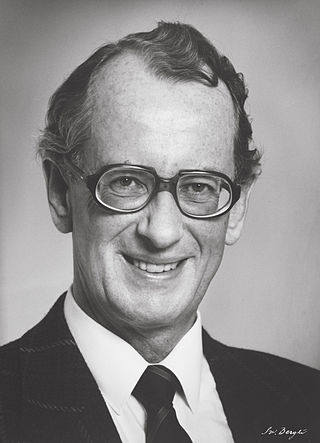
Syse's Cabinet was a minority centre-right Conservative, Centre, Christian Democrat Government of Norway. It succeeded the Labour Second cabinet Brundtland after the 1989 election, and sat between 16 October 1989 and 3 November 1990. It was replaced by the Labour Third cabinet Brundtland after Centre left the coalition due to disagreement over possible Norwegian membership in the European Economic Area. This disagreement was anticipated as the cabinet operated with a suicide paragraph from the beginning. Syse's cabinet had the following composition:
Willoch's First Cabinet was a minority, Conservative Government of Norway. It succeeded Brundtland's First Cabinet, after the Conservative victory in the 1981 Storting election; and sat from 14 October 1981 to 8 June 1983. It was replaced by Willoch's Second Cabinet, a coalition of the Conservative, Centre and Christian Democrat parties to form a majority government. Willoch's First Cabinet was the first Conservative-only cabinet since Stang's Second Cabinet of 1893–95, and there has not been another Conservative-only cabinet since.
Bjørn Skogstad Aamo is a Norwegian economist and politician for the Labour Party. He was State Secretary for three non-consecutive terms between 1973 and 1993, and served as Director of the Financial Supervisory Authority of Norway from 1993 to 2011.
The Minister of Local Government and Modernisation is a Councillor of State and Chief of the Norwegian Ministry of Local Government and Regional Development. Currently, Centre Sigbjørn Gjelsvik has held the post since 2022. The ministry is responsible for local administration, including municipalities and county municipalities, rural and regional policy, information technology, elections and government administration, including management of state real estate and government employment. Major subordinate agencies include the Government Administration Services, Statsbygg, the Competition Authority, the National Office of Building Technology and Administration, the State Housing Bank and the Data Protection Authority.
Labour government or Labor government may refer to:
