Human rights in Cuba are under the scrutiny of human rights organizations, which accuse the Cuban government of committing systematic human rights abuses against the Cuban people, including arbitrary imprisonment and unfair trials. International human rights organizations such as Amnesty International and Human Rights Watch have drawn attention to the actions of the human rights movement and designated members of it as prisoners of conscience, such as Óscar Elías Biscet. In addition, the International Committee for Democracy in Cuba led by former statesmen Václav Havel of the Czech Republic, José María Aznar of Spain and Patricio Aylwin of Chile was created to support the Cuban dissident movement.
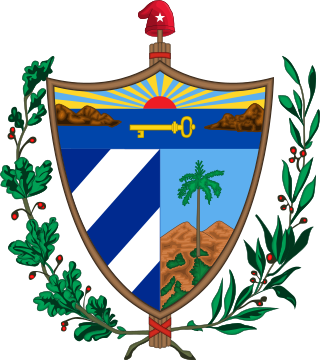
The Cuban dissident movement is a political movement in Cuba whose aim is to replace the current government with a liberal democracy. According to Human Rights Watch, the Marxist-Leninist Cuban government represses nearly all forms of political dissent.

Veja is a Brazilian weekly news magazine published in São Paulo and distributed throughout the country by media conglomerate Grupo Abril. It is the leading weekly publication in the country and one of the most influential outlets of the Brazilian Publishing. Veja publishes articles on politics, economics, culture, world events, entertainment, and war. It also regularly includes editorial pieces related to themes like technology, ecology, and religious debate. It has recurring sections on cinema, television, practical literature, music, and guides on diverse subjects. It has been described as politically aligned with right-wing movements, though it does not describe itself as such.
Granma is the official newspaper of the Central Committee of the Communist Party of Cuba. It was formed in 1965 by the merger of two previous papers, Revolución and Hoy ("Today"). Publication of the newspaper began in February 1966. Its name comes from the yacht Granma that carried Fidel Castro and 81 other rebels to Cuba's shores in 1956, launching the Cuban Revolution. The newspaper has been a way for the Cuban Communist Party to communicate their ideology to the world, especially regarding the United States. Marta Rojas worked for the paper since its founding.
Censorship in Cuba is the topic of accusations put forward by several foreign groups-organizations and political leaders, as well as Cuban dissidents. The accusations led the European Union to impose sanctions from 2003 to 2008 as well as statements of protest from groups, governments, and noted individuals.
The Cuban Democratic Directorate is a nongovernmental organization that supports the human rights movement in Cuba. The organisation is heavily financed by the United States government through the National Endowment for Democracy program, receiving $650,000 in 2022.

Agencia de Noticias Latinoamericana S.A., trading as Prensa Latina, is the official state news agency of Cuba, founded in March 1959 shortly after the Cuban Revolution.

Guillermo Fariñas Hernández is a Cuban doctor of psychology, independent journalist and political dissident in Cuba. He has conducted 23 hunger strikes over the years to protest various elements of the Cuban government and spent more than 11 years in prison. He vowed that he would die in the struggle against censorship in Cuba.

Black Spring was the 2003 crackdown by the Cuban Government on Cuban dissidents. The government imprisoned 75 dissidents, including 29 journalists on the basis that they were acting as agents of the United States by accepting funds from the US government and George W. Bush's administration at the time. Amnesty International described the 75 Cubans as "prisoners of conscience". The Cuban government stated at the time: "the 75 individuals arrested, tried and sentenced in March/April 2003... are demonstrably not independent thinkers, writers or human rights activists, but persons directly in the pay of the US government. [...] [T]hose who were arrested and tried were charged not with criticizing the [Cuban] government, but for receiving American government funds and collaborating with U.S. diplomats".

José Daniel Ferrer García is a Cuban human rights activist, whom the international and Spanish media claim to be "the visible head of the dissident movement in the interior of the island since the death of Oswaldo Payá, in July 2012”.
Antonio Enrique González-Rodiles Fernández is a Cuban political activist who has achieved international visibility for his work as the coordinator of Estado de SATS, a forum which was created in July 2010 to encourage debate on social, cultural and political issues in Cuba. Rodiles is also coordinator of the Forum for the Rights and Freedom.
Espacio Carta Abierta or Carta Abierta is a group of Argentine intellectuals who formed in March 2008 in defense of the Cristina Fernández de Kirchner government, which was facing a conflict with the agricultural sector.

Mariblanca Sabas Alomá was a Cuban feminist, journalist and poet. A political activist, she was also a Minister without portfolio in the Cuban government under Carlos Prio. Her writing was devoted to the cause of women's rights, particularly the right to vote.

Freedom Collection is a digital repository sponsored by the George W. Bush Institute at the George W. Bush Presidential Center on Southern Methodist University's campus in Dallas, Texas. The collection documents major players in human rights and freedom movements around the world during the 20th and 21st centuries through video interviews and documents. Contributors include former president of Liberia Ellen Johnson Sirleaf, Syrian dissident and author Ammar Abdulhamid, former president of Czechoslovakia and the Czech Republic Václav Havel, Chinese civil rights activist Chen Guangcheng, former president of Peru Alejandro Toledo, and Egyptian author Saad Eddin Ibrahim. At its launch on March 28, 2012, the collection consisted of 56 interviews. As of 2022, the Freedom Collection website was last updated in 2016 and its YouTube channel, where video interviews are available to watch, was last updated in October 2015. It is unclear if the project is still active.
Ana is a version of the female given name Anna meaning "favour" or "grace".
Yoeni de Jesús Guerra García is an independent Cuban journalist and human-rights activist who was arrested in October 2013 and sentenced to seven years in prison on March 13, 2014. He also belongs to the Council of Cuban Human Rights Rapporteurs and the Círculos Democráticos Municipalistas. He lives in Arroyo Blanco, Jatibonico, Sancti Spíritus.


