
Chagatai, also known as Turki, Eastern Turkic, or Chagatai Turkic, is an extinct Turkic literary language that was once widely spoken across Central Asia and remained the shared literary language there until the early 20th century. It was used across a wide geographic area including western or Russian Turkestan, eastern or Chinese Turkestan, the Crimea, the Volga region, etc. Literary Chagatai is the predecessor of the modern Karluk branch of Turkic languages, which includes Uzbek and Uyghur. Turkmen, which is not within the Karluk branch but in the Oghuz branch of Turkic languages, was nonetheless heavily influenced by Chagatai for centuries.

The Chagatai Khanate, or Chagatai Ulus was a Mongol and later Turkicized khanate that comprised the lands ruled by Chagatai Khan, second son of Genghis Khan, and his descendants and successors. At its height in the late 13th century the khanate extended from the Amu Darya south of the Aral Sea to the Altai Mountains in the border of modern-day Mongolia and China, roughly corresponding to the area once ruled by the Qara Khitai.
The names of people, battles, and places need to be spelled as they are on other articles title and then wikified.
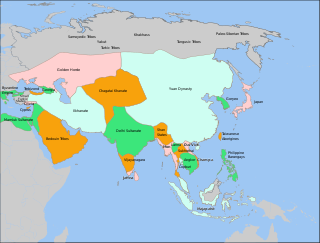
The Turco-Mongol or Turko-Mongol tradition was an ethnocultural synthesis that arose in Asia during the 14th century, among the ruling elites of the Golden Horde and the Chagatai Khanate. The ruling Mongol elites of these Khanates eventually assimilated into the Turkic populations that they conquered and ruled over, thus becoming known as Turco-Mongols. These elites gradually adopted Islam as well as Turkic languages, while retaining Mongol political and legal institutions.
Sultan Mahmud or Sultan Mahmoud may refer to:
The family tree of Genghis Khan is listed below. This family tree only lists prominent members of the Borjigin family and does not reach the present. Genghis Khan appears in the middle of the tree, and Kublai Khan appears at the bottom of the tree. The Borjigin family was the imperial house of the Mongol Empire, dating back to the 13th and 14th centuries.
Qazan or Ghazan is the name of:
Yesun Temur may refer to:
The Qara'unas or Negüderi were the Mongols who settled in Afghanistan after moving from Turkestan and Mongolia.

'Ali Khalil, also known as Ali-Sultan , was the khan (r.1339-1342) of the Chagatai Khanate. He was a descendant of Qadan, son of the second Great Khan Ögedei.
Mongol khanate or Mongolian khanate can refer to:
Buğa or Boğa means "bull" in Turkic languages, also transliterated as Bugha, or Buqa. It may refer to one of the following persons.
Çağatay is a Turkish masculine name. It is also used as a family name.
Karakhanid, also known as Khaqani Turkic, was a historical Turkic language developed in the 11th century during the Middle Turkic period under the Kara-Khanid Khanate. It has been described as the first literary Islamic Turkic language. It is sometimes classified under the Old Turkic category, rather than Middle Turkic, as it is contemporary to the East Old Turkic languages of Orkhon and Old Uyghur. Eastern Middle Turkic languages, namely Khorezmian and later Chagatai are descendants of the Karakhanid language.
Mubarak Shah may refer to the following people:
This page is based on this
Wikipedia article Text is available under the
CC BY-SA 4.0 license; additional terms may apply.
Images, videos and audio are available under their respective licenses.
