Special education is the practice of educating students in a way that accommodates their individual differences, disabilities, and special needs. This involves the individually planned and systematically monitored arrangement of teaching procedures, adapted equipment and materials, and accessible settings. These interventions are designed to help individuals with special needs achieve a higher level of personal self-sufficiency and success in school and in their community, which may not be available if the student were only given access to a typical classroom education.

The Centre for Addiction and Mental Health is a psychiatric teaching hospital located in Toronto and ten community locations throughout the province of Ontario, Canada. It reports being the largest research facility in Canada for mental health and addictions. The hospital was formed in 1998 from the amalgamation of four separate institutions – the Queen Street Mental Health Centre, the Clarke Institute of Psychiatry, the Addiction Research Foundation, and the Donwood Institute. It is Canada's largest mental health teaching hospital, and the only stand-alone psychiatric emergency department in Ontario. CAMH has 90 distinct clinical services across inpatient, outpatient, day treatment, and partial hospitalization models. CAMH has been the site of major advancements in psychiatric research, including the discovery of the Dopamine receptor D2.
Child advocacy refers to a range of individuals, professionals and advocacy organizations who speak out on the best interests of children. An individual or organization engaging in advocacy typically seeks to protect children's rights which may be abridged or abused in a number of areas.
A legal guardian is a person who has been appointed by a court or otherwise has the legal authority to make decisions relevant to the personal and property interests of another person who is deemed incompetent, called a ward. For example, a legal guardian might be granted the authority to make decisions regarding a ward's housing or medical care or manage the ward's finances. Guardianship is most appropriate when an alleged ward is functionally incapacitated, meaning they have a lagging skill critical to performing certain tasks, such as making important life decisions. Guardianship intends to serve as a safeguard to protect the ward.
An Individualized Education Program (IEP) is a legal document under United States law that is developed for each public school child in the U.S. who needs special education. It is created through a team of the child's parent(s), the student and district personnel who are knowledgeable about the child's needs. IEPs must be reviewed every year to keep track of the child's educational progress.

Universal Health Services, Inc. (UHS) is an American Fortune 500 company that provides hospital and healthcare services, based in King of Prussia, Pennsylvania. In 2023, UHS reported total revenues of $14.3b.
Child and Adolescent Mental Health Services (CAMHS) is the name for care provided by the NHS and other organisations in the United Kingdom for children, generally until school-leaving age, who have difficulties with their emotional well-being or are deemed to have persistent behavioural problems. The service is also known as Children and Young People’s Mental Health Services (CYPMHS). CAMHS offer children, young people and their families access to support for mental health issues from third sector (charity) organisations, school-based counselling, primary care as well as specialist mental health services. The exact services provided may vary, reflecting commissioning and providing arrangements agreed at local level.
Child protective services (CPS) is the name of an agency responsible for providing child protection, which includes responding to reports of child abuse or neglect. Some countries and US states use other names, often attempting to reflect more family-centered practices, such as department of children and family services (DCFS). CPS is also sometimes known by the name of department of social services, though these terms more often have a broader meaning.

Samuel James "Jimmy" Ryce was a child who was abducted, raped, and killed by Juan Carlos Chavez in Redland, Florida, United States. On Wednesday, February 12, 2014, Chavez was executed at Florida State Prison in Raiford.

British Columbia Children's Hospital is a medical facility located in Vancouver, British Columbia, and is an agency of the Provincial Health Services Authority. It specializes in health care for patients from birth to 16 years of age. It is also a teaching and research facility for children's medicine. The hospital includes the Sunny Hill Health Centre, which provides specialized services to children and youth with developmental disabilities aged birth to 16 years.
The Florida Mental Health Act of 1971, commonly known as the "Baker Act," allows for a) short-term, inpatient voluntary and involuntary examination, b) inpatient voluntary and involuntary admission of an individual for assessment and treatment of a mental illness, and c) involuntary outpatient treatment for mental illness.
A psychiatric assessment, or psychological screening, is the process of gathering information about a person within a psychiatric service, with the purpose of making a diagnosis. The assessment is usually the first stage of a treatment process, but psychiatric assessments may also be used for various legal purposes. The assessment includes social and biographical information, direct observations, and data from specific psychological tests. It is typically carried out by a psychiatrist, but it can be a multi-disciplinary process involving nurses, psychologists, occupational therapist, social workers, and licensed professional counselors.
The obligatory dangerousness criterion is a principle present in the mental health law of many developed countries. It mandates evidence of dangerousness to oneself or to others before involuntary treatment for mental illness. The term "dangerousness" refers to one's ability to hurt oneself or others physically or mentally within an imminent time frame, and the harm caused must have a long-term effect on the person(s).
The Psychiatric Institute of Washington (PIW) is an acute psychiatric hospital in Washington, D.C. Opened in 1967, PIW is a short-term, private hospital. It offers behavioral healthcare to patients with mental and addictive illnesses, including children, adolescents, adults and the elderly. Services offered by PIW include inpatient, partial and intensive outpatient hospitalization, and group treatment programs for substance abuse and addiction.
The Sixties Scoop, also known as The Scoop, was a period in which a series of policies were enacted in Canada that enabled child welfare authorities to take, or "scoop up," Indigenous children from their families and communities for placement in foster homes, from which they would be adopted by white families. Despite its name referencing the 1960s, the Sixties Scoop began in the mid-to-late 1950s and persisted into the 1980s.
The Ashley Smith inquest was an Ontario coroner's inquest into the death of Ashley Smith, a teenager who died by self-inflicted strangulation on 19 October 2007 while under suicide watch in custody at the Grand Valley Institution for Women. Despite guards watching her on video monitors, Smith was able to strangle herself with a strip of cloth, and it was 45 minutes before guards or supervisors entered her cell and confirmed her death. The warden and deputy warden were fired after the incident; although the four guards and supervisors in immediate contact with Smith were initially charged with negligent homicide, those charges were withdrawn a year later. Smith's family brought a lawsuit against the Correctional Service of Canada (CSC) for negligence; this lawsuit was settled out of court in May 2011.
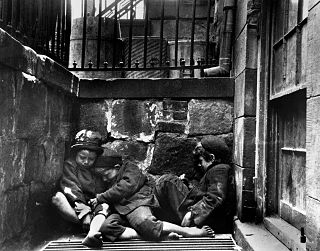
Foster care is the term used for a system in which a minor who has been made a ward or a non-minor, typically aged 18–21, who volunteers for placement, is placed in a relative placement, a non-related extended family (NREFM) placement, a community family home, an institution, a group home (residential child care community, residential treatment center, etc. Relative, NREFM, and community caregivers certified by the state are typically referred to as "foster parents," "kin caregivers," "resource parents," or other local terms. The placement of the child is usually arranged through state or county social services. The institution, group home, or caregiver is reimbursed for the expenses related to caring for the child. The state via the family court and child protection agency stand in loco parentis to the minor, making all legal decisions, while the caregiver is responsible for the day-to-day care of the minor. Even while their child is in Care, typically birth parents retain Education and Medical rights and the right to contact with their child unless parental rights are terminated by the Court.
The Huronia Regional Centre was an institution for developmentally disabled people operated by the government of Ontario, Canada between 1876 and 2009. After the closing of the school, and prompted by a class-action lawsuit, the government apologized for decades of neglectful abuse of the facility's residents and paid a settlement to surviving victims.
LGBT parents in Canada have undergone significant progress in terms of both legal and social acceptance. Same-sex couples who wish for parenthood now enjoy equally the possibilities, responsibilities and rights of opposite-sex couples. Following the nationwide legalization of same-sex marriage in 2005, the number of LGBT families in Canada has increased substantially, paving the way for same-sex couples' aspirations of having their own children. Legal methods of assisted reproduction range from insemination via IVF through to surrogacy arrangements.
Involuntary commitment or civil commitment is a legal process through which an individual who is deemed by a qualified agent to have symptoms of severe mental disorder is detained in a psychiatric hospital (inpatient) where they can be treated involuntarily.


