
The Huilliche, Huiliche or Huilliche-Mapuche are the southern partiality of the Mapuche macroethnic group in Chile and Argentina. Located in the Zona Sur, they inhabit both Futahuillimapu and, as the Cunco or Veliche subgroup, the northern half of Chiloé Island. The Huilliche are the principal indigenous people of those regions. According to Ricardo E. Latcham the term Huilliche started to be used in Spanish after the second founding of Valdivia in 1645, adopting the usage of the Mapuches of Araucanía for the southern Mapuche tribes. Huilliche means 'southerners' A genetic study showed significant affinities between Huilliches and indigenous peoples east of the Andes, which suggests but does not prove a partial origin in present-day Argentina.

Austral University of Chile is a Chilean research university based primarily in Valdivia, with satellite campuses in Puerto Montt and Coyhaique. Founded on September 7, 1954, it is one of the eight original Chilean Traditional Universities. It operates as a nonprofit self-owned corporation under private law, and receives significant state-funding.
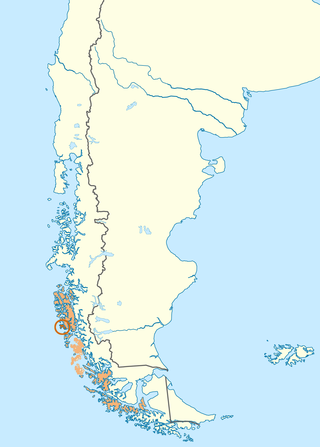
Kawésqar (Qawasqar), also known as Alacaluf, is a critically endangered Alacalufan language spoken in southern Chile by the Kawésqar people. Originally part of a small family, only the northern language remains. In 2009, only a handful of elderly people spoke the language, most of whom lived on Wellington Island off the southwest coast of Chile.

Valdivia is a city and commune in southern Chile, administered by the Municipality of Valdivia. The city is named after its founder, Pedro de Valdivia, and is located at the confluence of the Calle-Calle, Valdivia, and Cau-Cau Rivers, approximately 15 km (9 mi) east of the coastal towns of Corral and Niebla. Since October 2007, Valdivia has been the capital of Los Ríos Region and is also the capital of Valdivia Province. The national census of 2017 recorded the commune of Valdivia as having 166,080 inhabitants (Valdivianos), of whom 150,048 were living in the city. The main economic activities of Valdivia include tourism, wood pulp manufacturing, forestry, metallurgy, and beer production. The city is also the home of the Austral University of Chile, founded in 1954 and the Centro de Estudios Científicos.

Zona Sur is one of the five natural regions on which CORFO divided continental Chile in 1950. Its northern border is formed by the Bío-Bío River, which separates it from the Central Chile Zone. The Southern Zone borders the Pacific Ocean to the west, and to the east lies the Andean mountains and Argentina. Its southern border is the Chacao Channel, which forms the boundary with the Austral Zone. While the Chiloé Archipelago belongs geographically to the Austral Zone in terms of culture and history, it lies closer to the Southern Zone.

Teja island is an island in the city of Valdivia, Chile, surrounded by three rivers: Cau-Cau river to the north, Cruces river to the west and Valdivia river to the southeast. Prior to the mid-19th century, the island was known as isla Valenzuela after Francisco de Valenzuela, an encomendero that settled there in 1552. In the second half of the 19th century, the island became known for its roof tile and brick factory, hence the name isla Teja. Initially it was outside the proper city, but with the arrival of German immigrants, many of them settled there, and since 1939, the island is directly connected to downtown Valdivia through the Pedro de Valdivia bridge. A large section of the island's western riverside sank below water level due to the Great Chilean earthquake of 1960.
The Valdivia International Film Festival is an international film exhibition and competition, held annually in the city of Valdivia, Los Rios region, Chile.
Mario Pino Quivira is a Chilean geologist specialized in geoarchaeology and sedimentology that has been involved in several studies of early human settlements in Southern Chile. After Tom Dillehay's excavation of Monte Verde near Puerto Montt, where human remains estimated to be about 15,000 years old have been found, challenging the Clovis theory of the first human arrival in the Americas, Pino controversially claimed the site was 33,000 years old. Other studied sites includes the Chan-Chan settlement near Mehuín and the Gomphotherium of Osorno.

Carlos Anwandter was a German political exile who emigrated to Valdivia, Chile in 1850 after participating in the Revolutions of 1848.

Persea lingue, synonyms including Persea meyeniana, is an evergreen tree or shrub in the laurel family (Lauraceae), found in Argentina and Chile. It belongs to the genus Persea, a group of evergreen trees including the avocado. P. lingue was historically used in leather production, and is currently threatened by habitat loss.
Celulosa Arauco y Constitución is a Chilean wood pulp, engineered wood and forestry company controlled by Anacleto Angelini's economic group; Empresas Copec. In 2006 CELCO/ARAUCO had five pulp mills in Chile and one in Argentina. Apart from pulp mills, CELCO/ARAUCO has 4 engineered wood manufacturing plants in Chile, 2 in Argentina and 2 in Brazil.
Arturo Andrés Norambuena Ardiles is a retired Chilean footballer who played as forward and current manager.

Museo de Arte Contemporáneo or MAC is a modern art museum in Valdivia run by Universidad Austral de Chile. It was founded in 1994 by the then rector of Universidad Austral Manfred Max-Neef and the artist Hernán Miranda. Artists that have had exhibitions at MAC include: Nicanor Parra and Juan Francisco Salazar. MAC was built in the same site of the old Anwandter Brewery that collapsed during the 1960 Valdivia earthquake.
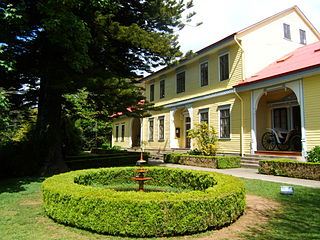
Museo Histórico y Antropológico Maurice van de Maele or is an anthropology and history museum in Valdivia run by Universidad Austral de Chile. The exhibitions at the museum deals with Mapuche and Huilliche culture and the German colonization of southern Chile. The museums exhibits collections of archaeological artifacts and also tools, toys, jewelry, textiles, ceramics and photo collection. The museum is named after Maurice van de Maele a Belgian amateur journalist, archaeologist and anthropologist who worked in Universidad Austral.
Sexual Democracia are a Chilean folk-rock band, active in the late 1980s until the early 2000s. Sexual Democracia is among the commercially most successful bands from Valdivia. Its second album Buscando Chilenos 2 reached platinum status due to strong sales.
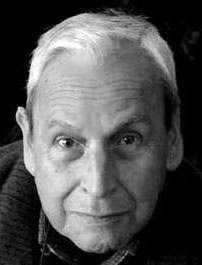
Guido Mutis Carrasco was an English literature professor at the Valdivia campus of the Austral University of Chile and director of the Valdivia International Film Festival. During his life he made important contributions to national cinema studies and Chilean literature.

The 1990 Chilean telethon was the ninth version of the solidarity campaign conducted in Chile, which took place on 7 and 8 December 1990. The theme of this version was "No-one Left Out."
The 2018 Copa Chile, was the 39th edition of the Copa Chile, the country's national football cup tournament. Santiago Wanderers were the defending champions, but lost to Palestino in the second round of the competition. Palestino went on to become champions after defeating Audax Italiano in the final by an aggregate score of 4–2.
The 2019 Copa Chile, was the 40th edition of the Copa Chile, the country's national football cup tournament. Palestino were the defending champions, but were knocked out of the competition by Santiago Morning in the second round. Colo-Colo were the champions, defeating Universidad de Chile 2–1 in the final.

