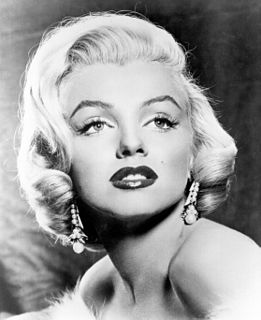
A stage name is a pseudonym used by performers and entertainers such as actors, comedians, singers, and musicians. Such titles are adopted for a wide variety of reasons, and may be similar or nearly identical to an individual's birth name. In some situations, though not often, a performer will adopt their title as a legal name. Nicknames and maiden names are sometimes used in person's professional name.

In some cultures, a surname, family name, or last name is the portion of one's personal name that indicates their family, tribe or community.

Zhang is third most common surname in China and one of the most common surnames in the world. Zhang is the pinyin romanization of the very common Chinese surname written 张 in simplified characters and 張 in traditional characters. It is spoken in the first tone: Zhāng. It is a surname that exists in many languages and cultures, corresponding to the surname 'Archer' in English for example. Chang is the Wade-Giles romanization; Cheung is commonly used in Hong Kong as romanization.

Huang is a Chinese surname that means "Yellow". While Huáng is the pinyin romanization of the word, it may also be romanized as Hwang, Wong, Waan, Wan, Waon, Hwong, Vong, Hung, Hong, Bong, Eng, Ng, Uy, Wee, Oi, Oei, Oey, Ooi, Ong, or Ung due to pronunciations of the word in different dialects and languages. It is the 96th name on the Hundred Family Surnames poem.

Chen is a common East Asian surname and one of the most common surnames in the world. It is the most common surname in Taiwan (2010) and Singapore (2000). Chen is also the most common family name in Guangdong, Zhejiang, Fujian, Macau, and Hong Kong. It is the most common surname in Xiamen, the ancestral hometown of many overseas Hoklo.
Quinn is an Anglicised form of the Irish Ó Coinn or McQuinn/MacQuinn. The latter surname means "descendant of Conn". The surname Quinn is also rendered Ó Cuinn in Irish. The surname is borne by numerous unrelated Irish families in Ulster and the Irish counties of Clare, Longford, and Mayo. The most notable family of the name are that of Thomond, a Dalcassian sept, who derive their surname from Niall Ó Cuinn who was slain at the Battle of Clontarf in 1014. This family was formerly represented by the Earls of Dunraven. Another family is that seated in Annaly, who were related to the O'Farrell lords of Longford. Other families include one seated in Antrim; one seated in Raphoe; and one called Clann Cuain, seated near Castlebar. In the seventeenth century, the surname Quinn was common in Waterford. In 1890, the surname was numerous in Dublin, Tyrone, Antrim, and Roscommon. Quinn is one of the twenty most common surnames in Ireland. It is sometimes said that the surname Quinn is borne by Catholics whilst Quin is borne by Protestants.
Brian is a male given name of Irish and Breton origin, as well as a surname of Occitan origin. It is common in the English-speaking world. It is possible that the name is derived from an Old Celtic word meaning "high" or "noble". For example, the element bre means "hill"; which could be transferred to mean "eminence" or "exalted one". The name is quite popular in Ireland, on account of Brian Boru, a 10th-century High King of Ireland. The name was also quite popular in East Anglia during the Middle Ages. This is because the name was introduced to England by Bretons following the Norman Conquest. Bretons also settled in Ireland along with the Normans in the 12th century, and 'their' name was mingled with the 'Irish' version. Also, in the north-west of England, the 'Irish' name was introduced by Scandinavian settlers from Ireland. Within the Gaelic speaking areas of Scotland, the name was at first only used by professional families of Irish origin. It was the fourth most popular male name in England and Wales in 1934, but a sharp decline followed over the remainder of the 20th century and by 1994 it had fallen out of the top 100. It retained its popularity in the United States for longer; its most popular period there was from 1968–1979 when it consistently ranked between eighth and tenth. The name has become increasingly popular in South America - particularly Argentina and Uruguay since the early 1990s.
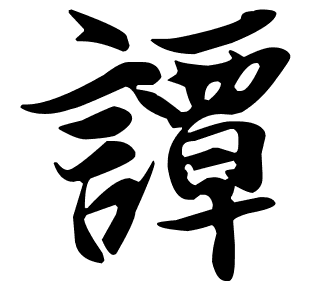
Tan is a common Chinese surname 譚. It is considered the 56th most common surname.

Zhōu is the Hanyu Pinyin transliteration of the Chinese family name 周, which ranks as the 10th most common surname in Mainland China as of 2019. In 2013 it was found to be the 10th most common name, shared by 25,200,000 people or 1.900% of the population, with the province with the most being Hunan. Derived from the Zhou dynasty, it has been one of the ten most common surnames in China since the Yuan dynasty. It is the 5th name on the Hundred Family Surnames poem.
American Sign Language (ASL) is the main language of members of the deaf community in the United States. One component of their language is the use of idioms. The validity of these idioms have often been questioned or confused with metaphorical language. The term idiom can be defined as, "A speech form or an expression of a given language that is peculiar to itself grammatically or cannot be understood from the individual meanings of its elements,". The following examples are written in ASL glossing. These idioms further validate ASL as a language unique and independent of English. Idioms in ASL bond people in the Deaf community because they are expressions that only in-group members can understand.
Bing most often refers to:

The Dr. E.P. McGehee Infirmary is a historic medical complex at 614 South Cokley Street in Lake Village, Arkansas. The complex began as a single wood-frame structure in 1910 serving as a medical clinic for the local African-American population. It was the town's primary infirmary from its establishment until 1973. It was established and operated by Dr. Edward Pelham McGehee until his death in 1950. It is now home to the Museum of Chicot County.

Rebecca Hare Cokley is an American disability rights activist and public speaker who is currently the director of the Disability Justice Initiative at the Center for American Progress working on disability policy. She previously served as the Executive Director of the National Council on Disability (NCD).
Chris Cokley is an American basketball player for AB Contern of the Total League. He competed in college for UAB.
American Descendants of Slavery (ADOS) is a term used to refer to people who are descended from Africans who were enslaved specifically in the area that would become the United States, from its colonial period onward, and to the political movement that advocates for them. Both the concept and the movement grew out of the hashtag #ADOS created by Yvette Carnell and Antonio Moore.
Cari is an English and Spanish feminine given name and surname. As an English given name, Cari is diminutive form of Caroline and an alternate form of Carrie both derived from Karl. Cari is a Spanish given name that is a short form of Caridad, a derivative of Caritas. Notable people referred to by this name include the following:
Char is a French feminine given name that is a variation of Chardonnay, Charlene, and Charlotte and a feminine form of Charles. Char is also used as a variation of Charmaine. Notable people with this name include the following:
Carlon is a given name and surname. Notable people referred to by this name include the following:

Kevin Cokley is an African-American counselling psychologist, academic and researcher. He is a Professor of African and African Diaspora Studies and the Oscar and Anne Mauzy Regents Professor of Educational Research and Development at the University of Texas at Austin, where he directs the Institute for Urban Policy Research & Analysis. He is a Fellow of the UT System Academy of Distinguished Teachers and a Distinguished Teaching Professor at the University of Texas at Austin.

