
A hymn is a type of song, usually religious, specifically written for the purpose of adoration or prayer, and typically addressed to a deity or deities, or to a prominent figure or personification. The word hymn derives from Greek ὕμνος (hymnos), which means "a song of praise". A writer of hymns is known as a hymnist. The singing or composition of hymns is called hymnody. Collections of hymns are known as hymnals or hymn books. Hymns may or may not include instrumental accompaniment.

A hymnal or hymnary is a collection of hymns, usually in the form of a book, called a hymnbook. Hymnals are used in congregational singing. A hymnal may contain only hymn texts ; written melodies are extra, and more recently harmony parts have also been provided.
"O My Father" is a Latter-day Saint hymn written by Eliza R. Snow, who felt inspired to write the lyrics after Joseph Smith had taught her the principle of heavenly parents. The hymn is significant in terms of Mormon theology in that it is one of the few direct references to a "Heavenly Mother" in materials published by The Church of Jesus Christ of Latter-day Saints.

Emma Hale Smith Bidamon was the first wife of Joseph Smith and a leader in the early days of the Latter Day Saint movement, both during Joseph's lifetime and afterward as a member of the Reorganized Church of Jesus Christ of Latter Day Saints. In 1842, when the Ladies' Relief Society of Nauvoo was formed as a women's service organization, she was elected by its members as the organization's first president.

"Hark! The Herald Angels Sing" is an English Christmas carol that first appeared in 1739 in the collection Hymns and Sacred Poems. As it is known in the modern era, it features lyrical contributions from Charles Wesley and George Whitefield, two of the founding ministers of Methodism, with music adapted from "Vaterland, in deinen Gauen" by Felix Mendelssohn.
"The Spirit of God Like a Fire Is Burning" is a hymn of the Latter Day Saint movement. It was written by W. W. Phelps, one of the most prolific hymnwriters of early Mormonism.
"Joy to the World! The Lord Will Come" is an adaptation by W. W. Phelps of the popular Christmas carol "Joy to the World". The adapted song was included in A Collection of Sacred Hymns, the first Latter Day Saint hymnal, which was prepared for publication in 1835 and published in February 1836 as well as all English-language hymnals published by the LDS Church since 1948.

A Collection of Sacred Hymns, for the Church of the Latter Day Saints. was the first hymnal of the Latter Day Saint movement. It was published in 1835 by the Church of the Latter Day Saints.

"Christ the Lord Is Risen Today" is a Christian hymn associated with Easter. Most of the stanzas were written by Charles Wesley, and the hymn appeared under the title "Hymn for Easter Day" in Hymns and Sacred Poems by Charles and John Wesley in 1739. The hymn eventually became well known for the "Alleluia" sung as a melisma after each line, which was added by an unknown author, probably to fit the commonly used hymn tune of "Easter hymn". It remains a traditional processional hymn on Easter Sunday.

Jiří Třanovský, was a Lutheran priest and hymnwriter from the Cieszyn Silesia. Sometimes called the father of Slovak hymnody and the "Luther of the Slavs," Třanovský's name is sometimes anglicized to George Tranoscius. Both the Evangelical Lutheran Church in America and the Evangelical Lutheran Church in Canada remember his life and work annually, on the anniversary of his death.

"Recessional" is a poem by Rudyard Kipling. It was composed for Queen Victoria's Diamond Jubilee, in 1897.
Hymns are an important part of the history and worship of The Church of Jesus Christ of Latter-day Saints.

Hymns of The Church of Jesus Christ of Latter-day Saints is the official hymnal of The Church of Jesus Christ of Latter-day Saints . Published in English in 1985, and later in many other languages, it is used throughout the LDS Church. This article refers to the English version. The book was published on the 150th anniversary of the publication of the first LDS hymnbook, compiled by Emma Smith in 1835. Previous hymnbooks used by the church include The Manchester Hymnal (1840), The Psalmody (1889), Songs of Zion (1908), Hymns (1927), and Hymns (1948).

"O Sacred Head, Now Wounded" is a Christian Passion hymn based on a Latin text written during the Middle Ages. Paul Gerhardt wrote a German version which is known by its incipit, "O Haupt voll Blut und Wunden".
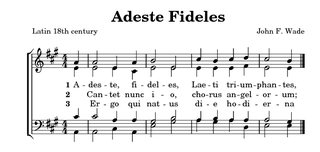
A hymn tune is the melody of a musical composition to which a hymn text is sung. Musically speaking, a hymn is generally understood to have four-part harmony, a fast harmonic rhythm, and no refrain or chorus.

"A Poor Wayfaring Man of Grief" is a seven-stanza poem written in 1826 by James Montgomery. The words of the poem have since been adopted as a Christian hymn.
"The Morning Breaks, the Shadows Flee" is an 1840 hymn written by Latter Day Saint apostle Parley P. Pratt.

Kirchenlied is a German Catholic hymnal published in 1938. It was a collection of 140 old and new songs, including hymns by Protestant authors. It was the seed for a common Catholic hymnal which was realised decades later, in the Gotteslob (1975).

"I Know That My Redeemer Lives" is an English Christian Easter hymn in long metre by Samuel Medley. It was published in 1775 and is written for Easter Sunday.
