
Corleone is an Italian town and comune of roughly 11,158 inhabitants in the Metropolitan City of Palermo, in Sicily.
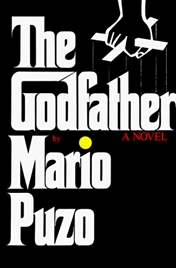
The Godfather is a crime novel by American author Mario Puzo. Originally published in 1969 by G. P. Putnam's Sons, the novel details the story of a fictional Mafia family in New York City, headed by Vito Corleone, the Godfather. The novel covers the years 1945 to 1955 and includes the back story of Vito Corleone from early childhood to adulthood.

Michael Corleone is a fictional character and the protagonist of Mario Puzo's 1969 novel The Godfather. In the three Godfather films, directed by Francis Ford Coppola, Michael was portrayed by Al Pacino, for which he was twice-nominated for Academy Awards. Michael is the youngest son of Vito Corleone, a Sicilian immigrant who builds a Mafia empire. Upon his father's death, Michael succeeds him as the don of the Corleone crime family.

Vito Corleone is a fictional character in Mario Puzo's 1969 novel The Godfather and in the first two of Francis Ford Coppola's film trilogy. Vito is originally portrayed by Marlon Brando in the 1972 film The Godfather, and later by Oreste Baldini as a boy and by Robert De Niro as a young man in The Godfather Part II (1974). He is an orphaned Sicilian immigrant who builds a Mafia empire.

Santino "Sonny" Corleone is a fictional character in Mario Puzo's 1969 novel The Godfather and its 1972 film adaptation.

Vincent SantinoMancini is a fictional character in the 1990 feature film The Godfather Part III. He is portrayed by Andy García, who was nominated for an Academy Award for his performance. Vincent is the illegitimate son of Sonny Corleone and his mistress Lucy Mancini. He eventually succeeds his uncle Michael as head of the Corleone family. In Mario Puzo's original 1969 novel Lucy did not conceive a child with Sonny.
The Corleone family are fictional characters in both the novels and the films created by Mario Puzo, first appearing in his 1969 novel, The Godfather. They are an organized crime family originating from the Sicilian town of Corleone, and based in New York City.

Thomas Hagen is a fictional character in Mario Puzo's 1969 novel The Godfather and Francis Ford Coppola's films The Godfather (1972) and The Godfather Part II (1974). He is portrayed by Robert Duvall in the films. He also appears in the Mark Winegardner sequel novels The Godfather Returns and The Godfather's Revenge, as well as Ed Falco's novel The Family Corleone. Duvall was nominated for an Academy Award for Best Supporting Actor and a BAFTA for his performance in the first film.
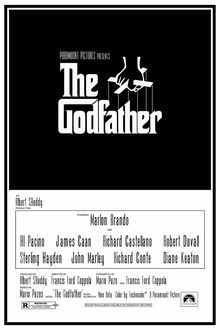
The Godfather is a 1972 American epic crime film directed by Francis Ford Coppola, who co-wrote the screenplay with Mario Puzo, based on Puzo's best-selling 1969 novel of the same title. The film stars Marlon Brando, Al Pacino, James Caan, Richard Castellano, Robert Duvall, Sterling Hayden, John Marley, Richard Conte and Diane Keaton. It is the first installment in The Godfather trilogy, chronicling the Corleone family under patriarch Vito Corleone (Brando) from 1945 to 1955. It focuses on the transformation of his youngest son, Michael Corleone (Pacino), from reluctant family outsider to ruthless mafia boss.

Peter Clemenza is a fictional character who first appeared in Mario Puzo's 1969 novel The Godfather. He is played by Academy Award-nominee Richard Castellano in Francis Ford Coppola's 1972 film adaptation of the novel, and by Bruno Kirby in The Godfather Part II (1974).

The Sicilian is a novel by American author Mario Puzo. Published in 1984 by Random House Publishing Group (ISBN 0-671-43564-7), it is based on the life of Sicilian bandit Salvatore Giuliano. It is set in the same universe as Puzo's most famous work, The Godfather (1969), and contains characters from The Godfather. It is regarded as The Godfather's literary sequel and is the second book in The Godfather novel series. It was adapted into a film in 1987, though all Godfather references were removed for copyright reasons in the film adaptation.
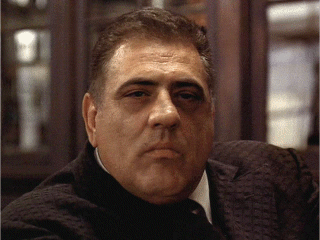
Luca Brasi is a fictional character in Mario Puzo's 1969 novel The Godfather, as well as its 1972 film adaptation. In the film, he was portrayed by Lenny Montana, an ex-wrestler and former bodyguard and enforcer for the Colombo crime family.
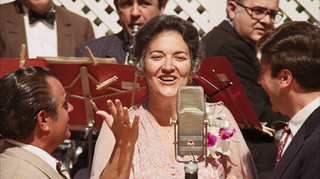
Carmela Corleone (1897–1959) is a fictional character in Mario Puzo's 1969 novel The Godfather. Carmela is portrayed by Italian-American Morgana King in Francis Ford Coppola's 1972 film adaptation of the novel, and in The Godfather Part II (1974).
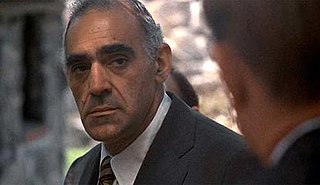
Salvatore "Sal" Tessio is a fictional character in Mario Puzo's 1969 novel The Godfather, as well as two of the films based on it: The Godfather (1972) and The Godfather Part II (1974). His given name was created for the films; in the novel he is referred to only as "Tessio". In the film The Godfather, Tessio was portrayed by Abe Vigoda. In The Godfather Part II, John Aprea portrayed the younger Tessio, while Vigoda reprised the role in a flashback, set in late 1941, at the end of the film.

Emilio "The Wolf" Barzini is a fictional character and the main antagonist in Mario Puzo's 1969 novel The Godfather and in its 1972 film adaptation, in which he is portrayed by Richard Conte. The Barzini crime family was inspired by the Genovese crime family.
The Godfather is a trilogy of American crime films directed by Francis Ford Coppola inspired by the 1969 novel of the same name by Italian American author Mario Puzo. The films follow the trials of the fictional Italian American mafia Corleone family whose patriarch, Vito Corleone, rises to be a major figure in American organized crime. His youngest son, Michael Corleone, becomes his successor. The films were distributed by Paramount Pictures and released in 1972, 1974, and 1990. The series achieved success at the box office, with the films earning between $430 and $517 million worldwide. The Godfather and The Godfather Part II are both seen by many as two of the greatest films of all time. The series is heavily awarded, winning 9 out of 28 total Academy Award nominations.

Carlo Rizzi is a fictional character in Mario Puzo's 1969 novel The Godfather. In the 1972 film adaptation, he was portrayed by Gianni Russo.
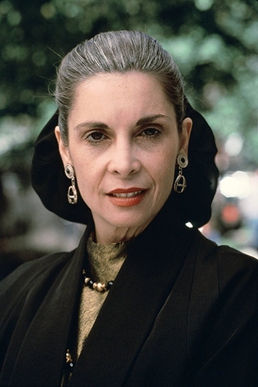
Constanzia "Connie" Corleone is a fictional character in The Godfather, a 1969 novel by Mario Puzo, and the 1972 film The Godfather. In the film, Connie is portrayed by Talia Shire, the sister of the director Francis Ford Coppola. Shire was nominated for the Academy Award for Best Supporting Actress for her portrayal of Connie Corleone in The Godfather Part II.

