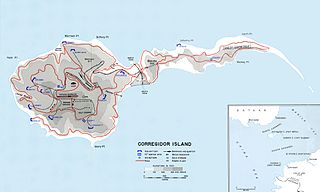
Corregidor Island is an island located at the entrance of Manila Bay in southwestern part of Luzon Island in the Philippines. Due to this location, Corregidor has historically been fortified with coastal artillery to defend the entrance of Manila Bay and Manila from attacks by enemy warships. Located 48 kilometres (30 mi) inland, Manila has been the largest city and the most important seaport in the Philippines for centuries, from the colonial rule of Spain, Japan and the United States, to the establishment of the Philippines in 1946.

Jonathan Mayhew Wainwright IV was a career American army officer and the Commander of Allied forces in the Philippines at the time Japan surrendered to the United States, during World War II. Wainwright was a recipient of the Medal of Honor for his courageous leadership during the fall of the Philippines.
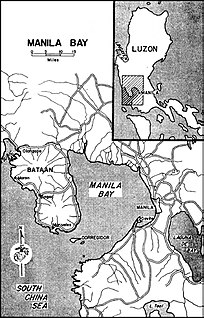
The Harbor Defenses of Manila and Subic Bays were a United States Army Coast Artillery Corps harbor defense command, part of the Philippine Department of the United States Army from circa 1910 through early World War II. The command primarily consisted of four forts on islands at the entrance to Manila Bay and one fort on an island in Subic Bay.
Fort Mills was the location of US Major General George F. Moore's headquarters for the Philippine Department's Harbor Defenses of Manila and Subic Bays in early World War II, and was the largest seacoast fort in the Philippines. Most of this Coast Artillery Corps fort was built 1904–1910 by the United States Army Corps of Engineers as part of the Taft program of seacoast defense. The fort was named for Brigadier General Samuel Meyers Mills Jr., Chief of Artillery 1905–1906. It was the primary location of the Battle of Corregidor in the Japanese invasion of the Philippines in 1941–42, and of the recapture of Corregidor in February 1945, both in World War II.
Fort Hughes was part of the Harbor Defenses of Manila and Subic Bays built by the Philippine Department of the U.S. Army in the early 1900s. The fort was named for Major General Robert Patterson Hughes, a veteran of the American Civil War, Spanish–American War, and the Philippine–American War.

The Bataan Death March was the forcible transfer by the Imperial Japanese Army of 60,000–80,000 American and Filipino prisoners of war from Saysain Point, Bagac, Bataan and Mariveles to Camp O'Donnell, Capas, Tarlac, via San Fernando, Pampanga, where the prisoners were loaded onto trains. The transfer began on April 9, 1942, after the three-month Battle of Bataan in the Philippines during World War II. The total distance marched from Mariveles to San Fernando and from the Capas Train Station to Camp O'Donnell is variously reported by differing sources as between 60 and 69.6 miles. Differing sources also report widely differing prisoner of war casualties prior to reaching Camp O'Donnell: from 5,000 to 18,000 Filipino deaths and 500 to 650 American deaths during the march. The march was characterized by severe physical abuse and wanton killings. After the war, the Japanese commander, General Masaharu Homma and two of his officers were tried in United States military commissions on charges of failing to prevent their subordinates from committing war crimes.
Battle of the Philippines may refer to several wars, military campaigns, and major battles which have been fought in the Philippine Islands, including:
The Philippines campaign, also known as the Battle of the Philippines or the Fall of the Philippines, was from December 8, 1941 to May 8, 1942 the invasion of the Philippines by the Empire of Japan and the defense of the islands by United States and the Philippine Armies during World War II.

The Battle of Corregidor, fought May 5–6, 1942, was the culmination of the Japanese campaign for the conquest of the Commonwealth of the Philippines during World War II.

The Battle of Bataan was fought by the United States and the Philippine Commonwealth against Japan during World War II. The battle represented the most intense phase of the Japanese invasion of the Philippines during World War II. In January 1942, forces of the Imperial Japanese Army and Navy invaded Luzon along with several islands in the Philippine Archipelago after the bombing of the American naval base at Pearl Harbor.
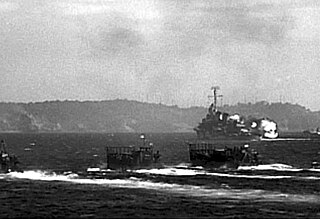
The Battle for the Recapture of Corregidor, which occurred on the 16th until the 26th of February, 1945, pitted American forces against the defending Japanese garrison on the island fortress. The Japanese had captured the bastion from the United States Army Forces in the Far East during their 1942 invasion.
The Commonwealth of the Philippines was attacked by the Empire of Japan on 8 December 1941, nine hours after the attack on Pearl Harbor. Although it was governed by a semi-independent commonwealth government, the United States of America controlled the Philippines at the time and possessed important military bases there. The combined American-Filipino army was defeated in the Battle of Bataan and the Battle of Corregidor in April 1942, but guerrilla resistance against the Japanese continued throughout the war. Uncaptured Filipino army units, a communist insurgency, and supporting American agents all played a role in the resistance. Due to the huge number of islands, the Japanese never occupied many of the smaller and more minor islands. Japanese control over the countryside and smaller towns was often tenuous at best.
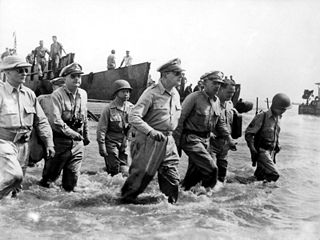
The Philippines campaign, Battle of the Philippines or the Liberation of the Philippines, codenamed Operation Musketeer I, II, and III, was the American and Filipino campaign to defeat and expel the Imperial Japanese forces occupying the Philippines during World War II. The Japanese Army overran all of the Philippines during the first half of 1942. The liberation of the Philippines commenced with amphibious landings on the eastern Philippine island of Leyte on October 20, 1944. United States and Philippine Commonwealth military forces were progressing in liberating territory and islands when the Japanese forces in the Philippines were ordered to surrender by Tokyo on August 15, 1945, after the dropping of the atomic bombs on mainland Japan and the Soviet invasion of Manchuria.
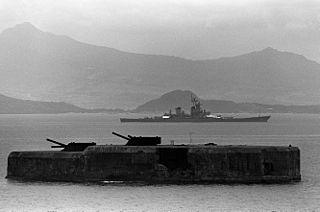
Fort Drum, also known as "the concrete battleship", is a heavily fortified island situated at the mouth of Manila Bay in the Philippines, due south of Corregidor Island. The reinforced concrete sea fort shaped like a battleship was built by the United States in 1909 as one of the harbor defenses at the wider South Channel entrance to the bay during the American colonial period.

The South West Pacific theatre, during World War II, was a major theatre of the war between the Allies and the Axis. It included the Philippines, the Dutch East Indies, Borneo, Australia and its mandate Territory of New Guinea and the western part of the Solomon Islands. This area was defined by the Allied powers' South West Pacific Area (SWPA) command.

USS Quail (AM-15) was an Lapwing-class minesweeper acquired by the U.S. Navy for the dangerous task of removing mines from minefields laid in the water to prevent ships from passing.
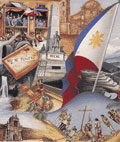
The Japanese occupation of the Philippines occurred between 1942 and 1945, when Imperial Japan occupied the Commonwealth of the Philippines during World War II.

The Type 45 240 mm howitzer was a siege gun used by the Imperial Japanese Army during World War I and World War II. The Type 45 designation was given to this gun as it was accepted in the 45th year of Emperor Meiji's reign (1912). It was the first such weapon to be entirely designed in Japan.
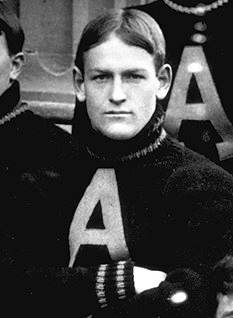
Paul Delmont Bunker was an American football player and soldier. Bunker attended the U.S. Military Academy and became the first football player at West Point to be selected as a first-team All-American by Walter Camp. Bunker was chosen as an All-American at the tackle position in 1901 and repeated as an All-American in 1902, but as a halfback. He served in the U.S. Army for 40 years and was in command of the coastal artillery forces in the Battle of Corregidor. On the fall of Corregidor, Bunker became a prisoner of war. He died of starvation and disease in a Japanese prison camp in 1943 after losing 70 pounds. His posthumously published journal, Paul Bunker's Diary, became a best-seller. He was elected to the College Football Hall of Fame in 1969.

During the Japanese occupation of the islands in World War II, there was an extensive Philippine resistance movement, which opposed the Japanese and their collaborators with active underground and guerrilla activity that increased over the years. Fighting the guerrillas – apart from the Japanese regular forces – were a Japanese-formed Bureau of Constabulary, the Kenpeitai, and the Makapili. Postwar studies estimate that around 260,000 persons were organized under guerrilla groups and that members of anti-Japanese underground organizations were more numerous. Such was their effectiveness that by the end of World War II, Japan controlled only twelve of the forty-eight provinces.
