Rader, Roeder, or sometimes Raeder are surnames with German roots believed to be Americanized spellings of the German surnames Röder and Räder and may refer to:
Ralph Michael "Mike" Caldwell is an American and former collegiate and professional baseball left-handed pitcher.
Douglas Lee Rader, nicknamed "The Red Rooster", is a former third baseman in Major League Baseball who was known primarily for his defensive ability, winning five straight Gold Glove Awards from 1970 to 1974.
Robert Leroy "Buck" Rodgers is a former catcher, manager and coach in Major League Baseball. He managed three major league teams: the Milwaukee Brewers (1980–82), Montreal Expos (1985–91) and California Angels (1991–94), compiling a career won-lost mark of 784–773 (.504).
Stanley Gerard Papi is a former major league baseball player perhaps most remembered for being traded by the Montreal Expos to the Boston Red Sox for Bill Lee during the 1978-79 off-season.
David Martin Rader is an American former professional baseball player. He played as a catcher in Major League Baseball from 1971 through 1980, with the San Francisco Giants (1971–1976), St. Louis Cardinals (1977), Chicago Cubs (1978), Philadelphia Phillies (1979) and Boston Red Sox (1980). He batted left-handed and threw right-handed.
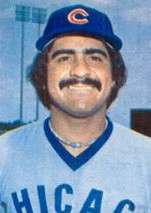
Julio Ruben "Jerry" Morales Torres is a former Major League Baseball outfielder who played from 1969-1983.
Horace Arthur Speed III is a retired Major League Baseball outfielder who played three seasons for the San Francisco Giants and the Cleveland Indians.

The 1978 St. Louis Cardinals season was the team's 97th season in St. Louis, Missouri and its 87th season in the National League. The Cardinals went 69-93 during the season and finished fifth in the National League East, 21 games behind the Philadelphia Phillies.
The 1977 St. Louis Cardinals season was the team's 96th season in St. Louis, Missouri and its 86th season in the National League. The Cardinals went 83–79 during the season and finished third in the National League East, 18 games behind the Philadelphia Phillies.
The 1980 Boston Red Sox season was the 80th season in the franchise's Major League Baseball history. The Red Sox finished fifth in the American League East with a record of 83 wins and 77 losses, 19 games behind the New York Yankees. Manager Don Zimmer was fired with five games left, and Johnny Pesky finished the season as manager.
The California Angels 1981 season involved the Angels finishing with the 5th best overall record in the American League West with 51 wins and 59 losses. The season was suspended for 50 days due to the infamous 1981 players' strike and the league chose as its playoff teams the division winners from the first and second halves of the season.
The 1980 Philadelphia Phillies season was the team's 98th season in Major League Baseball (MLB) and culminated with the Phillies winning the World Series at home by defeating the Kansas City Royals in game 6 on Oct. 21, 1980.
The 1977 San Diego Padres season was the 9th season in franchise history.
The 1976 San Diego Padres season was the 8th season in franchise history.

The 1979 Chicago Cubs season was the 108th season of the Chicago Cubs franchise, the 104th in the National League and the 64th at Wrigley Field, and the first to be beamed via satellite and cable television to viewers all over the United States on WGN Television, thanks to a postseason decision by the company management to uplink its broadcast signals via satellite with the help of Oklahoma-based United Video Satellite Group, making them the pioneer superstation in the country's midwest and the Cubs games of that season the third superstation baseball broadcasts live via satellite relay after the Braves and the Yankees.It was the first season of over 40 to be broadcast all over the county, slowly making the team a national brand. The Cubs finished fifth in the National League East with a record of 80–82.
The 1967 San Francisco Giants season was the Giants' 85th year in Major League Baseball, their tenth year in San Francisco since their move from New York following the 1957 season, and their eighth at Candlestick Park. The team finished in second place in the National League with a record of 91 wins and 71 losses, 10½ games behind the NL and World Series champion St. Louis Cardinals.
The 1973 San Francisco Giants season was the franchise's 91st season, 16th season in San Francisco and 14th in Candlestick Park. The team finished third in the National League West with a record of 88–74, 11 games behind the Cincinnati Reds.
The 1977 San Francisco Giants season was the Giants' 95th season in Major League Baseball, their 20th season in San Francisco since their move from New York following the 1957 season, and their 18th at Candlestick Park. The team finished in fourth place in the National League West with a 75–87 record, 23 games behind the Los Angeles Dodgers.
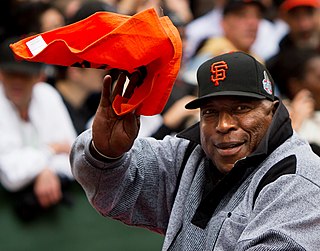
Elections to the Baseball Hall of Fame for 1986 followed the system in place since 1978. The Baseball Writers' Association of America (BBWAA) voted by mail to select from recent major league players and elected Willie McCovey. The Veterans Committee met in closed sessions to consider older major league players as well as managers, umpires, executives, and figures from the Negro Leagues. It selected two players, Bobby Doerr and Ernie Lombardi. A formal induction ceremony was held in Cooperstown, New York, on August 3, 1986, with Commissioner of Baseball Peter Ueberroth, and former Commissioners Bowie Kuhn and Happy Chandler, in attendance.
