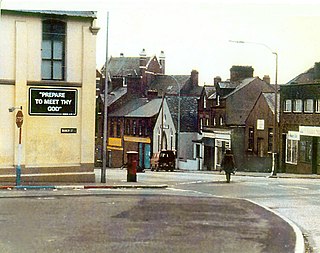
The Ship/Submarine Recycling Program (SRP) is the process that the United States Navy uses to dispose of decommissioned nuclear vessels. SRP takes place only at the Puget Sound Naval Shipyard (PSNS) in Bremerton, Washington, but the preparations can begin elsewhere.
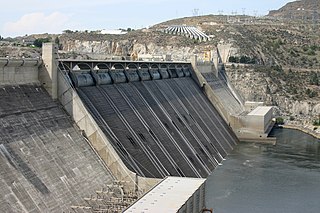
Hazardous waste is waste that has substantial or potential threats to public health or the environment.

Waste management are the activities and actions required to manage waste from its inception to its final disposal.
This includes the collection, transport, treatment and disposal of waste, together with monitoring and regulation of the waste management process.

Chemical waste is a waste that is made from harmful chemicals. Chemical waste may fall under regulations such as COSHH in the United Kingdom, or the Clean Water Act and Resource Conservation and Recovery Act in the United States. In the U.S., the Environmental Protection Agency (EPA) and the Occupational Safety and Health Administration (OSHA), as well as state and local regulations also regulate chemical use and disposal. Chemical waste may or may not be classed as hazardous waste. A chemical hazardous waste is a solid, liquid, or gaseous material that displays either a “Hazardous Characteristic” or is specifically “listed” by name as a hazardous waste. There are four characteristics chemical wastes may have to be considered as hazardous. These are Ignitability, Corrosivity, Reactivity, and Toxicity. This type of hazardous waste must be categorized as to its identity, constituents, and hazards so that it may be safely handled and managed. Chemical waste is a broad term and encompasses many types of materials. Consult the Material Safety Data Sheet (MSDS), Product Data Sheet or Label for a list of constituents. These sources should state whether this chemical waste is a waste that needs special disposal.

Toxic waste is any unwanted material in all forms that can cause harm. Many of today's household products such as televisions, computers and phones contain toxic chemicals that can pollute the air and contaminate soil and water. Disposing of such waste is a major public health issue.
A plumbing fixture is an exchangeable device which can be connected to a plumbing system to deliver and drain water.
InSinkErator is an American company and brand name known for producing instant hot water dispensers and food waste disposal systems, generally called "garbage disposals" or "garbage disposers". It is owned by Emerson Electric.

Illegal dumping, also called fly dumping or fly tipping, is the dumping of waste illegally instead of using an authorised method such as kerbside collection or using an authorised rubbish dump. It is the illegal deposit of any waste onto land, including waste dumped or tipped on a site with no licence to accept waste. The United States Environmental Protection Agency developed a “profile” of the typical illegal dumper. Characteristics of offenders include, local residents, construction and landscaping contractors, waste removers, scrap yard operators, and automobile and tire repair shops.
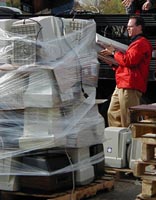
Computer recycling, electronic recycling or e-waste recycling is the disassembly and separation of components and raw materials of waste electronics. Although the procedures of re-use, donation and repair are not strictly recycling, they are other common sustainable ways to dispose of IT waste.
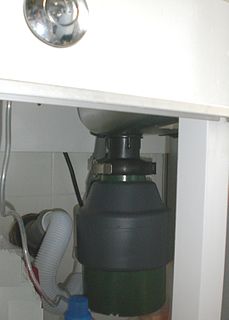
A garbage disposal unit is a device, usually electrically powered, installed under a kitchen sink between the sink's drain and the trap. The disposal unit shreds food waste into pieces small enough—generally less than 2 mm (0.079 in)—to pass through plumbing.

Sharps waste is a form of biomedical waste composed of used "sharps", which includes any device or object used to puncture or lacerate the skin. Sharps waste is classified as biohazardous waste and must be carefully handled. Common medical materials treated as sharps waste are:

Electronic waste or e-waste describes discarded electrical or electronic devices. Used electronics which are destined for reuse, resale, salvage, recycling, or disposal are also considered e-waste. Informal processing of e-waste in developing countries can lead to adverse human health effects and environmental pollution.
Nuclear entombment is entombment of a radioactive site and a method of nuclear decommissioning in which radioactive contaminants are encased in a structurally long-lived material, such as concrete. The idea is that the entombment will last for a period of time to ensure the remaining radioactivity is no longer of significant concern. The method has usually been used in relation to nuclear reactors, but also in relation to some nuclear test sites. Regarding decommission of nuclear power plants, entombment is one of three various ways: dismantling, safe enclosure and entombment. Nuclear entombment is the least used of the three options. The use of nuclear entombment is more practical for larger nuclear power plants that are in need of both long and short term burials. Entombment is used as a case by case basis because of its major commitment with years of surveillance and complexity until the radioactivity is no longer a major concern, permitting decommissioning and ultimate unrestricted release of the property.
Biomedical waste is any kind of waste containing infectious materials. It may also include waste associated with the generation of biomedical waste that visually appears to be of medical or laboratory origin, as well research laboratory waste containing biomolecules or organisms that are many restricted from environmental release. As detailed below, discarded sharps are considered biomedical waste whether they are contaminated or not, due to the possibility of being contaminated with blood and their propensity to cause injury when not properly contained and disposed of. Biomedical waste is a type of biowaste.

Waste are unwanted or unusable materials. Waste is any substance which is discarded after primary use, or is worthless, defective and of no use. A by-product by contrast is a joint product of relatively minor economic value. A waste product may become a by-product, joint product or resource through an invention that raises a waste product's value above zero.
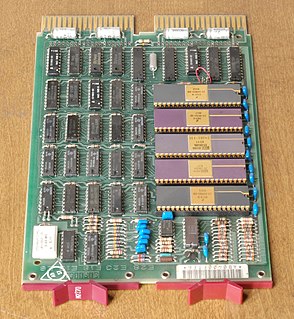
Computer hardware includes the physical, tangible parts or components of a computer, such as the cabinet, central processing unit, monitor, keyboard, computer data storage, graphics card, sound card, speakers and motherboard. By contrast, software is instructions that can be stored and run by hardware. Hardware is so-termed because it is "hard" or rigid with respect to changes or modifications; whereas software is "soft" because it is easy to update or change. Intermediate between software and hardware is "firmware", which is software that is strongly coupled to the particular hardware of a computer system and thus the most difficult to change but also among the most stable with respect to consistency of interface. The progression from levels of "hardness" to "softness" in computer systems parallels a progression of layers of abstraction in computing.
A number of different methods exist for disposing of a ship after it has reached the end of its effective or economic service life with an organisation.
Electronic waste or e-waste in the United States refers to electronic products that have reached the end of their operable lives, and the United States is beginning to address its waste problems with regulations at a state and federal level. Used electronics are the quickest-growing source of waste and can have serious health impacts. The United States is the world leader in producing the most e-waste, followed closely by China; both countries domestically recycle and export e-waste. Only recently has the United States begun to make an effort to start regulating where e-waste goes and how it is disposed of.
The global waste trade is the international trade of waste between countries for further treatment, disposal, or recycling. Toxic or hazardous wastes are often exported from developed countries to developing countries, also known as countries of the Global South. Therefore, the burden of the toxicity of wastes from Western countries falls predominantly onto developing countries in Africa, Asia, and Latin America.
The World Bank Report What a Waste: A Global Review of Solid Waste Management, describes the amount of solid waste produced in a given country. Specifically, countries which produce more solid waste are more economically developed and more industrialized. The report explains that "[g]enerally, the higher the economic development and rate of urbanization, the greater the amount of solid waste produced.” Therefore, countries in the Global North, which are more economically developed and urbanized, produce more solid waste than Global South countries.