
Civil defense or civil protection is an effort to protect the citizens of a state from human-made and natural disasters. It uses the principles of emergency operations: prevention, mitigation, preparation, response, or emergency evacuation and recovery. Programs of this sort were initially discussed at least as early as the 1920s and were implemented in some countries during the 1930s as the threat of war and aerial bombardment grew. Civil-defense structures became widespread after authorities recognised the threats posed by nuclear weapons.

The Emergency Broadcast System (EBS), sometimes called the Emergency Action Notification System (EANS), was an emergency warning system used in the United States. It was the most commonly used, along with the Emergency Override system. It replaced the previous CONELRAD system and was used from 1963 to 1997, at which point it was replaced by the Emergency Alert System.

The Emergency Alert System (EAS) is a national warning system in the United States designed to allow authorized officials to broadcast emergency alerts and warning messages to the public via cable, satellite and broadcast television and both AM, FM and satellite radio. Informally, Emergency Alert System is sometimes conflated with its mobile phone counterpart Wireless Emergency Alerts (WEA), a different but related system. However, both the EAS and WEA, among other systems, are coordinated under the Integrated Public Alert and Warning System (IPAWS). The EAS, and more broadly IPAWS, allows federal, state, and local authorities to efficiently broadcast emergency alert and warning messages across multiple channels. The EAS became operational on January 1, 1997, after being approved by the Federal Communications Commission (FCC) in November 1994, replacing the Emergency Broadcast System (EBS), and largely supplanted Local Access Alert systems, though Local Access Alert systems are still used from time to time. Its main improvement over the EBS, and perhaps its most distinctive feature, is its application of a digitally encoded audio signal known as Specific Area Message Encoding (SAME), which is responsible for the characteristic "screeching" or "chirping" sounds at the start and end of each message. The first signal is the "header" which encodes, among other information, the alert type and locations, or the specific area that should receive the message. The last short burst marks the end-of-message. These signals are read by specialized encoder-decoder equipment. This design allows for automated station-to-station relay of alerts to only the area the alert was intended for.

The Malayan Emergency, also known as the Anti-British National Liberation War(1948–1960), was a guerrilla war fought in British Malaya between communist pro-independence fighters of the Malayan National Liberation Army (MNLA) and the military forces of the Federation of Malaya, British Empire and Commonwealth. The communists fought to win independence for Malaya from the British Empire and to establish a socialist economy, while the Malayan Federation and Commonwealth forces fought to combat communism and protect British economic and colonial interests. The term "Emergency" was used by the British to characterise the conflict in order to avoid referring to it as a war, because London-based insurers would not pay out in instances of civil wars.

The War Measures Act was a statute of the Parliament of Canada that provided for the declaration of war, invasion, or insurrection, and the types of emergency measures that could thereby be taken. The Act was brought into force three times in Canadian history: during the First World War, Second World War, and the 1970 October Crisis.

The defense readiness condition (DEFCON) is an alert state used by the United States Armed Forces. For security reasons, the US military does not announce a DEFCON level to the public.
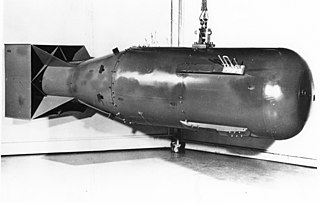
Continuity of government (COG) is the principle of establishing defined procedures that allow a government to continue its essential operations in case of a catastrophic event such as nuclear war.
The four-minute warning was a public alert system conceived by the British Government during the Cold War and operated between 1953 and 1992. The name derived from the approximate length of time from the point at which a Soviet nuclear missile attack against the United Kingdom could be confirmed and the impact of those missiles on their targets.

"Emergency management" or "disaster management" is a science and a system charged with creating the framework within which communities reduce vulnerability to hazards and cope with disasters. Emergency management, despite its name, does not actually focus on the management of emergencies, which can be understood as minor events with limited impacts and are managed through the day-to-day functions of a community. Instead, emergency management focuses on the management of disasters, which are events that produce more impacts than a community can handle on its own. The management of disasters tends to require some combination of activity from individuals and households, organizations, local, and/or higher levels of government. Although many different terminologies exist globally, the activities of emergency management can be generally categorized into preparedness, response, mitigation, and recovery, although other terms such as disaster risk reduction and prevention are also common. The outcome of emergency management is to prevent disasters and where this is not possible, to reduce their harmful impacts.

Emergency evacuation is an immediate egress or escape of people away from an area that contains an imminent threat, an ongoing threat or a hazard to lives or property.
Cameo or CAMEO may refer to:
The Maine Department of Defense, Veterans, and Emergency Management (DVEM) is a government agency in Maine. It comprises the two components of the Maine National Guard, the Maine Army National Guard and the Maine Air National Guard, the Bureau of Veterans' Affairs, the Maine Emergency Management Agency, and when it is active, the Maine State Guard. The Adjutant General of Maine, Brigadier General Doug A. Farnham, commands the Maine National Guard and serves as the State's Commissioner of Defense, Veterans, and Emergency Management (DVEM). The Maine Army and Air National Guard has responded to every call of the State and Nation since before the Revolutionary War. Their soldiers and airmen are trained to high standards and are ready to respond to combat missions, domestic emergencies, counterdrug efforts, reconstruction missions and more.
An emergency is a situation that poses an immediate risk to health, life, property, or environment.

In the United Kingdom, military conscription has existed for two periods in modern times. The first was from 1916 to 1920, and the second from 1939 to 1960. The last conscripted soldiers left the service in 1963.
Help is a word meaning to give aid or signal distress.
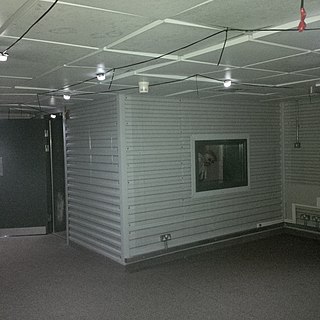
The Wartime Broadcasting Service is a service of the BBC that is intended to broadcast in the United Kingdom either after a nuclear attack or if conventional bombing destroyed regular BBC facilities in a conventional war. It is unclear if the Wartime Broadcasting Service is still operational as plans are kept mainly secretly with the BBC and government officials. According to an article by the BBC, recordings of a nuclear attack warning are still re-recorded and kept up to date periodically.

The first inauguration of Franklin D. Roosevelt as the 32nd president of the United States was held on Saturday, March 4, 1933, at the East Portico of the United States Capitol in Washington, D.C. This was the 37th inauguration, and marked the commencement of the first term of Franklin D. Roosevelt as president and John Nance Garner as vice president.
999 or triple nine most often refers to:
ISO 22395:2018, Security and resilience -- Community resilience -- Guidelines for supporting vulnerable persons in an emergency, is an international standard developed by ISO/TC 292 Security and resilience and published by the International Organization for Standardization in October 2018. This document is a voluntary guidance standard for supporting vulnerable persons in an emergency.
