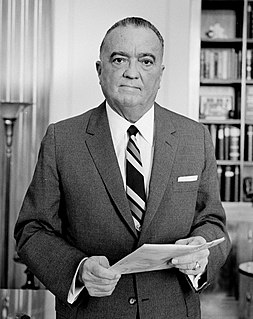
James Paul Blaylock is an American fantasy author. He is noted for a distinctive, humorous style, as well as being one of the pioneers of the steampunk genre of science fiction. Blaylock has cited Jules Verne, H. G. Wells, Robert Louis Stevenson, Arthur Conan Doyle and Charles Dickens as his inspirations.
Linux malware includes viruses, Trojans, worms and other types of malware that affect the Linux operating system. Linux, Unix and other Unix-like computer operating systems are generally regarded as very well-protected against, but not immune to, computer viruses.

Joan D. Vinge is an American science fiction author. She is known for such works as her Hugo Award-winning novel The Snow Queen and its sequels, her series about the telepath named Cat, and her Heaven's Chronicles books.
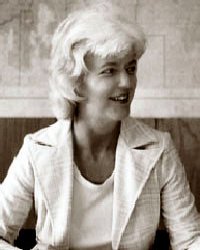
Kate Wilhelm was an American author. She wrote novels and stories in the science fiction, mystery, and suspense genres, including the Hugo Award–winning Where Late the Sweet Birds Sang, and she established the Clarion Workshop with her husband Damon Knight and writer Robin Scott Wilson.

Kij Johnson is an American writer of fantasy. She is a faculty member at the University of Kansas.

Roger Jason Stone Jr. is an American political consultant, author, lobbyist and strategist known for his use of opposition research, usually for candidates of the Republican Party. Since the 1970s, Stone has worked on the campaigns of Republican politicians including Richard Nixon, Ronald Reagan, Jack Kemp, Bob Dole and Donald Trump.
Nigel Barley is an anthropologist famous for the books he has written on his experiences. His reputation was established with his first book, The Innocent Anthropologist (1983), a witty account of anthropological field work in Cameroon. After working in Africa and writing more books about his time there, he moved to Indonesia, where he wrote in a variety of genres: travel, art, historical biography, and fiction. His first book there, the humorous Not a Hazardous Sport (1989), described his anthropological experiences in Tana Toraja.
Life hack is any trick, shortcut, skill, or novelty method that increases productivity and efficiency, in all walks of life. The term was primarily used by computer experts who suffer from information overload or those with a playful curiosity in the ways they can accelerate their workflow in ways other than programming.

Scott Carl Sigler is a contemporary American author of science fiction and horror as well as an avid podcaster. Scott is the New York Times #1 bestselling author of sixteen novels, six novellas, and dozens of short stories. He is the co-founder of Empty Set Entertainment, which publishes his young adult Galactic Football League series. He lives in San Diego.

The Skeptics' Guide to the Universe is a weekly 80-minute podcast hosted by Steven Novella, MD, along with a panel of "skeptical rogues." It is named to evoke The Hitchhiker's Guide to the Galaxy and is the official podcast of the New England Skeptical Society. The show features discussions of recent scientific developments in layman's terms, and interviews authors, people in the area of science, and other famous skeptics. The show also includes discussions of myths, conspiracy theories, pseudoscience, the paranormal, and many general forms of superstition, from the point of view of scientific skepticism. Steven Novella, the host of the show, has been particularly active in debunking pseudoscience in medicine. His activities include opposing the claims of anti-vaccine activists, homeopathy practitioners and individuals denying the link between HIV and AIDS.

WikiLeaks is an international non-profit organisation that publishes news leaks, and classified media provided by anonymous sources. Its website, initiated in 2006 in Iceland by the organisation Sunshine Press, claimed in 2016 to have released online 10 million documents in its first 10 years. Julian Assange, an Australian Internet activist, is generally described as its founder and director. Since September 2018, Kristinn Hrafnsson has served as its editor-in-chief.
The WANK Worm was a computer worm that attacked DEC VMS computers in 1989 over the DECnet. It was written in DIGITAL Command Language.
Jussi Parikka is a Finnish new media theorist and Professor in Technological Culture & Aesthetics at Winchester School of Art. He is also Docent of digital culture theory at the University of Turku in Finland. Until May 2011 Parikka was the Director of the Cultures of the Digital Economy (CoDE) research institute at Anglia Ruskin University and the founding Co-Director of the Anglia Research Centre for Digital Culture.

Kaspersky Lab is a multinational cybersecurity and anti-virus provider headquartered in Moscow, Russia and operated by a holding company in the United Kingdom. It was founded in 1997 by Eugene Kaspersky, Natalya Kaspersky, and Alexey De-Monderik; Eugene Kaspersky is currently the CEO. Kaspersky Lab develops and sells antivirus, internet security, password management, endpoint security, and other cybersecurity products and services.

Samuel Ray Delany Jr., Chip Delany to his friends, is an American author and literary critic. His work includes fiction, memoir, criticism and essays on sexuality and society.
The transmission of hepadnaviruses between their natural hosts, humans, non-human primates, and birds, including intra-species host transmission and cross-species transmission, is a topic of study in virology.

The Fifth Estate is a 2013 biographical thriller film directed by Bill Condon, about the news-leaking website WikiLeaks. The film stars Benedict Cumberbatch as its editor-in-chief and founder Julian Assange, and Daniel Brühl as its former spokesperson Daniel Domscheit-Berg. Anthony Mackie, David Thewlis, Alicia Vikander, Stanley Tucci, and Laura Linney are featured in supporting roles. The film's screenplay was written by Josh Singer based in-part on Domscheit-Berg's book Inside WikiLeaks: My Time with Julian Assange at the World's Most Dangerous Website (2011), as well as WikiLeaks: Inside Julian Assange's War on Secrecy (2011) by British journalists David Leigh and Luke Harding. The film's name is a reference to people who operate in the manner of journalists outside the normal constraints imposed on the mainstream media.