An allele is a variation of the same sequence of nucleotides at the same place on a long DNA molecule. The simplest alleles are single nucleotide polymorphisms (SNP). but they can also be insertions and deletions of up to several thousand base pairs.
Polymorphism, polymorphic, polymorph, polymorphous, or polymorphy may refer to:
The neutral theory of molecular evolution holds that most evolutionary changes occur at the molecular level, and most of the variation within and between species are due to random genetic drift of mutant alleles that are selectively neutral. The theory applies only for evolution at the molecular level, and is compatible with phenotypic evolution being shaped by natural selection as postulated by Charles Darwin. The neutral theory allows for the possibility that most mutations are deleterious, but holds that because these are rapidly removed by natural selection, they do not make significant contributions to variation within and between species at the molecular level. A neutral mutation is one that does not affect an organism's ability to survive and reproduce. The neutral theory assumes that most mutations that are not deleterious are neutral rather than beneficial. Because only a fraction of gametes are sampled in each generation of a species, the neutral theory suggests that a mutant allele can arise within a population and reach fixation by chance, rather than by selective advantage.

Genetic diversity is the total number of genetic characteristics in the genetic makeup of a species, it ranges widely from the number of species to differences within species and can be attributed to the span of survival for a species. It is distinguished from genetic variability, which describes the tendency of genetic characteristics to vary.

In biology, polymorphism is the occurrence of two or more clearly different morphs or forms, also referred to as alternative phenotypes, in the population of a species. To be classified as such, morphs must occupy the same habitat at the same time and belong to a panmictic population.
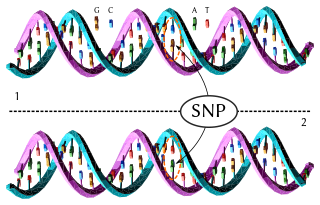
In genetics, a single-nucleotide polymorphism is a germline substitution of a single nucleotide at a specific position in the genome. Although certain definitions require the substitution to be present in a sufficiently large fraction of the population, many publications do not apply such a frequency threshold.
A haplotype is a group of alleles in an organism that are inherited together from a single parent.
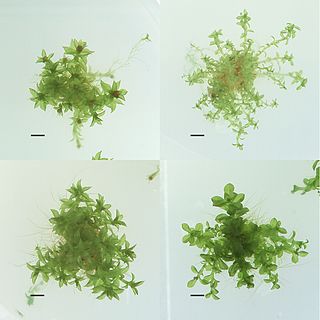
In evolutionary ecology, an ecotype, sometimes called ecospecies, describes a genetically distinct geographic variety, population, or race within a species, which is genotypically adapted to specific environmental conditions.
In biochemistry, isozymes are enzymes that differ in amino acid sequence but catalyze the same chemical reaction. Isozymes usually have different kinetic parameters, or are regulated differently. They permit the fine-tuning of metabolism to meet the particular needs of a given tissue or developmental stage.

Methylenetetrahydrofolatereductase (MTHFR) is the rate-limiting enzyme in the methyl cycle, and it is encoded by the MTHFR gene. Methylenetetrahydrofolate reductase catalyzes the conversion of 5,10-methylenetetrahydrofolate to 5-methyltetrahydrofolate, a cosubstrate for homocysteine remethylation to methionine. Natural variation in this gene is common in otherwise healthy people. Although some variants have been reported to influence susceptibility to occlusive vascular disease, neural tube defects, Alzheimer's disease and other forms of dementia, colon cancer, and acute leukemia, findings from small early studies have not been reproduced. Some mutations in this gene are associated with methylenetetrahydrofolate reductase deficiency. Complex I deficiency with recessive spastic paraparesis has also been linked to MTHFR variants. In addition, the aberrant promoter hypermethylation of this gene is associated with male infertility and recurrent spontaneous abortion.
Genetic association is when one or more genotypes within a population co-occur with a phenotypic trait more often than would be expected by chance occurrence.
A molecular marker is a molecule contained within a sample taken from an organism or other matter. It can be used to reveal certain characteristics about the respective source. DNA, for example, is a molecular marker containing information about genetic disorders and the evolutionary history of life. Specific regions of the DNA are used for diagnosing the autosomal recessive genetic disorder cystic fibrosis, taxonomic affinity (phylogenetics) and identity. Further, life forms are known to shed unique chemicals, including DNA, into the environment as evidence of their presence in a particular location. Other biological markers, like proteins, are used in diagnostic tests for complex neurodegenerative disorders, such as Alzheimer's disease. Non-biological molecular markers are also used, for example, in environmental studies.

Human genetic variation is the genetic differences in and among populations. There may be multiple variants of any given gene in the human population (alleles), a situation called polymorphism.
Dr George B. Johnson is a science educator who for many years has written a weekly column "On Science" in the St. Louis Post-Dispatch. For over 30 years he was a biology professor at Washington University and a genetics professor at their school of medicine. He has authored 44 scientific papers and ten high school and college widely used biology texts. Over 3 million students have learned biology from these texts.
In natural selection, negative selection or purifying selection is the selective removal of alleles that are deleterious. This can result in stabilising selection through the purging of deleterious genetic polymorphisms that arise through random mutations.
Public health genomics is the use of genomics information to benefit public health. This is visualized as more effective preventive care and disease treatments with better specificity, tailored to the genetic makeup of each patient. According to the Centers for Disease Control and Prevention (U.S.), Public Health genomics is an emerging field of study that assesses the impact of genes and their interaction with behavior, diet and the environment on the population's health.

The word allotype comes from two Greek roots, allo meaning 'other or differing from the norm' and typos meaning 'mark'. In immunology, allotype is an immunoglobulin variation that can be found among antibody classes and is manifested by heterogeneity of immunoglobulins present in a single vertebrate species. The structure of immunoglobulin polypeptide chain is dictated and controlled by number of genes encoded in the germ line. However, these genes, as it was discovered by serologic and chemical methods, could be highly polymorphic. This polymorphism is subsequently projected to the overall amino acid structure of antibody chains. Polymorphic epitopes can be present on immunoglobulin constant regions on both heavy and light chains, differing between individuals or ethnic groups and in some cases may pose as immunogenic determinants. Exposure of individuals to a non-self allotype might elicit an anti- allotype response and became cause of problems for example in a patient after transfusion of blood or in a pregnant woman. However, it is important to mention that not all variations in immunoglobulin amino acid sequence pose as a determinant responsible for immune response. Some of these allotypic determinants may be present at places that are not well exposed and therefore can be hardly serologically discriminated. In other cases, variation in one isotype can be compensated by the presence of this determinant on another antibody isotype in one individual. This means that divergent allotype of heavy chain of IgG antibody may be balanced by presence of this allotype on heavy chain of for example IgA antibody and therefore is called isoallotypic variant. Especially large number of polymorphisms were discovered in IgG antibody subclasses. Which were practically used in forensic medicine and in paternity testing, before replaced by modern day DNA fingerprinting.

The Single Nucleotide Polymorphism Database (dbSNP) is a free public archive for genetic variation within and across different species developed and hosted by the National Center for Biotechnology Information (NCBI) in collaboration with the National Human Genome Research Institute (NHGRI). Although the name of the database implies a collection of one class of polymorphisms only, it in fact contains a range of molecular variation: (1) SNPs, (2) short deletion and insertion polymorphisms (indels/DIPs), (3) microsatellite markers or short tandem repeats (STRs), (4) multinucleotide polymorphisms (MNPs), (5) heterozygous sequences, and (6) named variants. The dbSNP accepts apparently neutral polymorphisms, polymorphisms corresponding to known phenotypes, and regions of no variation. It was created in September 1998 to supplement GenBank, NCBI’s collection of publicly available nucleic acid and protein sequences.
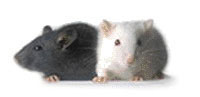
A gene is said to be polymorphic if more than one allele occupies that gene's locus within a population. In addition to having more than one allele at a specific locus, each allele must also occur in the population at a rate of at least 1% to generally be considered polymorphic.
