In linguistics, a genus is a group of phylogenetically related languages inside a linguistic family, in particular a genus is a group languages which can be recognized as related languages without using complex methods of historical linguistics. The notion of genus was proposed by M. Dryer, [1] and is used commonly in some academic projects such as WALS. [2] According to WALS most families can be subdivided into a certain number of genera, so the notion is similar to the term subfamily.
Linguistics is the scientific study of language. It involves analysing language form, language meaning, and language in context. The earliest activities in the documentation and description of language have been attributed to the 6th-century-BC Indian grammarian Pāṇini who wrote a formal description of the Sanskrit language in his Aṣṭādhyāyī.
Historical linguistics, also called diachronic linguistics, is the scientific study of language change over time. Principal concerns of historical linguistics include:
The World Atlas of Language Structures (WALS) is a database of structural properties of languages gathered from descriptive materials. It was first published by Oxford University Press as a book with CD-ROM in 2005, and was released as the second edition on the Internet in April 2008. It is maintained by the Max Planck Institute for Evolutionary Anthropology and by the Max Planck Digital Library. The editors are Martin Haspelmath, Matthew S. Dryer, David Gil and Bernard Comrie.
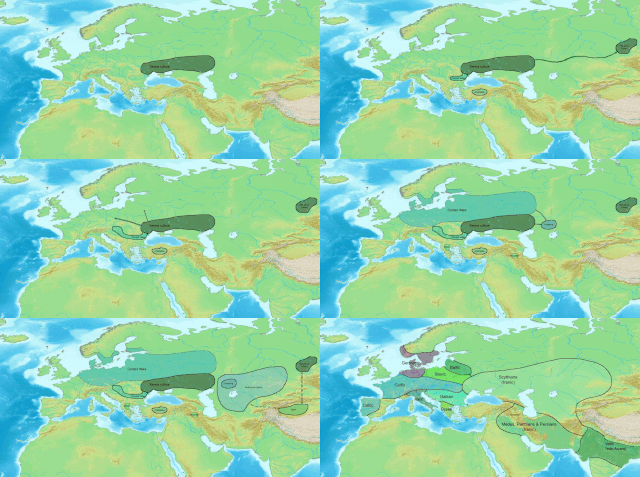
Since the 18th century, linguists have classified languages according to phylogenetic criteria. Before the 18th century, the common origins of Germanic languages or Slavic languages had been recognized. Many authors hypothesized that each of these language groups derived from a common "mother language" (in a similar way in which Romance languages derive historically from Latin). The philologists of the 19th century called a group of related languages a "family of sister languages" (generalizing the genealogical metaphor). When a "mother language" is undocumented, but can be partially reconstructed from its "daughter languages", one refers to this language as a proto-language.

Phylogenesis is the biological process by which a taxon appears. The science that studies these processes is called phylogenetics.
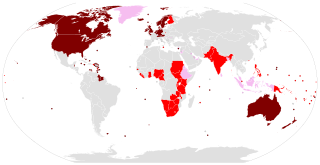
The Germanic languages are a branch of the Indo-European language family spoken natively by a population of about 515 million people mainly in Europe, North America, Oceania, and Southern Africa.
The Slavic languages are the Indo-European languages spoken by the Slavic peoples. They are thought to descend from a proto-language called Proto-Slavic, spoken during the Early Middle Ages, which in turn is thought to have descended from the earlier Proto-Balto-Slavic language, linking the Slavic languages to the Baltic languages in a Balto-Slavic group within the Indo-European family.
With the development of comparative linguistics and the establishment of historical linguistics as a scientific discipline, more "language families" were recognized, and more proto-languages were proposed.
Comparative linguistics is a branch of historical linguistics that is concerned with comparing languages to establish their historical relatedness.
There are some problems when one tries to compare language families. Some families are huge, and their proto-languages were spoken several millennia ago, but other families are tiny and their ancestor languages seem to have been spoken more recently. Indeed, the establishment of an accepted language family depends on the quality of the documentation and the amount of comparative work done in each group of languages. Obviously, the languages of Europe were well known in the 19th century, and the Indo-European language family was well-established early on. As to the remainder of the world languages, in the 19th century only a few language families were identified, often in an incomplete manner (the Bantu and Malayo-Polynesian languages were recognized as groups of related languages, but not the Niger–Congo or Austronesian languages).
The Indo-European languages are a language family of several hundred related languages and dialects.
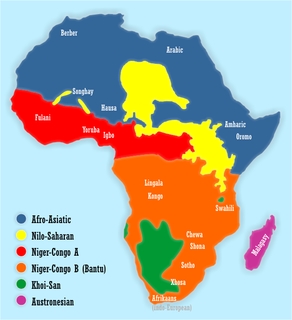
The Bantu languages technically the Narrow Bantu languages, as opposed to "Wide Bantu", a loosely defined categorization which includes other "Bantoid" languages, are a large family of languages spoken by the Bantu peoples throughout Sub-Saharan Africa.
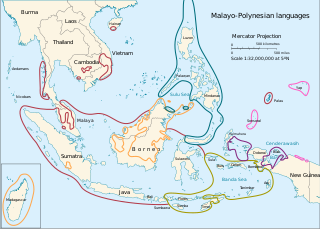
The Malayo-Polynesian languages are a subgroup of the Austronesian languages, with approximately 385.5 million speakers. The Malayo-Polynesian languages are spoken by the Austronesian people of the island nations of Southeast Asia and the Pacific Ocean, with a smaller number in continental Asia, going well into the Malay peninsula. Cambodia and Vietnam serve as the northwest geographic outlier. On the northernmost geographical outlier does not pass beyond the north of Pattani, which is located in southern Thailand. Malagasy is spoken in the island of Madagascar located off the eastern coast of Africa in the Indian Ocean. Part of the language family shows a strong influence of Sanskrit and particularly Arabic as the Western part of the region has been a stronghold of Hinduism, Buddhism and, since the 10th century, Islam.
On the other hand, all the genera are internally much more homogeneous than language families. In addition, most language genera seem to involve more or less the same time depth. For these reason, genera are much more suitable for typological comparison than language families.
Afroasiatic (Afro-Asiatic), also known as Afrasian and in older sources as Hamito-Semitic (Chamito-Semitic) or Semito-Hamitic, is a large language family of about 300 languages. It includes languages spoken predominantly in West Asia, North Africa, the Horn of Africa and parts of the Sahel.
In linguistics, the comparative method is a technique for studying the development of languages by performing a feature-by-feature comparison of two or more languages with common descent from a shared ancestor, in order to extrapolate back to infer the properties of that ancestor. The comparative method may be contrasted with the method of internal reconstruction, in which the internal development of a single language is inferred by the analysis of features within that language. Ordinarily both methods are used together to reconstruct prehistoric phases of languages, to fill in gaps in the historical record of a language, to discover the development of phonological, morphological, and other linguistic systems, and to confirm or refute hypothesised relationships between languages.
A language family is a group of languages related through descent from a common ancestral language or parental language, called the proto-language of that family. The term "family" reflects the tree model of language origination in historical linguistics, which makes use of a metaphor comparing languages to people in a biological family tree, or in a subsequent modification, to species in a phylogenetic tree of evolutionary taxonomy. Linguists therefore describe the daughter languages within a language family as being genetically related.
Ural–Altaic, Uralo-Altaic or Uraltaic is a linguistic convergence zone and former language-family proposal uniting the Uralic and the Altaic languages. It is generally now agreed that even the Altaic languages most likely do not share a common descent: the similarities among Turkic, Mongolic and Tungusic are better explained by diffusion and borrowing. Cecelia Eaton Luschnig, an expert of Ancient Greek language, has written that "this term and the kinship it implies is now considered obsolete" as a family proposal. However, the term continues to be used for the central Eurasian typological, grammatical and lexical convergence zone. Indeed, "Ural-Altaic" may be preferable to "Altaic" in this sense. For example, J. Janhunen states that "speaking of 'Altaic' instead of 'Ural-Altaic' is a misconception, for there are no areal or typological features that are specific to 'Altaic' without Uralic."
The Austronesian languages are a language family that is widely dispersed throughout Maritime Southeast Asia, Madagascar and the islands of the Pacific Ocean, with a few members in continental Asia. Austronesian languages are spoken by about 386 million people (4.9%), making it the fifth-largest language family by number of speakers. Major Austronesian languages with the highest number of speakers are Malay, Javanese, and Filipino (Tagalog). The family contains 1,257 languages, which is the second most of any language family.
The Mayan languages form a language family spoken in Mesoamerica and northern Central America. Mayan languages are spoken by at least 6 million Maya peoples, primarily in Guatemala, Mexico, Belize and Honduras. In 1996, Guatemala formally recognized 21 Mayan languages by name, and Mexico recognizes eight more within its territory.
Na-Dene is a family of Native American languages that includes at least the Athabaskan languages, Eyak, and Tlingit languages. An old inclusion of Haida is now considered doubtful.
In historical linguistics, an Urheimat is the area of origin of the speakers of a proto-language, the parent language of a group of languages assumed to be genetically related.
The Pama–Nyungan languages are the most widespread family of indigenous Australian languages, containing perhaps 300 languages. The name "Pama–Nyungan" is derived from the names of the two most widely separated groups, the Pama languages of the northeast and the Nyungan languages of the southwest. The words pama and nyunga mean "man" in their respective languages.
The Caddoan languages are a family of languages native to the Great Plains. They were spoken by tribal groups of the central United States, from present-day North Dakota south to Oklahoma. In the 21st century, they are critically endangered, as the number of native speakers has declined markedly.
Borean is a hypothetical linguistic macrofamily that encompasses almost all language families worldwide except those native to sub-Saharan Africa, New Guinea, Australia, and the Andaman Islands. Its supporters propose that the various languages spoken in Eurasia and adjacent regions have a genealogical relationship, and ultimately descend from languages spoken during the Upper Paleolithic in the millennia following the Last Glacial Maximum. The name Borean is based on the Greek βορέας, and means "northern". This reflects the fact that the group is held to include most language families native to the northern hemisphere. Two distinct models of Borean exist: that of Harold C. Fleming and that of Sergei Starostin.
Linguistic reconstruction is the practice of establishing the features of an unattested ancestor language of one or more given languages. There are two kinds of reconstruction:
The South or East Bougainville languages are a small language family spoken on the island of Bougainville in Papua New Guinea. They were classified as East Papuan languages by Wurm, but this does not now seem tenable, and was abandoned in Ethnologue (2009).
Pseudoscientific language comparison is a form of pseudo-scholarship that has the objective of establishing historical associations between languages by naive postulations of similarities between them.
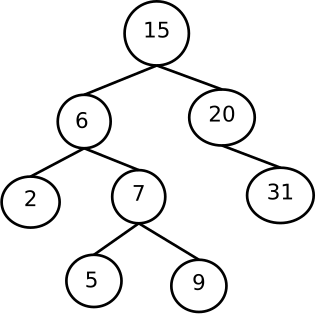
In historical linguistics, the tree model is a model of the evolution of languages analogous to the concept of a family tree, particularly a phylogenetic tree in the biological evolution of species. As with species, each language is assumed to have evolved from a single parent or "mother" language, with languages that share a common ancestor belonging to the same language family.
A proto-language, in the tree model of historical linguistics, is a language, usually hypothetical or reconstructed, and usually unattested, from which a number of attested known languages are believed to have descended by evolution, forming a language family.
The Komuz languages are a proposed branch of the Nilo-Saharan language family which would include the Koman languages, the Gumuz languages and the Shabo language, all spoken in eastern South Sudan and Sudan and western Ethiopia. Nilo-Saharan specialists have vacillated on a genealogical relationship between the Koman and Gumuz languages, a relationship called Komuz. Greenberg (1963) had included Gumuz in the Koman language family. Bender classified them together in a distant relationship he called Komuz, but by 1996 he had reversed himself, though he kept both groups in core Nilo-Saharan. Dimmendaal (2008) kept them together, though expressed doubts over whether they belonged in Nilo-Saharan, later referring to Gumuz as an isolate (2011). Ahland, on the basis of new Gumuz data, resurrected the hypothesis. Blench (2010) independently came to the same conclusion and suggested that the Shabo language might be a third, outlying branch. The classification of Shabo is difficult because of a strong Koman influence on the language that is independent of any genealogical relationship between them. Schnoebelen (2009), moreover, sees Shabo as a likely isolate.