
Charles Seymour, 6th Duke of Somerset, KG, PC,, known by the epithet "The Proud Duke", was an English aristocrat and courtier. He rebuilt Petworth House in Sussex, the ancient Percy seat inherited from his wife, in the palatial form which survives today. According to the Encyclopædia Britannica Eleventh Edition, he was a remarkably handsome man, and inordinately fond of taking a conspicuous part in court ceremonial; his vanity, which earned him the sobriquet of "the proud duke", was a byword among his contemporaries and was the subject of numerous anecdotes; Macaulay described him as "a man in whom the pride of birth and rank amounted almost to a disease".

Duke of Northumberland is a noble title that has been created three times in English and British history, twice in the Peerage of England and once in the Peerage of Great Britain. The current holder of this title is Ralph Percy, 12th Duke of Northumberland.
The title of Earl of Northumberland has been created several times in the Peerage of England and of Great Britain, succeeding the title Earl of Northumbria. Its most famous holders are the House of Percy, who were the most powerful noble family in Northern England for much of the Middle Ages. The heirs of the Percys, via a female line, were ultimately made Duke of Northumberland in 1766, and continue to hold the earldom as a subsidiary title.

Algernon Percy, 4th Duke of Northumberland,, styled Lord Algernon Percy from birth until 1816 and known as Lord Prudhoe between 1816 and 1847, was a British naval commander, explorer and Conservative politician.

Hugh Percy, 3rd Duke of Northumberland, styled Earl Percy until 1817, was a British aristocrat and Tory politician who served as Lord Lieutenant of Ireland under the Duke of Wellington from 1829 to 1830.

Henry George Percy, 7th Duke of Northumberland,, styled Lord Warkworth between 1865 and 1867 and Earl Percy between 1867 and 1899, was a British Conservative politician. He served as Treasurer of the Household under Benjamin Disraeli between 1874 and 1875 and was Chairman of the National Union of Conservative and Constitutional Associations from 1879 to 1883.
Lord Percy is the name of:
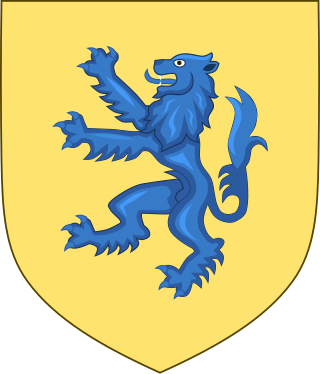
The Percy family is an English noble family. They were among the most powerful noble families in Northern England for much of the Middle Ages. The noble family is known for its long rivalry with the House of Neville, another family powerful in northern England during the 15th century. The Percy-Neville feud led to the Wars of the Roses, at the time known as the Civil Wars, in England.
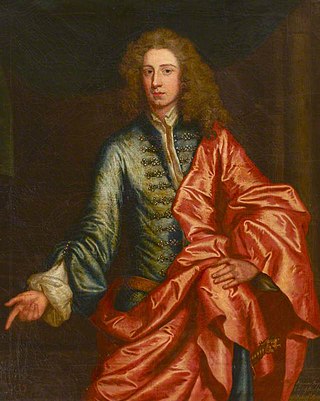
General Algernon Seymour, 7th Duke of Somerset was a British Army officer, Whig politician and peer who sat in the House of Commons from 1708 to 1722 when he was raised to the peerage as Baron Percy and took his seat in the House of Lords.

Algernon George Percy, 6th Duke of Northumberland,, styled Lord Lovaine between 1830 and 1865 and Earl Percy between 1865 and 1867, was a British Conservative politician. He held office under the Earl of Derby as Paymaster General and Vice-President of the Board of Trade in 1859 and under Benjamin Disraeli as Lord Privy Seal between 1878 and 1880.
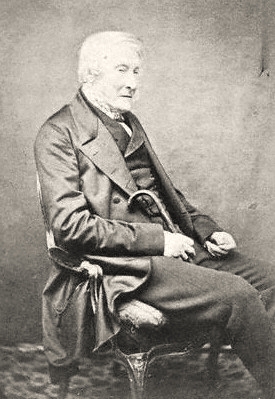
George Percy, 5th Duke of Northumberland PC, styled Lord Lovaine between 1790 and 1830 and known as the Earl of Beverley between 1830 and 1865, was a British Tory politician. He served as Captain of the Yeomen of the Guard under Sir Robert Peel between 1842 and 1846. He succeeded to his peerage on 12 February 1865, after the death of his childless cousin Algernon Percy.
Henry Percy may refer to:
This is a list of people who have served as Lord-Lieutenant of Northumberland. Since 1802, all Lords Lieutenant have also been Custos Rotulorum of Northumberland.
Earl of Beverley, in the County of York, is a title in the Peerage of Great Britain, held by the Duke of Northumberland since 1865. It was created in 1790 for Algernon Percy, 2nd Baron Lovaine. He was the second son of Hugh Percy, 1st Duke of Northumberland. The title of Baron Lovaine, of Alnwick in the County of Northumberland, had been created in the Peerage of Great Britain in 1784 for the first Duke of Northumberland, with a special remainder to his second son, the aforementioned Algernon, who succeeded in the barony on his father's death in 1786. Lord Beverley was succeeded by his son, George, the 2nd Earl, who in 1865 inherited the dukedom of Northumberland from his cousin, the 4th Duke. All three titles have remained united since.

George Dominic Percy, Earl Percy, is a British businessman and the heir apparent to the Dukedom of Northumberland.

Algernon Percy, 1st Earl of Beverley,, styled Lord Algernon Percy between 1766 and 1786 and known as the Lord Lovaine between 1786 and 1790, was a British politician who sat in the House of Commons from 1774 to 1786 when he succeeded to the Peerage. He is the ancestor of the present Dukes of Northumberland.
Algernon Percy may refer to:

Henry Algernon George Percy, Earl Percy, sometimes styled as Lord Percy or, until 1899, Lord Warkworth, was a British Conservative politician. He held political office under Arthur Balfour as Under-Secretary of State for India and Under-Secretary of State for Foreign Affairs before his early death in 1909.
Honouring individuals buried in Westminster Abbey has a long tradition. Over 3,300 people are buried or commemorated in the abbey. For much of the abbey's history, most of the people buried there besides monarchs were people with a connection to the church – either ordinary locals or the monks of the abbey itself, who were generally buried without surviving markers. Since the 18th century, it has become a prestigious honour for any British person to be buried or commemorated in the abbey, a practice much boosted by the lavish funeral and monument of Isaac Newton, who died in 1727. By 1900, so many prominent figures were buried in the abbey that the writer William Morris called it a "National Valhalla".

Charlotte Florentia Percy, Duchess of Northumberland, was governess of the future Queen Victoria.
