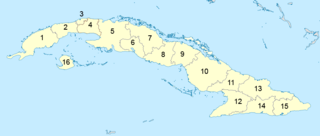
Administratively, Cuba is divided into 15 provinces and one special municipality. The current structure has been in place since August 2010, when the then-La Habana Province was divided into Artemisa Province and Mayabeque Province.
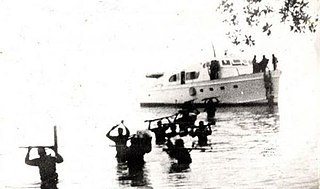
Granma is a yacht that was used to transport 82 fighters of the Cuban Revolution from Mexico to Cuba in November 1956 to overthrow the regime of Fulgencio Batista. The 60-foot diesel-powered vessel was built in 1943 by Wheeler Shipbuilding of Brooklyn, New York, as a light armored target practice boat, US Navy C-1994, and modified postwar to accommodate 12 people. "Granma", in English, is an affectionate term for a grandmother; the yacht is said to have been named for the previous owner's grandmother.

Granma is one of the provinces of Cuba. Its capital is Bayamo. Other towns include Manzanillo and Pilón.
Manzanillo or manzanillo may refer to:
A grandma is a female grandparent.

Manzanillo is a municipality and city in the Granma Province of Cuba. By population, it is the 14th-largest Cuban city and the most populated one not being a provincial seat.
Granma is the official newspaper of the Central Committee of the Communist Party of Cuba. It was formed in 1965 by the merger of two previous papers, Revolución and Hoy ("Today"). Publication of the newspaper began in February 1966. Its name comes from the yacht Granma that carried Fidel Castro and 81 other rebels to Cuba's shores in 1956, launching the Cuban Revolution. The newspaper has been a way for the Cuban Communist Party to communicate their ideology to the world, especially regarding the United States. Marta Rojas worked for the paper since its founding.
Guantánamo is a city and the seat of Guantánamo Province, Cuba

Desembarco del Granma National Park is a national park in south-western Cuba, stretching across the Niquero and Pilón municipalities in what is now Granma Province. The name of the park means "Landing of the Granma" and refers to the yacht in which Fidel Castro, Che Guevara, Raúl Castro, and 79 of their supporters sailed from Mexico to Cuba in 1956 and incited the Cuban Revolution. The National park is well known for its karst topography and coastal cliffs.

Alazanes de Granma is a baseball team in the Cuban National Series, based in the eastern province of Granma. Until the 2016-2017 season, the Alazanes were a frequent contender, but had never advanced to a National Series final. However, in 2017 Granma not only made it to the Cuban National Series final, but swept Ciego de Ávila to win the series, breaking a 40-year record of being seen as underdogs who could not compete with dominant powerhouse teams.

The Cuban National Series is a domestic baseball competition in Cuba. Formed after the dissolution of the Cuban League in the wake of the Cuban Revolution, the National Series is a part of the Cuban baseball league system. Between 1961 and 2021, it was the top-level winter league in Cuba; it now operates as a summer league, with the top six National Series teams qualifying for the Cuban Elite League.
The 17th season of the Cuban National Series saw Vegueros of Pinar del Río Province win the title, finishing with a slim lead over Industriales of Havana. The makeup of the league was directly influenced by the administrative restructuring of the provinces of Cuba. The league expanded from 14 to 18 teams, and the regular season increased from 39 to 51 games.
In the 21st season of Cuban National Series, Vegueros, from Pinar del Río Province, repeated as champions, finishing with a one-game lead over Citricultores, from Matanzas Province. Metropolitanos finished well ahead of its Havana rival, Industriales. The league's teams and length of schedule remained unchanged from the prior season.
Pilon, Pilón or PILON may refer to:

Niquero is a municipality and town in the Granma Province of Cuba. It is located in the coastal region of the province, bordering the Gulf of Guacanayabo. Cape Cruz, the westernmost point of the province is located in this municipality.
The following outline is provided as an overview of and topical guide to Cuba:
Norberto Collado Abreu was the Cuban captain and helmsman of the yacht Granma, which brought Fidel Castro and 81 other rebels to Cuba from Tuxpan, Veracruz, Mexico, in 1956. The 1956 landing of Castro from the Granma in eastern Cuba began the Cuban Revolution which resulted in the termination of President Fulgencio Batista's government in 1959.
This page is based on this
Wikipedia article Text is available under the
CC BY-SA 4.0 license; additional terms may apply.
Images, videos and audio are available under their respective licenses.
