See also
 | This disambiguation page lists articles associated with the title Gyr. If an internal link led you here, you may wish to change the link to point directly to the intended article. |
Gyr or gyr can mean:
| | This disambiguation page lists articles associated with the title Gyr. If an internal link led you here, you may wish to change the link to point directly to the intended article. |

A zebu, sometimes known as indicine cattle or humped cattle, is a species or subspecies of domestic cattle originating in South Asia. Zebu are characterised by a fatty hump on their shoulders, a large dewlap, and sometimes drooping ears. They are well adapted to withstanding high temperatures, and are farmed throughout the tropical countries, both as pure zebu and as hybrids with taurine cattle, the other main type of domestic cattle. Zebu are used as draught and riding animals, dairy cattle, and beef cattle, as well as for byproducts such as hides and dung for fuel and manure. Zebu, namely miniature zebu, are kept as companion animals. In 1999, researchers at Texas A&M University successfully cloned a zebu.
GIR may refer to:
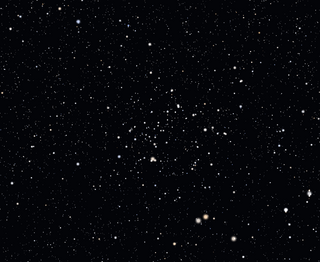
NGC 752 is an open cluster in the constellation Andromeda. The cluster was discovered by Caroline Herschel in 1783 and cataloged by her brother William Herschel in 1786, although an object that may have been NGC 752 was described by Giovanni Batista Hodierna before 1654.
DNA gyrase, or simply gyrase, is an enzyme within the class of topoisomerase and is a subclass of Type II topoisomerases that reduces topological strain in an ATP dependent manner while double-stranded DNA is being unwound by elongating RNA-polymerase or by helicase in front of the progressing replication fork. The enzyme causes negative supercoiling of the DNA or relaxes positive supercoils. It does so by looping the template so as to form a crossing, then cutting one of the double helices and passing the other through it before releasing the break, changing the linking number by two in each enzymatic step. This process occurs in bacteria, whose single circular DNA is cut by DNA gyrase and the two ends are then twisted around each other to form supercoils. Gyrase is also found in eukaryotic plastids: it has been found in the apicoplast of the malarial parasite Plasmodium falciparum and in chloroplasts of several plants. Bacterial DNA gyrase is the target of many antibiotics, including nalidixic acid, novobiocin, and ciprofloxacin.
A billion years (109 years) is a unit of time on the petasecond scale, more precisely equal to 3.16×10¹⁶ seconds.

Gurs[ɡyʁs] is a commune in the Pyrénées-Atlantiques department in south-western France.

Radu Gyr was a Romanian poet, essayist, playwright and journalist.

Phoenix Goodyear Airport is a public airport a 1.15 miles southwest of Goodyear, in Maricopa County, Arizona.

The Gir or Gyr is one of the principal Zebu breeds originating in India. It has been used locally in the improvement of other breeds including the Red Sindhi and the Sahiwal. It was also one of the breeds used in the development of the Brahman breed in North America. In Brazil and other South American countries the Gir is used frequently because, as a Bos indicus breed, it is resistant to hot temperatures and tropical diseases. It is very known for its milk producing qualities and is often bred with Friesian cows to make the Girolando breed.

Landis+Gyr, is a publicly listed, multinational corporation with 45 subsidiary companies in over 30 countries and headquarters in Zug, Switzerland. Landis+Gyr makes meters and related software for electricity and gas utilities.

Aminocoumarin is a class of antibiotics that act by an inhibition of the DNA gyrase enzyme involved in the cell division in bacteria. They are derived from Streptomyces species, whose best-known representative – Streptomyces coelicolor – was completely sequenced in 2002. The aminocoumarin antibiotics include:

The Girolando is a breed of dairy cattle created in Brazil by crossing Gyr cattle, a Bos indicus breed which is resistant to hot temperatures and tropical diseases, with Holstein cows, a Bos taurus breed. Coat colors vary from black to black-and-white Approximately 80% of the milk production in Brazil is produced from Girolando cows. A Girolando is 3/8 Gir and 5/8 Holstein.

A gyrovector space is a mathematical concept proposed by Abraham A. Ungar for studying hyperbolic geometry in analogy to the way vector spaces are used in Euclidean geometry. Ungar introduced the concept of gyrovectors that have addition based on gyrogroups instead of vectors which have addition based on groups. Ungar developed his concept as a tool for the formulation of special relativity as an alternative to the use of Lorentz transformations to represent compositions of velocities. This is achieved by introducing "gyro operators"; two 3d velocity vectors are used to construct an operator, which acts on another 3d velocity.

(311999) 2007 NS2 is an asteroid and Mars trojan orbiting near the L5 point of Mars.
Jaffrabadi is a breed of water buffalo from the state of Gujarat, India. Like the gyr cattle, it is known for its high potential for milk production.

Lucas Tramèr is a Swiss rower. He won gold at the 2016 Summer Olympics in the men's lightweight four, with Simon Schürch, Simon Niepmann and Mario Gyr. The team was coached by New Zealander Ian Wright. Tramèr has also won a number of gold medals at the World Rowing Championships. He also competed in the Men's lightweight coxless four event at the 2012 Summer Olympics.

Mario Gyr is a Swiss rower. He won gold at the 2016 Summer Olympics in the men's lightweight four with Lucas Tramèr, Simon Schürch and Simon Niepmann. The same team, coached by New Zealander Ian Wright, also won this event in the 2015 World Championships. He also competed in the men's lightweight coxless four event at the 2012 Summer Olympics, finishing fifth.

Nimari (Hindi:निमारि) is a breed of cattle native to the Nimar region of India. It originated out of Gyr (cattle) and Khillari cattle breeds, and is found in the regions of Narmada valley in the state of Madhya Pradesh and Jalgaon district in Maharashtra.
Mewati, also known as Kosi, is an indigenous breed of cattle in India. They are named after Mewat in Haryana state. They are known to be related to Gyr and Haryanvi cattle breeds. The cattle are almost universally white in colour with the rare occurrence of brown shades. It is considered to be a dual purpose breed with good milking and draft prowess. The bulls are known for their strength and endurance, and are employed for agricultural and carting purposes.
Of the more than 800 cattle breeds recognized worldwide, India had 27 acknowledged indigenous breeds of cattle and 7 breeds of buffaloes. As of 2018 the ICAR recognized 43 breeds that are indigenous in India, of which two cattle breeds and three buffalo breeds were added in 2018. Local conservation programs are endeavouring to maintain the purity of breeds such as Tharparkar, dwarf cattle such as Kasaragod, and Kankrej, Amrit Mahal and Kangayam.