Mohammed II may refer to:
Nur al-Din is a male Arabic given name, translating to "light of the religion", nūr meaning "light" and dīn meaning "religion". More recently, the name has also been used as a surname.
Osman is the Persian transliteration and derived from the Arabic masculine given name Uthman or an English surname. It may refer to:

Abu Al-Hasan 'Ali ibn 'Othman, was a sultan of the Marinid dynasty who reigned in Morocco between 1331 and 1348. In 1333 he captured Gibraltar from the Castilians, although a later attempt to take Tarifa in 1339 ended in fiasco. In North Africa he extended his rule over Tlemcen and Hafsid Ifriqiya, which together covered the north of what is now Algeria and Tunisia. Under him the Marinid realms in the Maghreb briefly covered an area that rivaled that of the preceding Almohad Caliphate. However, he was forced to retreat due to a revolt of the Arab tribes, was shipwrecked, and lost many of his supporters. His son Abu Inan Faris seized power in Fez. Abu Al-Hasan died in exile in the High Atlas mountains.
The first king of the Isdhoo Dynasty was proclaimed king in the year 1692 AD. Isdhoo Dynasty was from Isdhoo Family. This is a short ruling Dynasty. only three kings ruled under this Dynasty. This was because this Dynasty came into being during a time where there was a political turmoil. The first ruler of this Dynasty was Ah'Sultan Ali (seventh) Siri Kularan Mui Mahaaradhun. After he died, his son Ah'Sultan Hassan (tenth)came into throne. After this it was As'Sultan Ibrahim Muth Hirudhdheen Siri Muthei Raskaloska Mahaaradhun.
The Huraa Dynasty was the sixth royal dynasty to rule over the Sultanate of Maldives from 1757 to 1965. It was founded by Sultan al-Ghazi Hasan 'Izz ud-din.
Muleege Hassan Maniku or Dhon Bandaarain was Sultan al-Ghazi al-Hasan 'Izz ud-din Sri Kula Ranmiba Danala Kirti Kattiri Buwana Maha Radun, proclaimed king of the Maldives in the year 1759. He was the first sultan of the Huraa dynasty.
Sultan Muhammad may refer to:
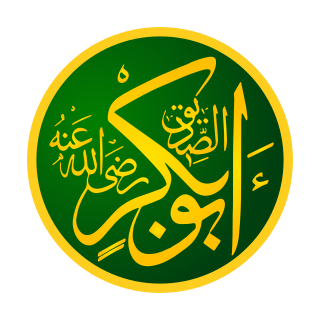
Abu Bakr is an Arabic given name meaning "Father of a Young Camel" that is widely used by Sunni Muslims.

The Aq Qoyunlu was a Persianate Sunni Turkoman tribal confederation that ruled parts of present-day eastern Turkey from 1378 to 1503, and in their last decades also ruled Armenia, Azerbaijan, most of Iran, and Iraq. The Aq Qoyunlu empire reached its zenith under Uzun Hasan.
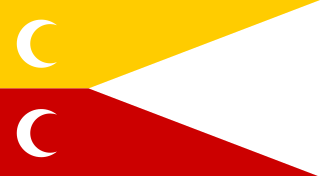
The Kilwa Sultanate was a sultanate, centered at Kilwa, whose authority, at its height, stretched over the entire length of the Swahili Coast. According to the legend, it was founded in the 10th century by Ali ibn al-Hassan Shirazi, a Persian prince of Shiraz. His family ruled the Sultanate until the year 1277. They were replaced by the Arab family of Abu Moaheb until 1505, when they were overthrown by a Portuguese invasion. By 1513, the sultanate was already fragmented into smaller states, many of which became protectorates of the Sultanate of Oman.

Mulee'aage is the "Official Residence of the President of the Maldives". The Mulee'aage is located in the ward of Henveiru in the historic center of Malé. It is in close proximity of the Medhu Ziyaarai shrine, the Friday Mosque, and the Munnaru.
Ghiyath al-Din, also transcribed as Ghiyāthu'd-Dīn, Ghiyasuddin, etc. is the name of many persons in the Islamic world. It may refer to:
Maadhadu is an administrative division of Fuvahmulah, Maldives. With the changes it has encountered over time, this is today the smallest district in Fuvahmulah. Located in the center of the island the district shares borders with Diguvāndo, Hōdhado, Mālegan and Miskimmago.
Amina I of the Maldives also called Amina Kabafaanu and Aminath Kabafan, was sultana regnant of the Maldives from 1753 until 1754. She also served as joint regent with her spouse Ali Shah Bandar Vela’ana’a Manikufa’anu in 1773 during the pilgrimage of her brother Sultan Muhammed Ghiya'as ud-din to Mecca.
Hassan I of Morocco or Hassan ben Mohammed (1836-1894) was the Alaouite sultan of Morocco from 1873 to 1894.

Several interregnums occurred in the history of the Maldives.
This page is based on this
Wikipedia article Text is available under the
CC BY-SA 4.0 license; additional terms may apply.
Images, videos and audio are available under their respective licenses.
