
The University of Bristol is a red brick Russell Group research university in Bristol, England. It received its royal charter in 1909, although it can trace its roots to a Merchant Venturers' school founded in 1595 and University College, Bristol, which had been in existence since 1876.

William Henry Wills, 1st Baron Winterstoke, known as Sir William Wills, Bt., between 1893 and 1906, was a British businessman, philanthropist and Liberal politician.
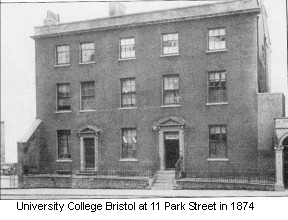
University College, Bristol was an educational institution which existed from 1876 to 1909. It was the predecessor institution to the University of Bristol, which gained a royal charter in 1909. During its time the college mainly served the middle classes of Bristol, and catered for young men who had entered a family business and needed a greater understanding of scientific topics.

The Wills Memorial Building is a neo-Gothic building in Bristol, England, designed by Sir George Oatley and built as a memorial to Henry Overton Wills III by his sons George and Henry Wills. Begun in 1915 and not opened until 1925, it is considered one of the last great Gothic buildings to be built in England.

Wills Hall is one of more than twenty halls of residence in the University of Bristol. It is located high on the Stoke Bishop site on the edge of the Bristol Downs, and houses c. 370 students in two quadrangles. Almost all of these students are in their first year of study.

Henry Overton Wills III of Kelston Knoll, near Bath in Somerset, was a prominent and wealthy member of the Bristol tobacco manufacturing family of Wills which founded the firm of W. D. & H. O. Wills. As a philanthropist his best-known act was the funding of the University of Bristol, founded in 1909, of which he became the first Chancellor.

Sir Frederick Charles Frank, OBE, FRS was a British theoretical physicist. He is best known for his work on crystal dislocations, including the idea of the Frank–Read source of dislocations. He also proposed the cyclol reaction in the mid-1930s, and made many other contributions to solid-state physics, geophysics, and the theory of liquid crystals.
Sir Frederick Wills, 1st Baronet was a businessman, philanthropist and politician in the United Kingdom. He was a director of W. D. & H. O. Wills, a famous tobacco company headquartered in Bristol which later merged into the Imperial Tobacco Company.
Sir George Alfred Wills, 1st Baronet of Blagdon was a President of Imperial Tobacco and the head of an eminent Bristol family.
Henry Herbert 'Harry' Wills was a businessman and philanthropist from Bristol, and a member of the Wills tobacco family.
The history of the University of Bristol can be said to have begun in 1909 when the university gained a royal charter which allowed it to award degrees. Like most English universities, Bristol evolved from earlier institutions, most notably University College, Bristol, Bristol Medical School (1833) and the Merchant Venturers' Technical College (founded as a school 1595 and which became the university engineering faculty.
John Robinson may refer to:
Jonathan Peter Keating is a British mathematician. As of September 2019, he is the Sedleian Professor of Natural Philosophy at the University of Oxford, and from 2012 to 2019 was the Henry Overton Wills Professor of Mathematics at the University of Bristol, where he served as Dean of the Faculty of Science (2009–2013). He has made contributions to applied mathematics and mathematical physics, in particular to quantum chaos, random matrix theory and number theory.
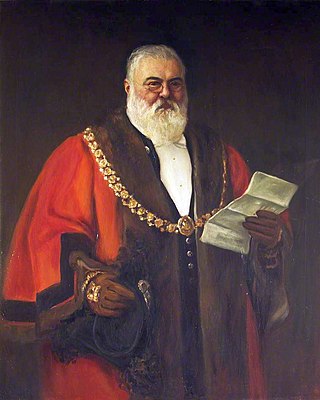
Sir Frank William Wills of Berkeley Square, Bristol, England, was a member of the Wills tobacco family, who became a noted British architect and went on to serve as Lord Mayor of Bristol.

Henry Overton Wills II of Ashley House, in Bristol, England, was a tobacco merchant who in 1830 together with his elder brother William Day Wills co-founded W.D. & H.O. Wills, a company which by the late 1800s had become Britain's largest importer of tobacco and manufacturer of tobacco products.
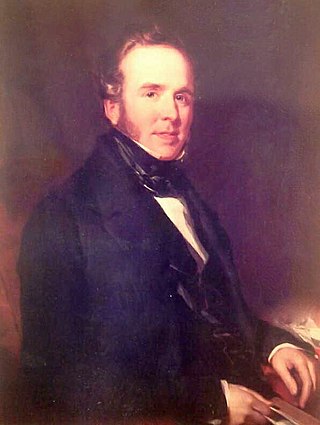
William Day Wills of 2 Portland Square, Bristol, England, was a tobacco merchant who in 1830 together with his younger brother Henry Overton Wills II took over W.D. & H.O. Wills, a company which by the late 1800s had become Britain's largest importer of tobacco and manufacturer of tobacco products.
Henry Overton Wills III was first Chancellor of the University of Bristol, and a member of the Wills tobacco family.

Henry Overton Wills I was a British merchant who founded the firm of W.D. & H.O. Wills in Bristol, England, which eventually became one of the largest tobacco companies in late 19th-century Britain, and later became the largest constituent part of Imperial Tobacco. The 1966 Guinness Book of Records named the Wills family, descended from him, as containing the largest number of millionaires in the British Isles, of which 14 left estates in excess of one million pounds since 1910, totalling 55 million, of which 27 million was paid in death duties. Wills is said to have been a non-smoker, despite the fact that he is regarded as one of the founders of the British tobacco industry.
Robert Louis Herbert Fowler, FBA is a classicist and academic. He was Henry Overton Wills Professor of Greek at the University of Bristol between 1996 and 2017.
