
The Irish Republican Army was an Irish republican revolutionary paramilitary organisation. The ancestor of many groups also known as the Irish Republican Army, and distinguished from them as the "Old IRA", it was descended from the Irish Volunteers, an organisation established on 25 November 1913 that staged the Easter Rising in April 1916. In 1919, the Irish Republic that had been proclaimed during the Easter Rising was formally established by an elected assembly, and the Irish Volunteers were recognised by Dáil Éireann as its legitimate army. Thereafter, the IRA waged a guerrilla campaign against the British occupation of Ireland in the 1919–1921 Irish War of Independence.

The Irish Civil War was a conflict that followed the Irish War of Independence and accompanied the establishment of the Irish Free State, an entity independent from the United Kingdom but within the British Empire.
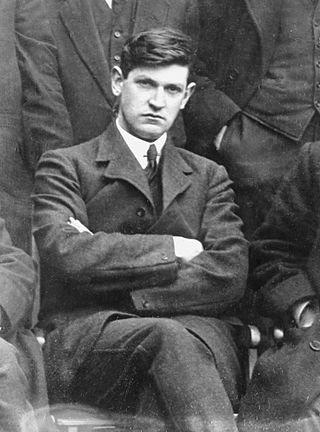
Michael Collins was an Irish revolutionary, soldier and politician who was a leading figure in the early-20th century struggle for Irish independence. During the War of Independence he was Director of Intelligence of the Irish Republican Army (IRA) and a government minister of the self-declared Irish Republic. He was then Chairman of the Provisional Government of the Irish Free State from January 1922 and commander-in-chief of the National Army from July until his death in an ambush in August 1922, during the Civil War.
The Irish War of Independence or Anglo-Irish War was a guerrilla war fought in Ireland from 1919 to 1921 between the Irish Republican Army and British forces: the British Army, along with the quasi-military Royal Irish Constabulary (RIC) and its paramilitary forces the Auxiliaries and Ulster Special Constabulary (USC). It was part of the Irish revolutionary period.

Thomas Bernardine Barry, better known as Tom Barry, was a prominent guerrilla leader in the Irish Republican Army (IRA) during the Irish War of Independence and the Irish Civil War. He is best remembered for orchestrating the Kilmichael ambush, in which he and his column wiped out a 18-man patrol of Auxiliaries, killing sixteen men.
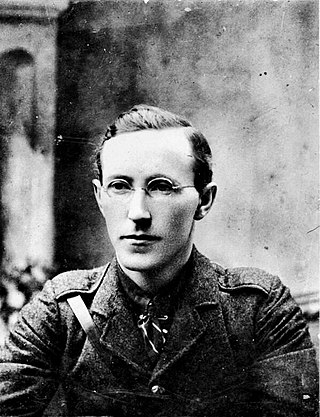
William Fanaghan Lynch was an Irish Republican Army officer during the Irish War of Independence of 1919–1921. During much of the Irish Civil War, he was chief of staff of the Irish Republican Army. On 10 April 1923, Lynch was killed whilst trying to escape an encirclement by Free State troops in south Tipperary.
The Irish Republican Army (IRA) is a name used by various resistance organisations in Ireland throughout the 20th and 21st centuries. Organisations by this name have been dedicated to anti-imperialism through Irish republicanism, the belief that all of Ireland should be an independent republic free from British colonial rule.
Liam Deasy was an Irish Republican Army officer who fought in the Irish War of Independence and the Irish Civil War. In the latter conflict, he was second-in-command of the Anti-Treaty forces for a period in late 1922 and early 1923. Before the anti-treaty and pro-treaty split, he was considered closely associated with Michael Collins
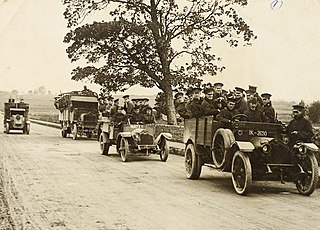
This is a timeline of the Irish War of Independence of 1919–21. The Irish War of Independence was a guerrilla conflict and most of the fighting was conducted on a small scale by the standards of conventional warfare.
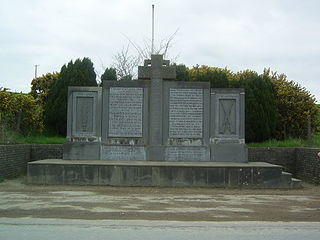
The Crossbarry ambush, also known as the Battle of Crossbarry, occurred on 19 March 1921 and was one of the largest engagements of the Irish War of Independence. It took place near the small village of Crossbarry in County Cork, about 20 km south-west of Cork city. About a hundred Irish Republican Army (IRA) volunteers, commanded by Tom Barry, escaped an attempt by about 1,200 British troops to encircle them. During the hour-long battle, ten British troops and three IRA volunteers were killed.
Charles Hurley was Officer Commanding of the 3rd Cork Brigade of the Irish Republican Army during the Irish War of Independence (1919–1921)

Joseph McKelvey was an Irish Republican Army officer who was executed during the Irish Civil War without trial or court martial. He participated in the Anti-Treaty IRA's repudiation of the authority of the Dáil Éireann, the civil government of the Irish Republic declared in 1919 in March 1922, and was elected to the IRA Army Council as Deputy Chief of Staff. In April 1922, he helped command the occupation of the Four Courts in defiance of the new Irish Free State. This action helped to spark the civil war, between pro- and anti-treaty factions. McKelvey was among the most hardline of the republican side and, briefly in June 1922, became IRA Chief of Staff.

Seán Allis Treacy was one of the leaders of the Third Tipperary Brigade of the IRA during the Irish War of Independence and one of a small group whose actions initiated that conflict in 1919. He was killed in October 1920, on Talbot Street in Dublin in a shootout with British troops during an aborted British Secret Service surveillance operation.
A volunteer is a member of various Irish republican paramilitary organisations. Among these have been the various forms of the Irish Republican Army (IRA), the Irish National Liberation Army (INLA), and the Irish People's Liberation Organization (IPLO). Óglach is the equivalent title in the Irish language.

Michael Fitzgerald also known as Mick Fitzgerald, was an Irish militant and Republican activist who was among the first members of the Irish Republican Army and played a significant role in organising it. He rose to the rank of Commandant, Officer Commanding (OC) in the First Battalion, Cork Number 2 Brigade. He died during the 1920 Cork hunger strike at Cork Gaol. Fitzgerald led 65 men in the hunger strike which was in protest at their detention without being either charged or convicted of any crime. The hunger strike is credited with bringing additional world-wide attention to the Irish cause for independence.
Maurice Moore was an Irish republican who fought in the Irish War of Independence. In April 1921 Moore was executed in the military prison of Victoria Barracks after being captured in the aftermath of the Clonmult Ambush.

Denis Barry was an Irish Republican who died during the 1923 Irish hunger strikes, shortly after the Irish Civil War.
Daniel Corkery was an Irish politician and Commandant in the Irish Republican Army (IRA) during the Irish War of Independence.
The Tooreen ambush was an ambush carried out by the Irish Republican Army (IRA) on 22 October 1920, during the Irish War of Independence. It took place near Roberts Farm, Tooreen, near Ballinhassig in County Cork. The IRA ambushed two lorries of British soldiers, killing three and wounding four others. The British surrendered and their weapons and ammunition were seized by the IRA. Later that night, British soldiers went on a rampage in nearby Bandon.
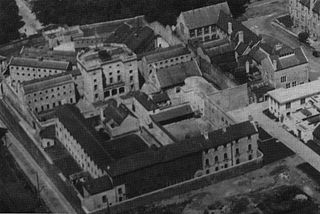
Cork County Gaol was a former prison located in Cork, Ireland. The main walls and gate entrance of the prison are today incorporated in the perimeter of University College Cork.
