Related Research Articles

The economy of the Dominican Republic is the seventh largest in Latin America, and is the largest in the Caribbean and Central American region. The Dominican Republic is an upper-middle income developing country with important sectors including mining, tourism, manufacturing, energy, real estate, infrastructure, telecommunications and agriculture. The Dominican Republic is on track to achieve its goal of becoming a high-income country by 2030, and is expected to grow 79% in this decade. The country is the site of the single largest gold mine in Latin America, the Pueblo Viejo mine.Although the service sector is currently the leading employer of Dominicans, agriculture remains an important sector in terms of the domestic market and is in second place in terms of export earnings. Tourism accounts for more than $7.4 billion in annual earnings in 2019. Free-trade zone earnings and tourism are the fastest-growing export sectors. A leading growth engine in the Free-trade zone sector is the production of medical equipment for export having a value-added per employee of $20,000 USD, total revenue of $1.5 billion USD, and a growth rate of 7.7% in 2019. The medical instrument export sector represents one of the highest-value added sectors of the country's economy, a true growth engine for the country's emerging market. Remittances are an important sector of the economy, contributing $8.2 billion in 2020. Most of these funds are used to cover household expenses, such as housing, food, clothing, health care and education. Secondarily, remittances have financed businesses and productive activities. Thirdly, this combined effect has induced investment by the private sector and helps fund the public sector through its value-added tax. The combined import market including the free-trade-zones amounts to a market of $20 billion a year in 2019. The combined export sector had revenues totaling $11 billion in 2019. The consumer market is equivalent to $61 billion in 2019. An important indicator is the average commercial loan interest rate, which directs short-term investment and stimulates long-term investment in the economy. It is currently 8.30%, as of June 2021.

The economy of Jamaica is heavily reliant on services, accounting for 70% of the country's GDP. Jamaica has natural resources and a climate conducive to agriculture and tourism. The discovery of bauxite in the 1940s and the subsequent establishment of the bauxite-alumina industry shifted Jamaica's economy from sugar, and bananas.
The economy of Eswatini is fairly diversified. Agriculture, forestry and mining account for about 13 percent of Eswatini's GDP whereas manufacturing represent 37 percent of GDP. Services – with government services in the lead – constitute the other 50 percent of GDP.

Agricultural policy describes a set of laws relating to domestic agriculture and imports of foreign agricultural products. Governments usually implement agricultural policies with the goal of achieving a specific outcome in the domestic agricultural product markets.
Dumping, in economics, is a kind of injuring pricing, especially in the context of international trade. It occurs when manufacturers export a product to another country at a price below the normal price with an injuring effect. The objective of dumping is to increase market share in a foreign market by driving out competition and thereby create a monopoly situation where the exporter will be able to unilaterally dictate price and quality of the product. Trade treaties might include mechanisms to alleviate problems related to dumping, such as countervailing duty penalties and anti-dumping statutes.
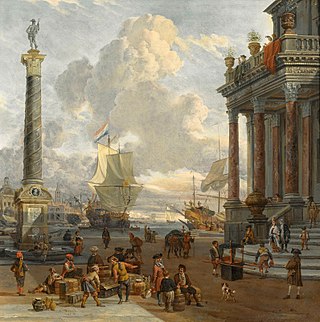
Trade barriers are government-induced restrictions on international trade. According to the theory of comparative advantage, trade barriers are detrimental to the world economy and decrease overall economic efficiency.
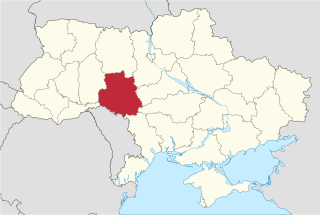
Vinnytsia Oblast, also referred to as Vinnychchyna, is an oblast in central Ukraine. Its administrative center is Vinnytsia. The oblast has a population of 1,509,515.
Non-tariff barriers to trade are trade barriers that restrict imports or exports of goods or services through mechanisms other than the simple imposition of tariffs. Such barriers are subject to controversy and debate, as they may comply with international rules on trade yet serve protectionist purposes.
The Australia – United States Free Trade Agreement (AUSFTA) is a preferential trade agreement between Australia and the United States modelled on the North American Free Trade Agreement (NAFTA). The AUSFTA was signed on 18 May 2004 and came into effect on 1 January 2005.
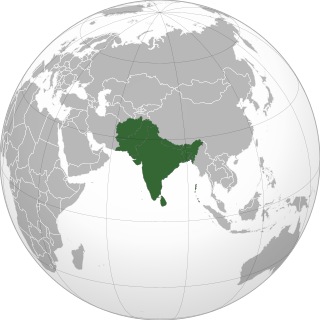
The South Asian Free Trade Area (SAFTA) is a 2004 agreement that created a free-trade area of 1.6 billion people in Afghanistan, Bangladesh, Bhutan, India, the Maldives, Nepal, Pakistan and Sri Lanka with the vision of increasing economic cooperation and integration.

High-fructose corn syrup (HFCS), also known as glucose–fructose, isoglucose and glucose–fructose syrup, is a sweetener made from corn starch. As in the production of conventional corn syrup, the starch is broken down into glucose by enzymes. To make HFCS, the corn syrup is further processed by D-xylose isomerase to convert some of its glucose into fructose. HFCS was first marketed in the early 1970s by the Clinton Corn Processing Company, together with the Japanese Agency of Industrial Science and Technology, where the enzyme was discovered in 1965.
The Agreement on Agriculture (AoA) is an international treaty of the World Trade Organization. It was negotiated during the Uruguay Round of the General Agreement on Tariffs and Trade, and entered into force with the establishment of the WTO on January 1, 1995.

Agriculture is one of the dominant parts of Senegal's economy, even though Senegal lies within the drought-prone Sahel region. As only about 5% of the land is irrigated, Senegal continues to rely on rain-fed agriculture. Agriculture occupies about 75% of the workforce. Despite a relatively wide variety of agricultural production, the majority of farmers produce for subsistence needs. Millet, rice, corn, and sorghum are the primary food crops grown in Senegal. Production is subject to drought and threats of pests such as locusts, birds, fruit flies, and white flies. Moreover, the effects of climate change in Senegal are expected to severely harm the agricultural economy due to extreme weather such as drought, as well as increased temperatures.

Agriculture in Colombia refers to all agricultural activities, essential to food, feed, and fiber production, including all techniques for raising and processing livestock within the Republic of Colombia. Plant cultivation and livestock production have continuously abandoned subsistence agricultural practices in favour of technological farming resulting in cash crops which contribute to the economy of Colombia. The Colombian agricultural production has significant gaps in domestic and/or international human and animal sustenance needs.

The economy of Belize is a small, essentially private enterprise economy that is based primarily on agriculture, tourism, and services. The cultivation of newly discovered oil in the town of Spanish Lookout has presented new prospects and problems for this developing nation. Belize's primary exports are citrus, sugar, and bananas. Belize's trade deficit has been growing, mostly as a result of low export prices for sugar and bananas.

Relations between the People's Republic of China and the Oriental Republic of Uruguay were first established in 1988. Relations were defined as “friendly and cooperative” by the Chinese government. The bilateral relation was promoted to a strategic partnership in 2016.

Agriculture in Guyana is dominated by sugar and rice production. Although once the chief industry, it has been overshadowed by mining.
In 2021, Germany was the third largest importer and exporter of consumer oriented agricultural products worldwide, and by far the most important European market for foreign producers. The retail market's key characteristics are consolidation, market saturation, strong competition and low prices. Germany is an attractive and cost-efficient location in the center of the EU. While many consumers are very price sensitive, the market also provides many wealthy consumers who follow value-for-money concepts. These consumers are looking for premium quality products and are willing to pay higher prices. Germany still has some of the lowest food prices in Europe, and German citizens spend only about 14 percent of their income on food and beverages. Low food prices are a result of high competition between discounters and the grocery retail sale segment.

Caribbean Basin Economic Recovery Act of 1983 (CBERA) — P.L. 98-67, Title II, authorized unilateral preferential trade and tax benefits for eligible Caribbean countries, including duty-free treatment of eligible products.
The European Union–Moldova Deep and Comprehensive Free Trade Area or EU–Moldova DCFTA is a free trade area between the European Union and Moldova. The DCFTA is a part of Moldova's EU Association Agreement. It allows Moldova access to the European Single Market in selected sectors and grants EU investors the same regulatory environment in the associated country as in the EU. The first countries to ratify the agreement with the EU were Moldova and Georgia, thus the agreement officially entered into force in July 2016, although parts of them were already provisionally applied. However, because of political instability in Ukraine, the agreement with Ukraine was provisionally applied on January 1, 2016. Only after almost one year after the agreement officially entered into force in Moldova and Georgia, the agreement finally entered into force on September 1, 2017 in Ukraine.
References
 This article incorporates public domain material from Jasper Womach. Report for Congress: Agriculture: A Glossary of Terms, Programs, and Laws, 2005 Edition (PDF). Congressional Research Service.
